







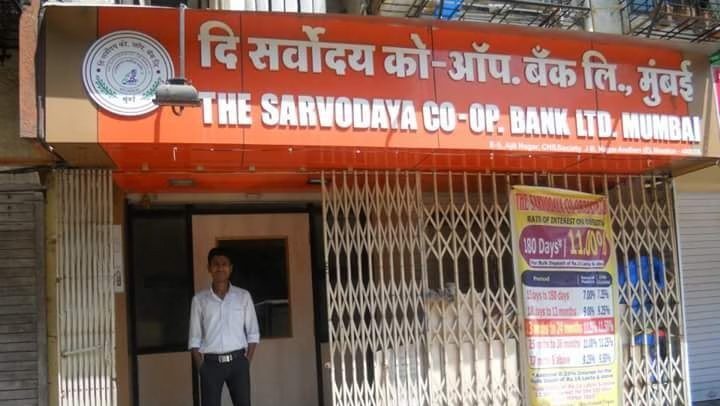
The Reserve Bank of India (RBI) has cancelled the banking licence of Sarvodaya Co-operative Bank Ltd., citing serious financial deterioration and failure to comply with key regulatory norms, marking yet another setback for the urban cooperative banking sector.
In an order issued on May 12, the RBI said the Mumbai-based lender lacked adequate capital and earning prospects and had failed to meet several requirements under the Banking Regulation Act. The central bank observed that the bank was no longer in a position to safeguard depositors’ interests and would be unable to repay its existing depositors in full if allowed to continue operations.
With the cancellation coming into immediate effect, the bank has been barred from carrying out any banking activities, including accepting fresh deposits or repaying existing ones. The RBI has also directed the Maharashtra Registrar of Cooperative Societies to initiate the winding-up process and appoint a liquidator for the bank.
Despite the closure, relief has been assured to most customers through deposit insurance protection. According to the RBI, nearly 98.36 per cent of the bank’s depositors are eligible to receive the full amount of their deposits under the Deposit Insurance and Credit Guarantee Corporation (DICGC) insurance scheme, which covers deposits up to Rs 5 lakh per depositor. The RBI said DICGC had already disbursed Rs 26.72 crore to eligible depositors till March 31, 2026.
The action against Sarvodaya Co-operative Bank is part of a broader regulatory crackdown on financially weak Urban Cooperative Banks (UCBs) across the country. Over the past two years, several cooperative banks have lost their licences due to inadequate capital, weak earnings, governance failures and rising financial stress.
Among the prominent banks that faced licence cancellation recently are Sumerpur Mercantile Urban Cooperative Bank in Rajasthan, Mahabhairab Cooperative Urban Bank in Assam, Ajantha Urban Co-operative Bank Maryadit, Imperial Urban Co-operative Bank and The Karwar Urban Co-operative Bank.
Reports citing Finance Ministry data indicate that several other UCBs from Uttar Pradesh, Gujarat, Andhra Pradesh and Karnataka also lost licences during 2024 amid growing concerns over financial instability in the sector.
Over the last decade, around 78 Urban Cooperative Banks across India have reportedly lost their licences, with Maharashtra accounting for the highest number of closures. Some major cases during the period included PMC Bank, CKP Co-operative Bank, Rupee Co-operative Bank and Kapol Co-operative Bank.
Banking experts say most such failures have been linked to weak governance, rising NPAs, poor compliance standards and inability to protect depositors’ funds, prompting the RBI to tighten supervision over the cooperative banking sector.

















































For better mamangement of Risk, one depositor should should have only 4-5 lakh rupees in a single Cooperative bank. Any amount above that should be in a different cooperative bank.
2. Also, savings of different members of families should be in different cooperative banks, example Husband’s Savings in Bank-A, Wife’s Savings in Bank-B, etc