






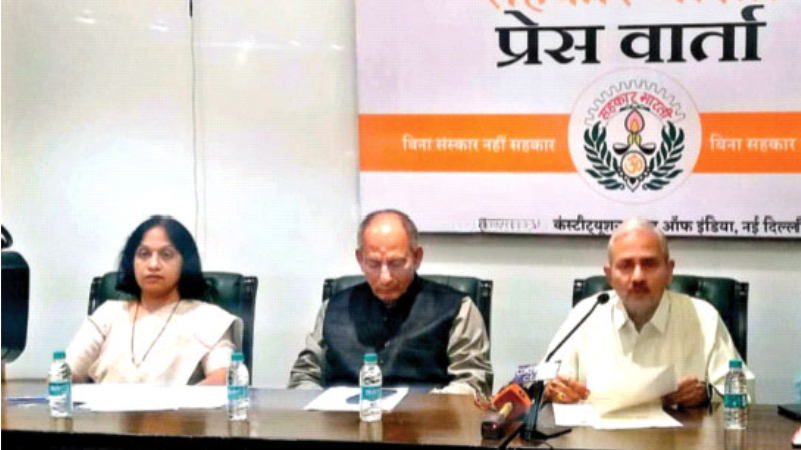
Sahakar Bharati has urged the Reserve Bank of India (RBI) Committee on Model Bye-Laws for Urban Cooperative Banks (UCBs) to frame a progressive and enabling regulatory framework that can prepare the sector for emerging banking and technological challenges.
In a letter addressed to Dinesh Oulkar, Chairman of the RBI Committee, and its members, Sahakar Bharati National President Dr Uday Joshi welcomed the RBI’s initiative to undertake a fresh exercise for drafting model bye-laws for UCBs. He noted that the existing bye-laws are largely based on the recommendations of the Madhav Das Committee Report, which came into force nearly 45 years ago.
Joshi pointed out that the functioning of UCBs has undergone significant changes over the decades, while amendments to the Banking Regulation Act and changes introduced through RBI Master Directions have further altered the regulatory environment. He said this made a comprehensive review and fresh drafting of the bye-laws necessary.
Sahakar Bharati also welcomed what it described as the gradual integration of UCBs with the mainstream banking sector, saying the move could strengthen urban cooperative banks and enable them to contribute more effectively to the goal of an Atmanirbhar Bharat.
Among its key suggestions, Sahakar Bharati has called for provisions enabling UCBs to have Representative General Bodies, particularly as many banks have thousands or even lakhs of shareholders. It has also proposed that elections and meetings of UCBs be allowed in a hybrid format to improve participation and accessibility.
The organisation has sought greater flexibility in the area of operation of UCBs, including permission for banks headquartered or having branches in a district adjoining another State or Union Territory to extend operations into the neighbouring district.
Sahakar Bharati has further proposed empowering UCBs to establish wholly owned companies and special purpose vehicles (SPVs), with the possibility of listing such entities on stock exchanges. It has also suggested linking the maximum shareholding of an individual or legal entity to a percentage of the bank’s authorised share capital.
On capital mobilisation, the organisation has proposed allowing UCBs to accept share capital contributions from mutual funds, Central and State governments, public sector undertakings and trusts. It has also sought permission for UCBs to issue rated bonds of different maturities and structures, as well as rated Certificates of Deposit and Commercial Papers for raising short- and medium-term funds.
Sahakar Bharati has recommended that UCBs be permitted to offer services such as wealth management, trusteeship and merchant banking, besides operating mobile banking vans in semi-urban and semi-rural areas.
The letter also calls for greater autonomy in human-resource management, including organisational structures, recruitment, remuneration, training, promotion and transfers. Finally, it has urged the RBI to enable UCBs to adopt and upgrade information technology and payment systems to remain competitive.
Sahakar Bharati stressed that most of its proposals are enabling in nature and that UCBs could undertake such activities subject to prior RBI approval.