





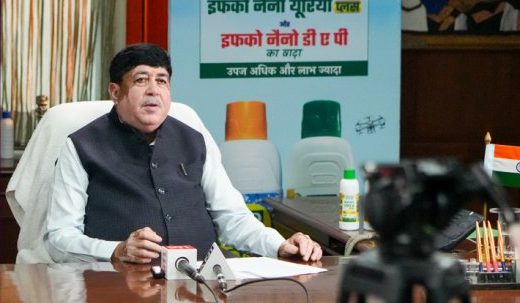
Welcoming the Union Budget 2026, senior cooperative leader and IFFCO Chairman Dileep Sanghani said the budget reflects the farsighted vision of Prime Minister Narendrabhai Modi and marks a historic step toward empowering farmers, strengthening the rural economy, and accelerating the cooperative movement.
Sanghani stated that the budget embodies the spirit of “Sarvajan Hitaya, Sarvajan Sukhaya” and firmly advances India toward the national goal of “Viksit Bharat @2047.” He described the budget as transformative for agriculture, rural livelihoods, and cooperative institutions.
Highlighting key agricultural initiatives, he said measures such as AI-based soil testing, expansion of digital marketplaces, integration of modern technologies, and a record increase in agricultural credit targets will play a crucial role in enhancing farmers’ incomes. He also noted that the modernization of the livestock sector will provide fresh momentum to rural livelihoods and strengthen self-reliance in agriculture-based industries.
On the cooperative front, Sanghani welcomed the government’s decision to provide tax exemption on dividends for notified national cooperative federations for three years, along with exemption on inter-cooperative dividends under the New Tax Regime. He said these steps would significantly enhance the financial capacity, sustainability, and expansion of cooperative institutions, further reinforcing the Prime Minister’s vision of “Sahkar se Samriddhi.”
Describing IFFCO as a pillar of Indian agriculture and the cooperative movement, Sanghani reaffirmed the organization’s long-standing commitment to the welfare of farmers and the cooperative community across the country.
In conclusion, he said the Union Budget 2026 is the combined outcome of Prime Minister Narendra Modi’s leadership, Finance Minister Smt. Nirmala Sitharaman’s economic vision, Cooperation Minister Amitbhai Shah’s cooperative-focused approach, and Agriculture Minister Shivraj Singh Chouhan’s farmer-centric decisions.
“This budget will prove decisive not only for agriculture and rural India but also for India’s self-reliance, long-term development, and a stronger cooperative movement,” Sanghani said.