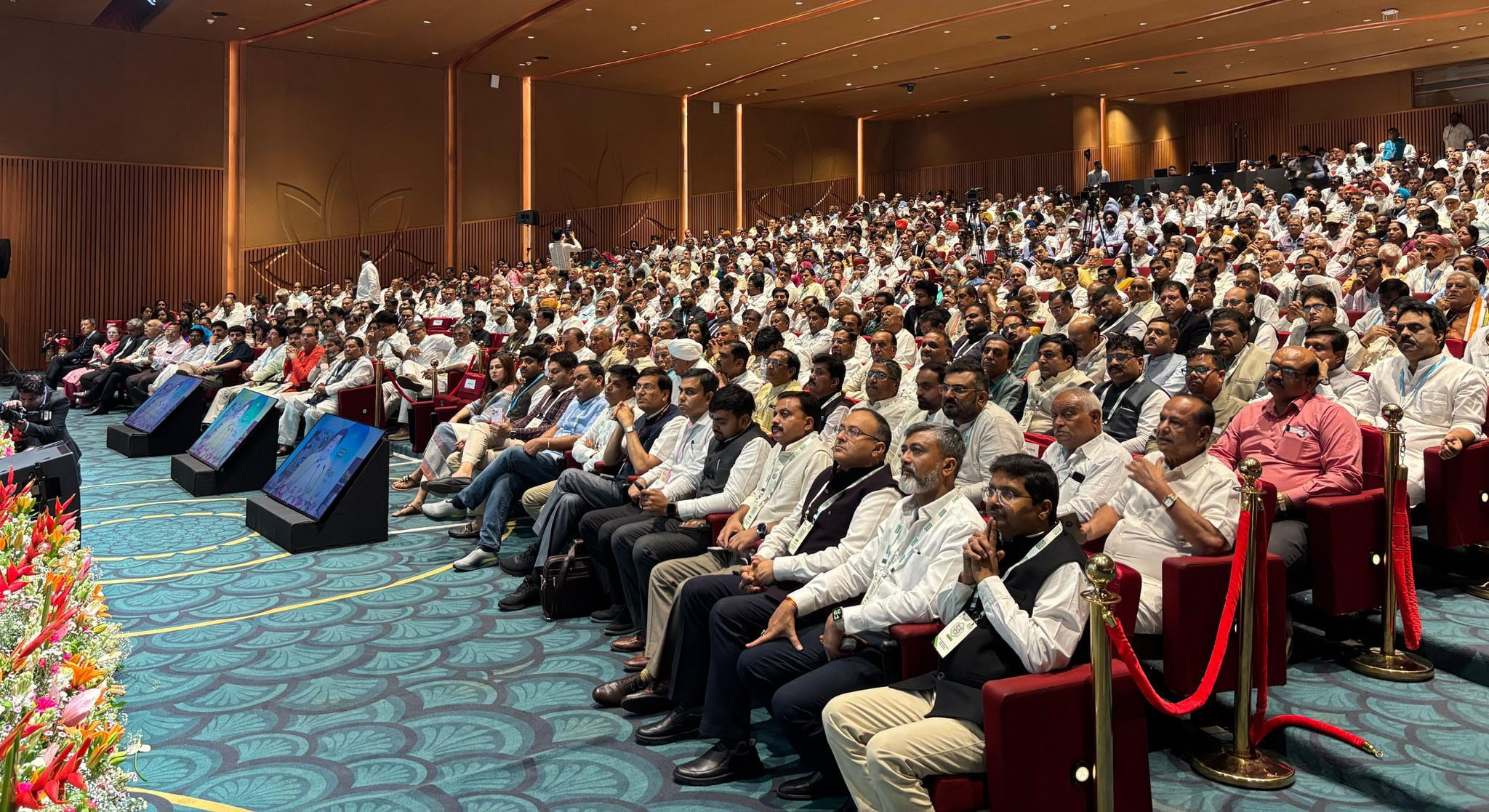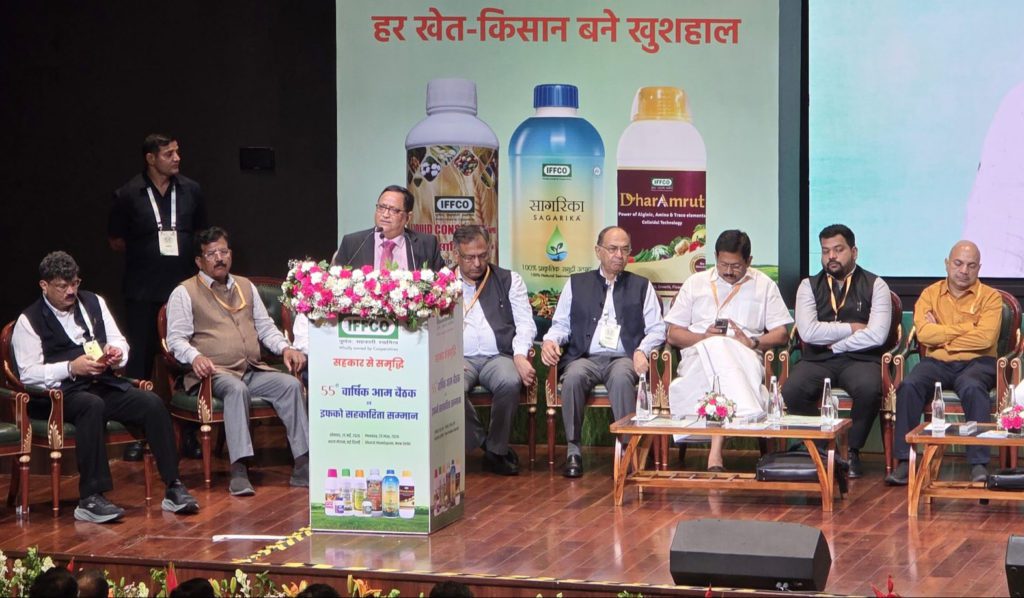
During the 55th AGM of IFFCO at Bharat Mandapam on Monday, its Managing Director K J Patel described in detail the energy crisis being faced by the country in general and IFFCO in particular in the wake of the West Asia conflict.
Recounting the harrowing experience, the IFFCO MD said that since February 28, when the war broke out, a ship carrying 50,000 metric tonnes of sulphur has remained stranded due to the closure of the Strait of Hormuz. While that consignment is yet to arrive, IFFCO’s attempt to load another ship with an additional 50,000 metric tones of Sulphur has again been hit by the war situation.
Detailing further on the West Asia crisis, K J Patel said that natural gas is a crucial raw material for fertilizer plants. “We import nearly 60 percent of our ammonia and 80 percent of our sulphur requirements from Gulf countries. The blockage of the Strait of Hormuz has created an unprecedented crisis on this front,” he said.
Patel also explained how, through Indian Potash Limited (IPL), a global tender was floated for sourcing raw materials. However, even that could not meet 50 percent of the requirement. “And one cannot imagine the unaffordable rates at which supplies were being offered,” he remarked.
In such circumstances, Patel said, the adoption of nano fertilizers could prove to be a major boon for the country. Patel said there is an alternative, provided the country recognizes it in time. Reiterating the Prime Minister’s call for natural farming, he said nano fertilizers offer India a unique opportunity to reduce chemical usage in agriculture while also saving lakhs of dollars in foreign exchange.
Even before the war, the government was providing nearly Rs 2 lakh crore in fertilizer subsidy, and with the conflict, one can only imagine how much the figure may rise further. Sadly, India imports nearly 50 percent of its fertilizer requirements from abroad. Against this backdrop, the adoption of nano fertilizers assumes even greater significance.
Thanking Dileep Sanghani for writing to Cooperation Minister Amit Shah when some states, including Uttar Pradesh, had banned the sale of non-subsidized fertilizers, affecting the sale of nano fertilizers, Patel said that Shah subsequently wrote to all Chief Ministers urging them to promote nano fertilizers, as they not only help save soil health but also conserve valuable foreign exchange reserves.
The IFFCO MD described the Cooperation Ministry as a “one-stop solution” for addressing problems faced not only by IFFCO but by the cooperative sector at large. “We rush to them and they help us with their best efforts,” Patel added.
Dileep Sanghani was also credited with expediting the release of subsidy dues pending with the government. “Due to the intervention of our Chairman, all pending subsidy amounts have been released,” said Balvir Singh, the Vice Chairman during his vote of thanks speech.
Meanwhile, in a related development, the govt stated that despite the crisis, India has sufficient fertilizer buffer stocks. “The fertilizer position in the country remains comfortable against the assessed requirement of 390.54 lakh metric tonnes for this year. The current stock stands at 200.12 lakh metric tonnes, which is more than 51 percent and significantly higher than the usual level of 33 percent”, read a govt release.
Domestic fertilizer production and imports after the crisis have also remained substantial. Total domestic production has been about 95 lakh metric tonnes, while around 22.60 lakh metric tonnes of imports have already reached Indian shores.
In all, 117.6 lakh metric tonnes of fertilizer has been added to overall availability. The country has also secured 13.5 lakh metric tonnes of DAP and 9 lakh metric tonnes of NPK complexes, ensuring adequate availability during the peak Kharif season.