








Union Home and Cooperation Minister Amit Shah on Sunday launched and laid the foundation stones for development projects worth Rs 6,453 crore across 17 districts of Rajasthan from Alwar, with cooperative dairies, farmers and rural infrastructure emerging as key components of the State’s development push.
At the event, Shah laid the foundation stone for a new milk-processing plant at Alwar with an initial capacity of three lakh litres per day, which will subsequently be expanded to five lakh litres. He said stronger dairy infrastructure could transform the fortunes of livestock-rearing families by ensuring that income from milk reaches their bank accounts regularly.
Four Saras Dairy plants in Bhilwara, Jaipur, Pali and Rajsamand were also commissioned at a combined cost of Rs 274 crore. Shah said Rajasthan’s dairy farmers would receive payment for their milk within seven days, while stressing that cooperative dairies could transform the rural economy and create opportunities for future generations.
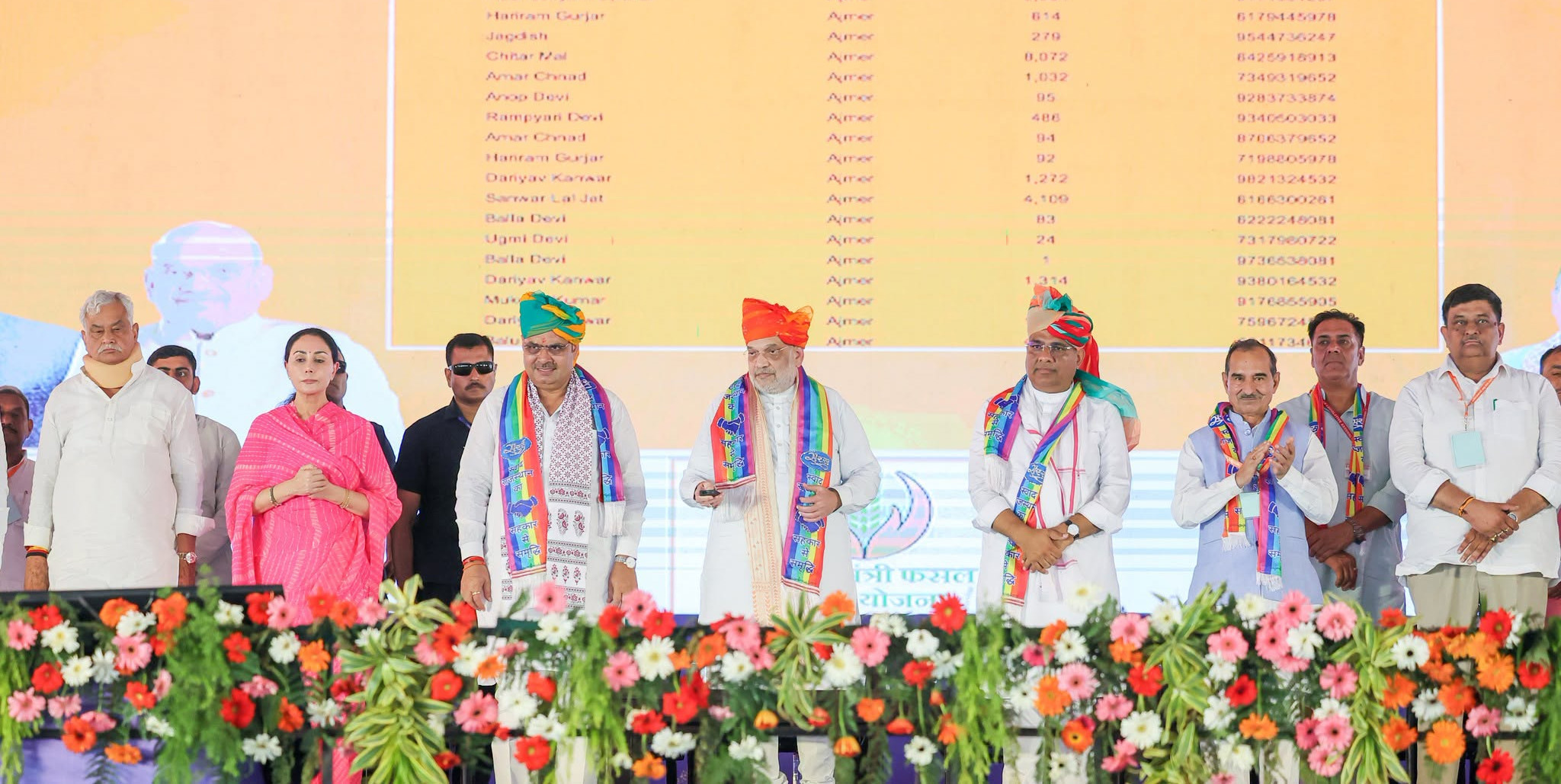 The cooperative push also included the launch of four district cooperative banks in Phalodi, Balotra, Didwana-Kuchaman and Pratapgarh, with farmers set to receive loans at zero interest. Shah said Rajasthan currently has around 44,000 cooperative societies and the government’s objective is to ensure that no village remains untouched by the cooperative movement.
On the farmers’ front, more than Rs 667 crore was transferred through DBT to 67 lakh farmers under the Mukhyamantri Kisan Samman Nidhi, while Rs 152 crore was released under the Chief Minister’s Crop Insurance Scheme. The programme also included employment initiatives for young people.
Shah said 954 development works worth Rs 6,453 crore had been taken up in Rajasthan, adding that projects worth Rs 5,500 crore had also been launched in Chittorgarh earlier the same day, taking the total value of development works initiated in the State to Rs 11,953 crore in a single day.
He also highlighted plans to construct 50 new warehouses during 2026–27 and said the cooperative movement would remain central to the government’s goal of achieving “Sahakar Se Samriddhi”. Shah argued that empowering farmers, livestock rearers, women, youth and the poor would be essential for India to become a developed nation by 2047.