





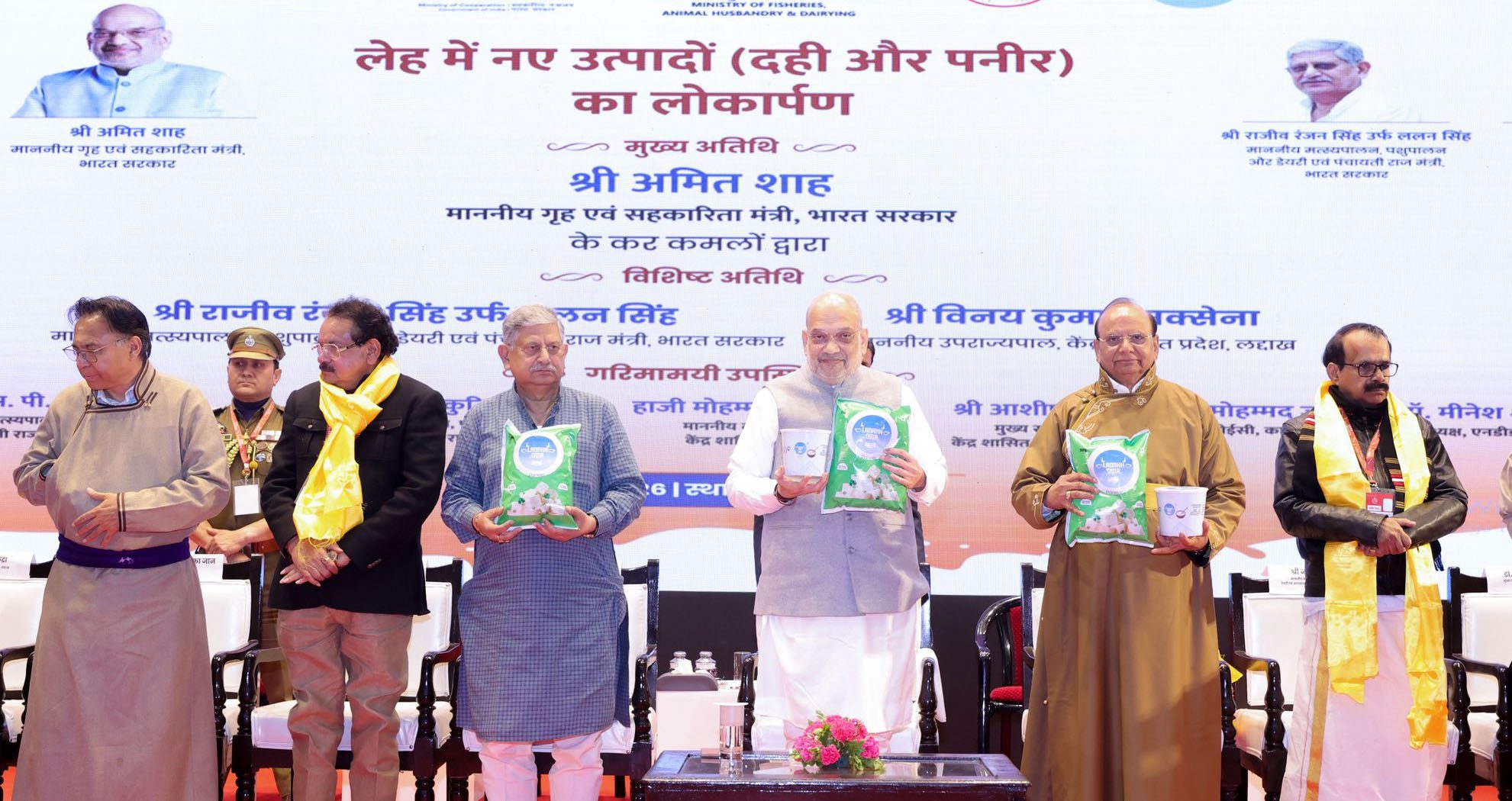
Union Home and Cooperation Minister Amit Shah inaugurated and laid the foundation stone for a series of dairy infrastructure and cooperative initiatives in Ladakh, marking a major step toward strengthening the region’s cooperative ecosystem and rural economy. The initiatives are aligned with the Centre’s broader vision of promoting “Sahkar se Samriddhi” through sustainable and inclusive growth.
A key highlight was the foundation of a Rs 25 crore dairy plant in Kargil with a processing capacity of 10,000 litres per day. The project is expected to significantly boost local livelihoods, particularly empowering women by providing them opportunities to engage in dairy-based income generation and become financially self-reliant. Shah noted that similar cooperative-led dairy models in other parts of India have transformed rural economies and expressed confidence that Ladakh’s women can replicate this success.
In addition to Kargil, dairy infrastructure in Leh is also being strengthened. An existing milk plant has already begun operations, and its capacity has been doubled from 5,000 to 10,000 litres per day. Further expansion is planned with a proposed 50,000 litres per day dairy plant in Leh at an estimated cost of Rs 70 crore, aimed at meeting growing demand and scaling production.
 To improve transparency and efficiency in cooperative operations, an Android-based milk collection system app was launched, allowing farmers to track procurement and payments digitally. A mobile testing laboratory has also been introduced to ensure quality control in milk production, enhancing trust among producers and consumers alike.
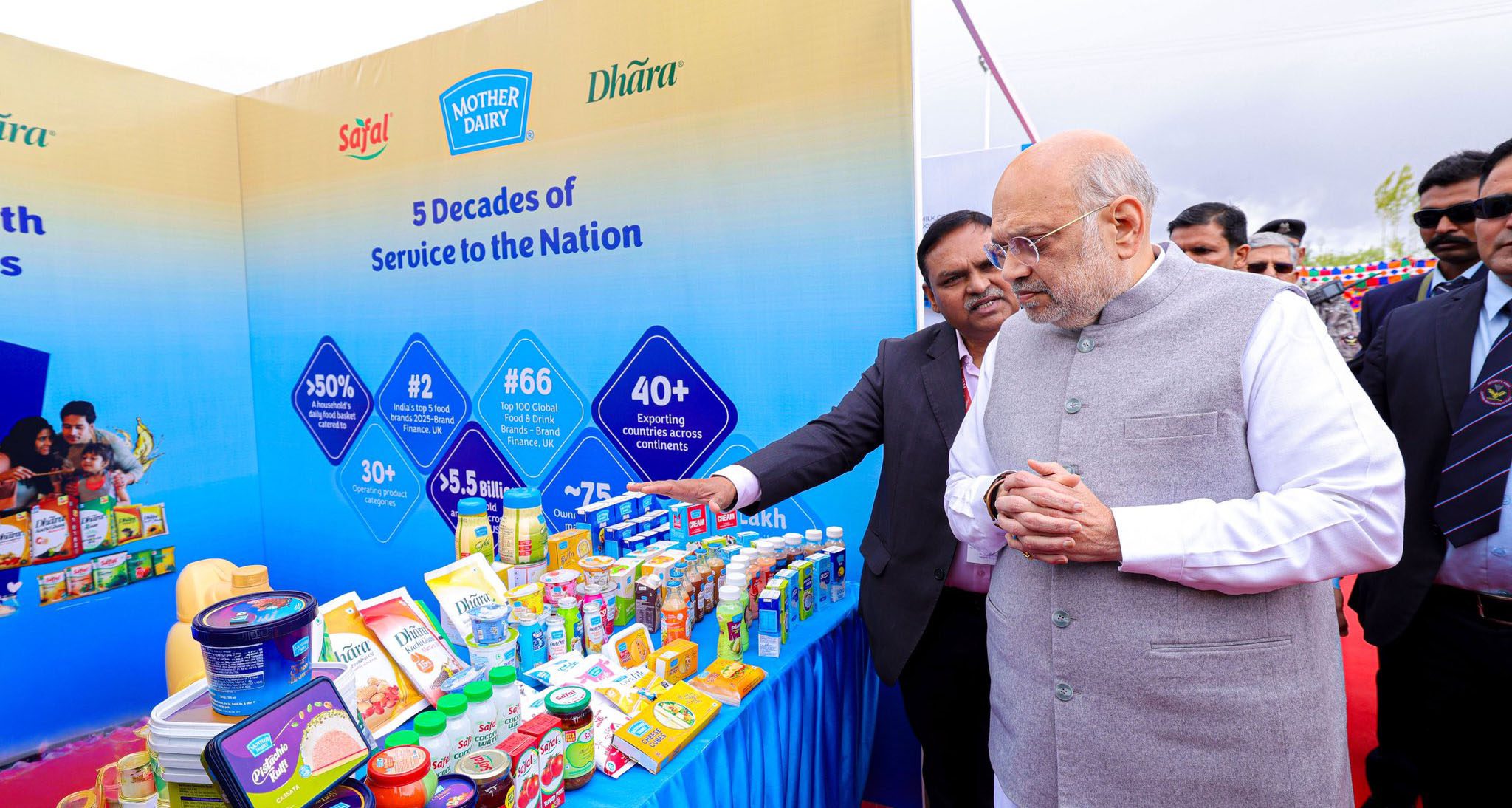
Market access is being widened through a strategic agreement between the Ladakh Milk Federation and Mother Dairy, which will enable Ladakh’s dairy and organic products to reach national markets. The National Dairy Development Board has been tasked with expanding cooperative networks to more villages, building on the current base of around 1,700 milk producers across 28 villages.
Shah highlighted the rapid growth of India’s dairy sector under Prime Minister Narendra Modi, noting that milk production has increased by 70% over the past decade to reach 248 million tonnes. This expansion has been driven by more than 2.36 lakh cooperative societies and nearly two crore farmers, demonstrating the strength of the cooperative model.
Looking ahead, the government plans to expand the cooperative framework in Ladakh beyond dairy to include sectors such as pashmina, organic farming, and honey production. Efforts are also underway to improve livestock quality by introducing high-yield breeds suited to the region’s harsh climate, with around 500 animals to be supplied annually.
Overall, these initiatives represent a comprehensive push to build a resilient, technology-driven cooperative ecosystem in Ladakh, aimed at enhancing farmer incomes, generating employment, and ensuring long-term rural prosperity in the strategically important region.