






The proposed Model Bye-Laws for Urban Cooperative Banks (UCBs) have prompted a strong call from the National Federation of Urban Cooperative Banks and Credit Societies Ltd. (NAFCUB) for greater State flexibility and protection of UCB autonomy, with the federation cautioning against a uniform framework that may not adequately reflect India’s federal cooperative structure.
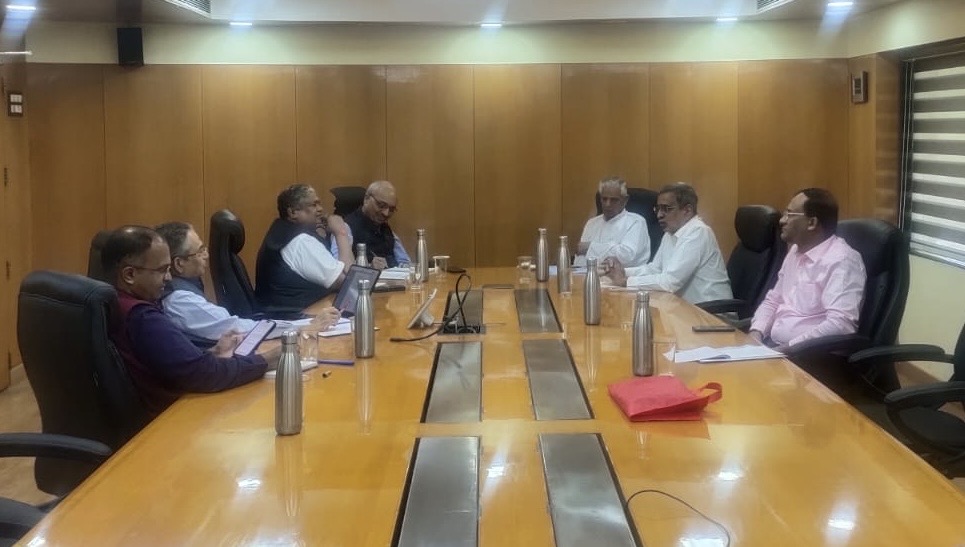
NAFCUB President Laxmi Das, accompanied by Vice President Milind Kale and Director Sunil Deora, met the RBI-appointed Committee on Model Bye-Laws for UCBs at CAIB, Pune, on Tuesday. Committee Chairman Dinesh Oulkar, Member Ganesh Dhargalkar, Kavi R.C.V. Seshachalam and others were present.
The meeting lasted nearly two hours and focused on NAFCUB’s concerns and suggestions regarding the proposed Model Bye-Laws. The committee is expected to submit its recommendations to the RBI shortly.
In its detailed submission to the RBI-constituted Committee, NAFCUB has argued that uniform provisions may be prescribed for banking and financial matters falling within the RBI’s regulatory jurisdiction. However, organisational and cooperative matters should take into account the respective State cooperative laws and frameworks, the federation said.
NAFCUB stressed that cooperation is a State subject and is not included in the Concurrent List. Against this constitutional backdrop, it cautioned that a comprehensive, uniform set of Model Bye-Laws, without sufficient consideration of State-specific legal and institutional frameworks, could create practical difficulties for UCBs.
A major point raised by the federation was the need to ensure that UCB autonomy is not diluted through bye-laws. NAFCUB emphasised that the regulatory roles of the RBI as banking regulator and State Registrars of Cooperative Societies in cooperative and organisational matters need to be appropriately balanced.
The federation also underlined that amendments to the legal framework should follow the appropriate legislative route, through Parliament or the concerned State Legislature, wherever applicable, and should not be introduced indirectly through bye-laws. It cautioned that using bye-laws to impose requirements beyond their proper scope could place additional pressure on cooperative banks.
NAFCUB has therefore urged the committee to seek and consider the views of State Governments and other stakeholders before finalising the Model Bye-Laws. According to the federation, such an approach would help create a framework that is widely accepted, practical to implement and respectful of India’s federal structure.
The Pune meeting assumes significance as the proposed Model Bye-Laws could have a direct impact on the governance, functioning and autonomy of UCBs across the country.
NAFCUB has made clear that it supports the exercise and will extend its cooperation, while seeking a final framework that maintains an appropriate balance between banking regulation, cooperative principles and State jurisdiction.