





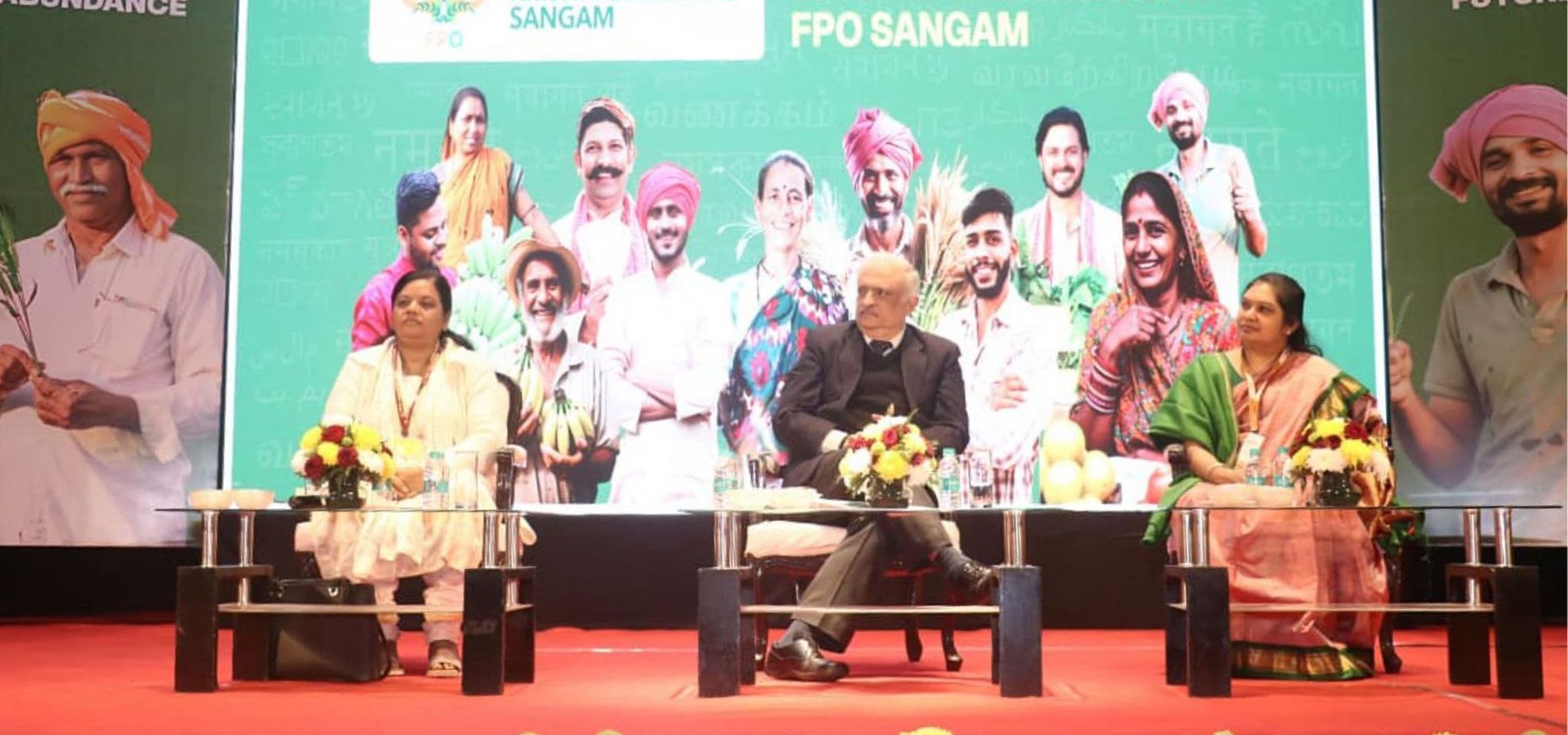
The first day of the PM Dhan-Dhaanya Krishi Yojana – FPO Sangam concluded in New Delhi on Monday with the spotlight firmly on Farmer Producer Organizations (FPOs) as engines of market reform, income enhancement and agricultural transformation.
Held at the NCUI Auditorium and NCDC Complex, the event witnessed the participation of over 72 FPOs from 15 states and 33 PMDDKY districts, drawing farmers, agri-enterprises, policymakers, buyers and technology innovators onto a shared platform.
Organised by the Ministry of Agriculture & Farmers’ Welfare, in partnership with the Gates Foundation and convened by Intellecap Advisory Services, the opening day underscored the strategic push to scale FPO-led growth under the PM Dhan-Dhaanya Krishi Yojana.
The event’s inaugural exhibition was opened by Devesh Chaturvedi, Secretary, Department of Agriculture & Farmers’ Welfare, who engaged directly with farmer collectives, took stock of their produce, and encouraged them to embrace value addition and wider market linkages.
Walking through stalls at the NCDC Atrium, visitors encountered a wide array of farm and processed products, from cereals, pulses and spices to edible oils, honey, millets, horticulture items and innovative value-added offerings.
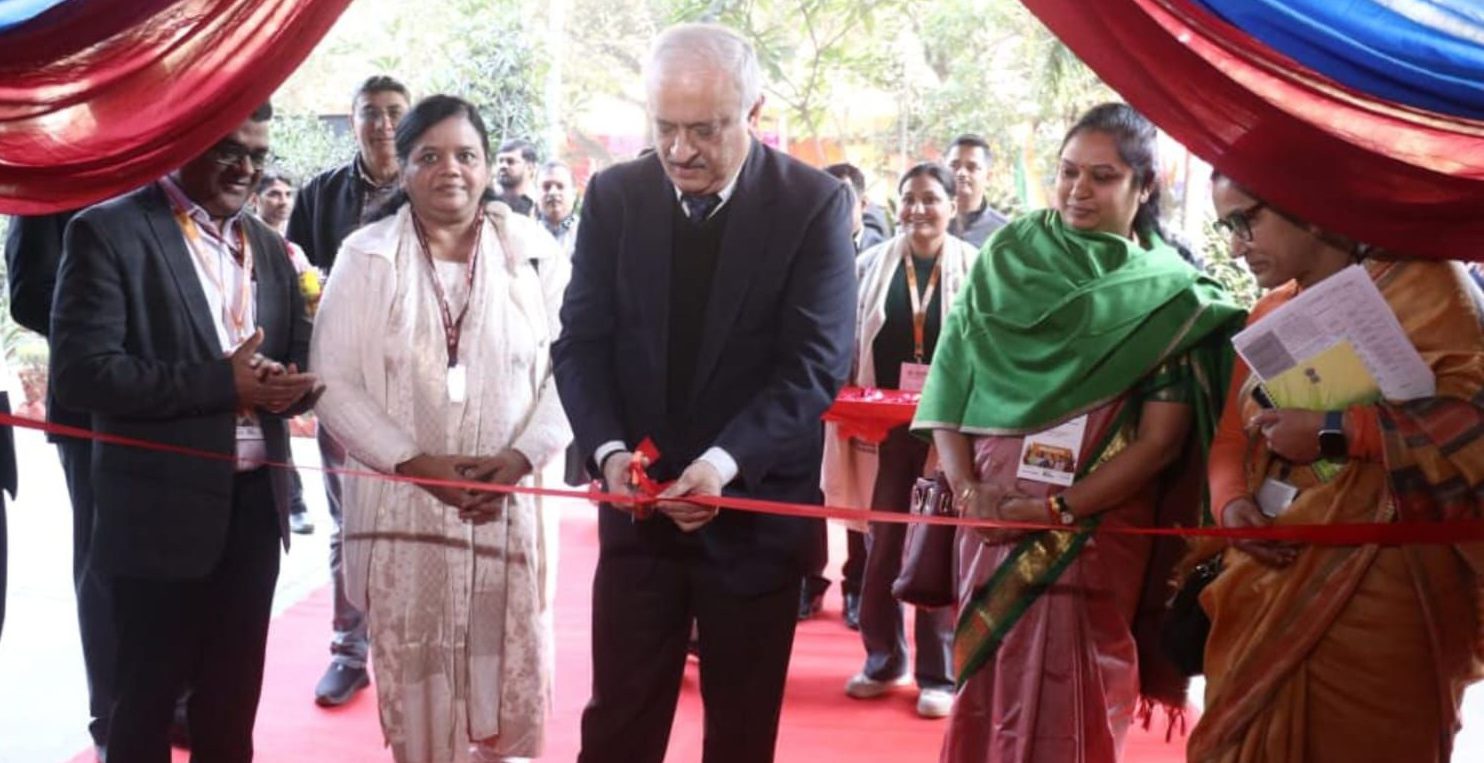 The exhibition served not only as a showcase of grassroots entrepreneurship but also as a live marketplace, with government officials, private buyers and retail representatives interacting directly with farmer groups. Several stalls witnessed brisk sales, hinting at the growing retail appeal of FPO-branded products.
In his keynote address, Secretary Devesh Chaturvedi placed FPOs firmly at the heart of the national agricultural roadmap. He said the government’s objective goes beyond boosting yields and aims to strengthen irrigation efficiency, crop diversification, and post-harvest modernization, with FPOs acting as the “backbone of reform.”
Stressing the need to shift farmers from subsistence systems toward market-driven collectives, he noted: “FPOs are central to improving input access, building better production systems, expanding market opportunities, and unlocking higher incomes for farmers.”
Encouraging corporate chains, processors and agri-buyers present at the event, Chaturvedi urged long-term procurement partnerships with FPOs to create assured marketing channels. He highlighted that Sangam platforms like this are key to bridging farmers with structured markets and scaling business viability for rural producer collectives.
Technical discussions through the day revolved around integrated and natural farming, oilseeds and beekeeping, protected cultivation, micro-irrigation, financing models, and digital agriculture solutions. Specialists from ICAR, National Beekeeping Mission, Kheyti, Nabkisan Finance, and other institutions presented case studies and offered actionable insights for scaling FPO impact.
A session dedicated to success stories sparked strong engagement, as FPO leaders and Kisan Credit Card beneficiaries narrated how collective marketing and better input planning had improved productivity and farmer earnings. Interactive quizzes on governance, fertilizer use and farm management kept the proceedings lively, reflecting the participatory spirit of the event.
The first day wrapped up with a networking meet, allowing FPO representatives to pitch products, explore investment avenues and forge buyer connect. The exhibition will remain open on Day 2, which will feature more technical deliberations and the closing ceremony.
With business-to-business interactions gaining traction and FPOs emerging as the centrepiece of policy and market discourse, Day 1 set the tone for a future where collectivized farmers could occupy a stronger position in agri-value chains, shaping not just yields but incomes and economic resilience across rural India.