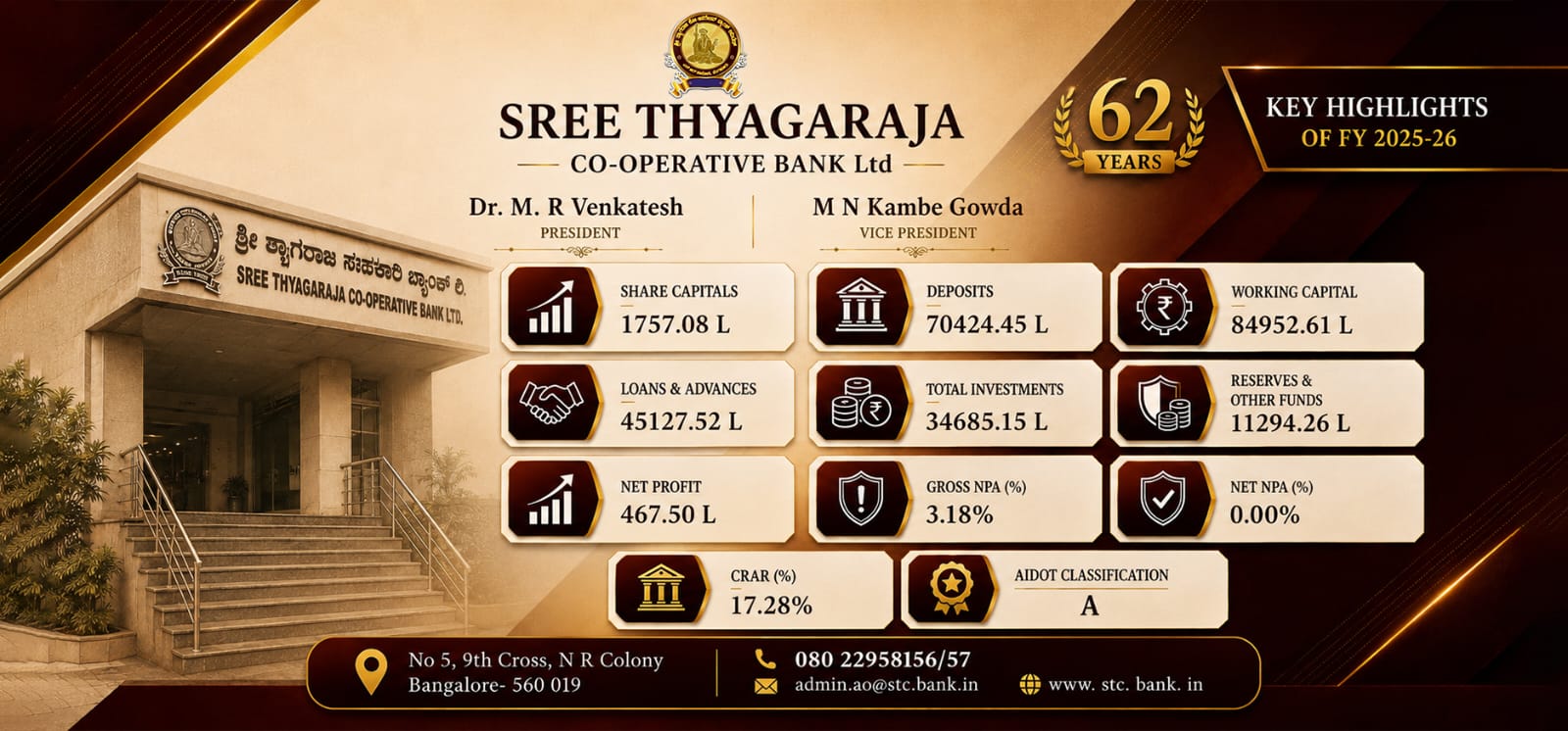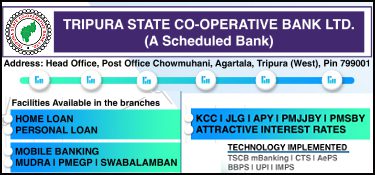







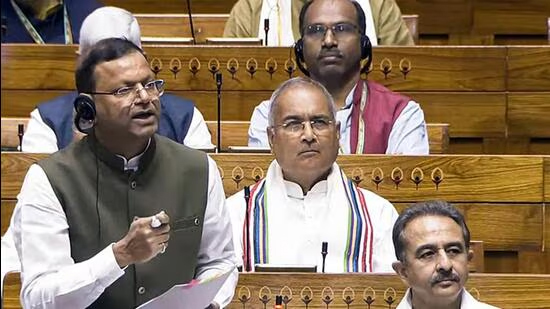
The gross non-performing assets (NPAs) of Urban Cooperative Banks (UCBs) declined to Rs 21,769 crore as on March 31, 2026, the lowest level in the last six years, Union Minister of State for Finance Pankaj Chaudhary informed the Rajya Sabha on Tuesday.
Replying to a question, the minister said UCB NPAs have steadily declined from Rs 37,993 crore in March 2021 to Rs 21,769 crore in March 2026.
The data placed before Parliament also showed that gross NPAs of Public Sector Banks (PSBs) fell from Rs 6.17 lakh crore in March 2021 to Rs 2.46 lakh crore in March 2026, while NPAs of Private Sector Banks declined from Rs 2.02 lakh crore to Rs 1.26 lakh crore during the same period.
The minister said that, aided by comprehensive measures taken by the Government and the Reserve Bank of India (RBI), the gross NPA ratio of Scheduled Commercial Banks has been on a continuous downward trajectory over the last eight years, falling to 2.75% as of March 2024 and further declining to 1.73% by March 2026.
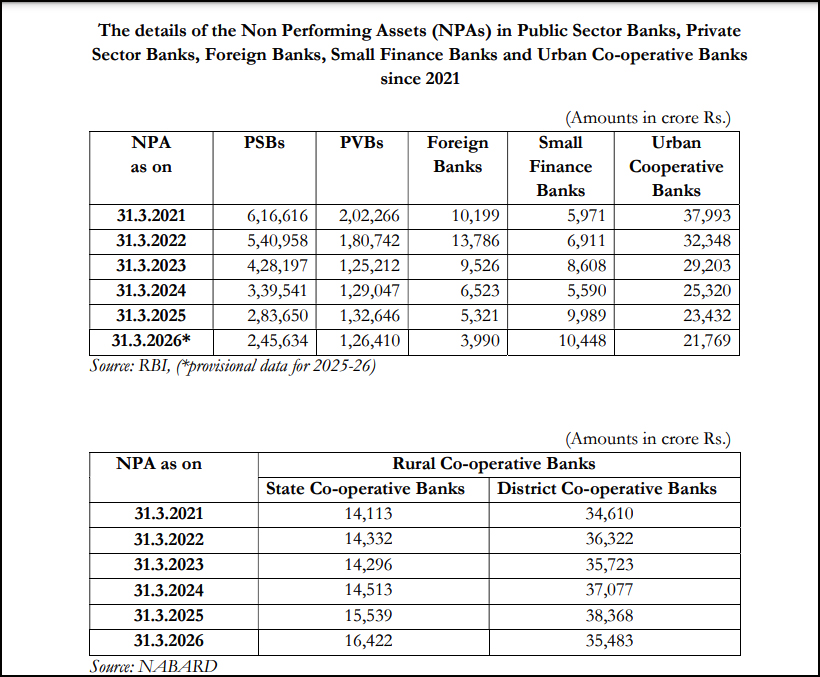 However, the trend was mixed in the cooperative banking sector. According to data provided by NABARD, NPAs of State Cooperative Banks increased from Rs 14,113 crore in March 2021 to Rs 16,422 crore in March 2026. NPAs of District Central Cooperative Banks (DCCBs) stood at Rs 35,483 crore as of March 2026, compared with Rs 34,610 crore in March 2021.
The Ministry of Cooperation informed Parliament that it does not maintain data on NPAs of Multi-State Cooperative Societies (MSCSs).
Explaining the treatment of bad loans, Chaudhary said NPAs are closed only after full recovery or compromise settlements in line with RBI guidelines. He clarified that loan write-offs are merely an accounting exercise and not loan waivers, with borrowers remaining liable for repayment.
The minister said the Government and RBI have strengthened the recovery framework through measures such as the IBC, SARFAESI Act, Early Warning Systems, Stressed Asset Management Verticals, and RBI’s Prudential Framework for Resolution of Stressed Assets.
He also said the MSCS (Amendment) Act and Rules, 2023 introduced safeguards including a Cooperative Ombudsman, Information Officers, and concurrent audits for large multi-state cooperative societies to enhance transparency and detect irregularities early.