






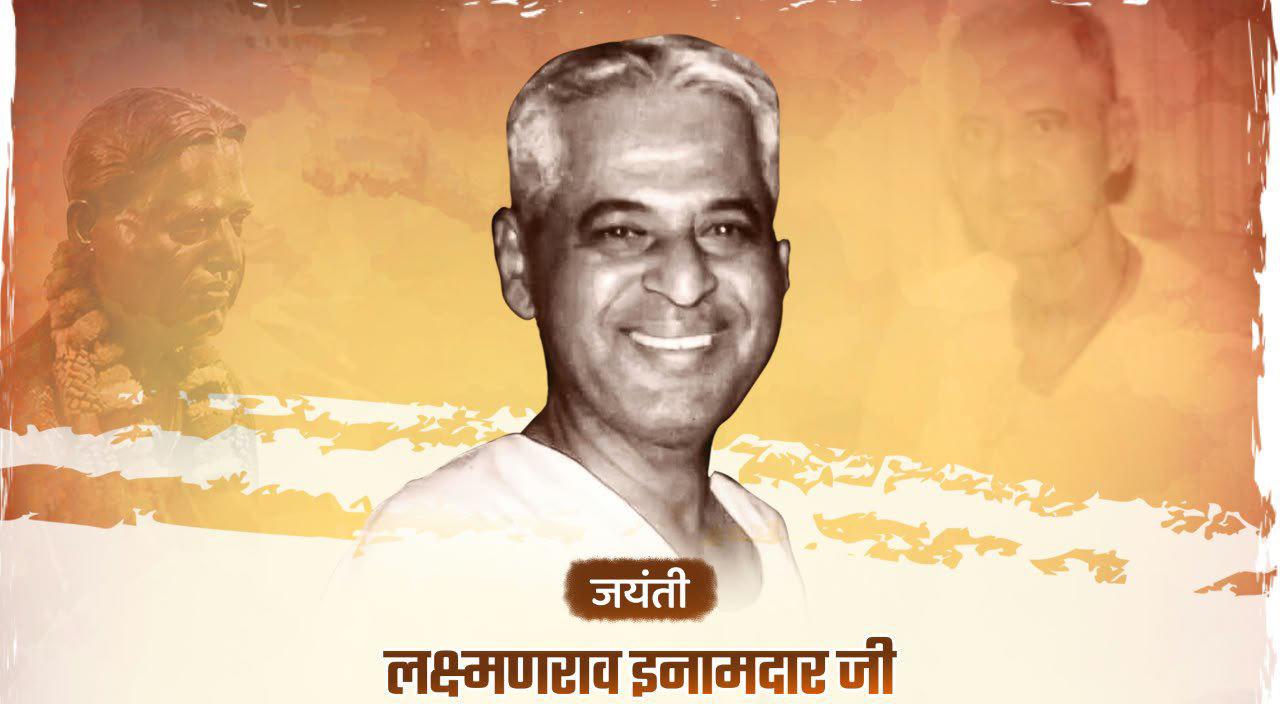
Union Home and Cooperation Minister Amit Shah paid tribute to Lakshmanrao Inamdar, popularly known as ‘Vakil Saheb’, on his birth anniversary, recalling his contribution to national service, organisation-building and the cooperative movement.
In a post on X, Shah said Inamdar gave a new direction and momentum to the cooperative movement in Gujarat and shaped numerous activists as a guardian-like figure. He highlighted Inamdar’s journey from the freedom struggle to the movements against the Nizam’s atrocities and the Emergency, describing his life as an inspiration for all.
Inamdar’s cooperative legacy subsequently found an institutional expression through Sahakar Bharati, which has grown into a nationwide voluntary organisation working to strengthen grassroots cooperatives.
Several Sahakar Bharati leaders took to social media to remember and pay tribute to Vakil Saheb. The organisation, which began its work in the late 1970s, has expanded its network across almost the entire country. Earlier organisational figures put its presence at more than 650 districts in around 28 states, while later reports indicated a footprint of about 700 districts and offices in almost all states.
Its activities now cover cooperative banking and credit, women’s cooperatives, skill development, training, natural farming, policy discussions and efforts to create new cooperative institutions. In recent years, Sahakar Bharati has organised national-level programmes involving cooperators from numerous States and Union Territories and has increasingly engaged with emerging areas of the cooperative economy.
The personality of Vakil Saheb was as distinctive as his organisational contribution. Born in Khatav near Pune in 1917, Inamdar studied law and was known for his simple lifestyle, voracious reading and ability to connect personally with people. He was described as friendly and unassuming, yet possessed a formidable capacity for organisation and mentoring. His early family circumstances taught him the values of caring, sharing and coexistence, qualities that later shaped his approach to cooperation.
He also became an important mentor to Prime Minister Narendra Modi during the latter’s formative years. Modi has repeatedly recalled Inamdar’s influence and dedicated writings to his mentor. At the 2017 centenary celebrations, Modi described Vakil Saheb as among those relatively unknown individuals whose lives embodied the cooperative principle of bringing people together while remaining self-effacing.
Shah’s tribute thus brought renewed attention to a legacy that combines grassroots organisation, personal mentorship and cooperative institution-building. Sahakar Bharati continues to invoke Inamdar’s values through its work of strengthening cooperatives and developing a committed cadre of cooperators across India.