
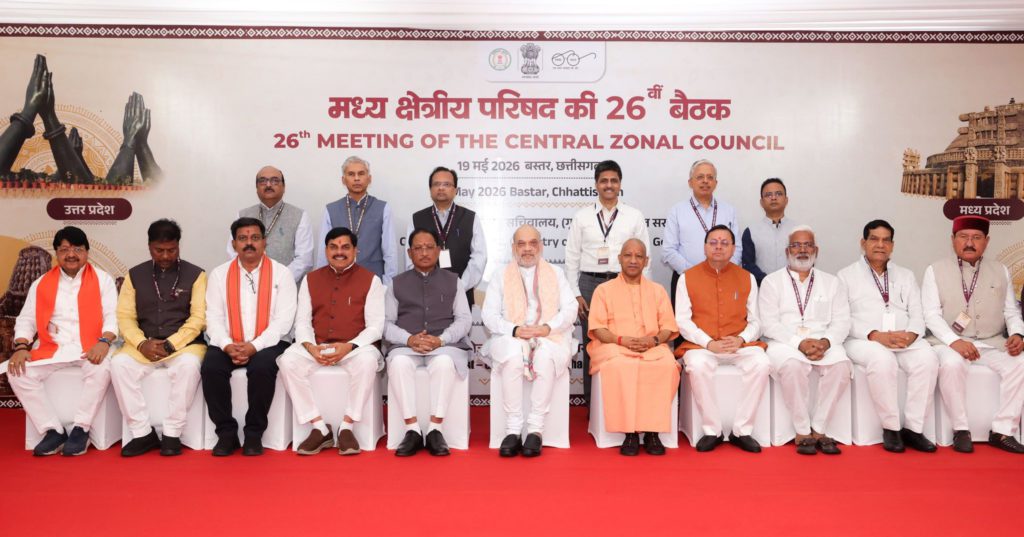
Union Home Minister and Minister of Cooperation Amit Shah has outlined an ambitious cooperative-driven development roadmap for Bastar during his recent visit to the tribal region of Bastar, stressing that cooperatives will play a major role in transforming the local economy and ensuring direct benefits to tribal communities.
While addressing gatherings in Jagdalpur and other parts of Bastar, Shah said forest-based non-timber produce would be linked through a cooperative framework so that “its entire profit reaches the tribal people.”
He emphasised that the region’s vast natural and agricultural resources must generate sustainable livelihoods for local communities rather than middlemen-driven profits.
The union minister also announced plans to strengthen grassroots cooperative institutions in the region through the establishment of Primary Agricultural Credit Societies (PACS) and village dairy systems.
According to Shah, tribal families would be encouraged to participate in cooperative dairy activities, enabling them to market milk across India under a cooperative structure.
The cooperative push forms part of a broader development strategy being pursued in Bastar after years of Left Wing Extremism.
Shah stated that nearly 70 out of around 200 security camps established in the region would now be transformed into “Veer Shahid Gundadhur Seva Dera” centres aimed at delivering governance, welfare and economic services to remote tribal populations.
The Home Minister argued that lack of development in Bastar was not the cause but rather the consequence of Naxal violence, which prevented infrastructure, healthcare, education and economic activity from reaching tribal areas for decades. He said the government now intends to replace fear and violence with development, cooperative participation and employment generation.
Shah also linked the cooperative expansion plan with Prime Minister Narendra Modi’s “Vocal for Local” initiative, highlighting efforts to promote Bastar’s tribal products, handicrafts and forest produce in wider national and international markets.
He pointed to initiatives such as Bastar Pandum, which showcases local tribal culture, cuisine, crafts and traditions, as part of a larger strategy to economically empower indigenous communities.
Officials believe the cooperative-led approach could open new avenues of income generation for tribal households through forest produce procurement, dairy activities and value-added rural enterprises.
The Centre views the initiative as a key step toward integrating Bastar’s tribal economy with mainstream development while preserving the region’s traditional culture and identity.