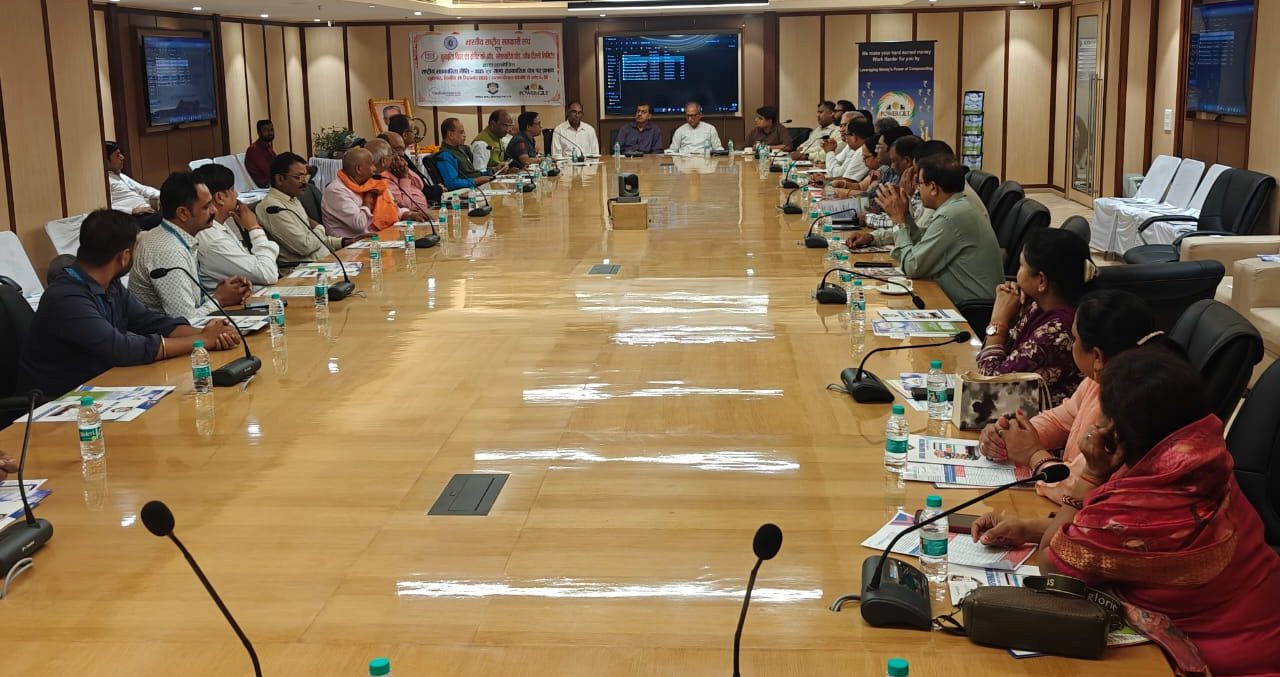






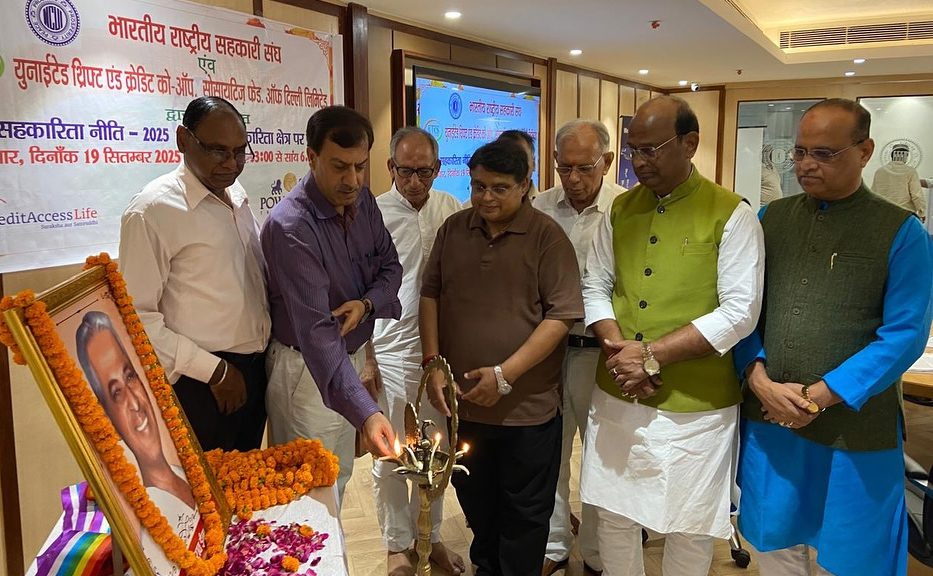
A national seminar on the theme “National Cooperative Policy 2025 and its Impact on State Cooperatives” was organized on Friday at the board room of the National Cooperative Union of India (NCUI). The event was jointly hosted by the United Thrift and Credit Cooperative Societies Federation of Delhi Ltd. and NCUI, bringing together key stakeholders, policymakers, and representatives from cooperative institutions across the country.
The programme was attended by prominent dignitaries including Lehkraj, Additional Registrar of Cooperative Societies, Delhi; Dinanath Thakur, Patron of Sahakar Bharati; Sunil Gupta, President, United Thrift and Credit Cooperative Societies Federation of Delhi Ltd.; Ved Prakash Sethia, Executive Director, NCUI; Ram Iqbal, Chairman, Necaab; Santosh Kumar Sharma, former Director, NCDC; Dhananjay Singh, Director, NCDC; Lakshmi Das, President, National Federation of Urban Cooperative Banks; T. Prasad Rao Dora, Chairman, FISCOFED; Balwan Gautam, Organization Head, Sahakar Bharati Delhi; and several other senior leaders from cooperative federations.
In his address, Federation President Sunil Gupta said the National Cooperative Policy 2025 has been announced under the guidance of Prime Minister Narendra Modi and Union Cooperation Minister Amit Shah.
He emphasized that this landmark policy aims to make cooperatives a driving force for “Sahkar se Samriddhi” in building a developed India by 2047. The policy prioritizes legal reforms, digitization, and financial empowerment while ensuring inclusive participation of women, youth, and marginalized communities.
Sahakar Bharati’s national patron Dinanath Thakur observed that cooperation has been a part of Indian culture since ancient times, fostering unity and collective progress. He noted that the government has taken several steps to strengthen the sector, including amendments to the Multi-State Cooperative Act, creation of new PACS, computerization of societies, formation of export, organic, and seed cooperatives, and initiatives like cooperative taxis, insurance schemes, and the establishment of Tribhuvan Cooperative University.
NCUI Executive Director Ved Prakash Sethia explained the broader objectives of the policy, stating that it provides a clear roadmap to strengthen cooperatives as an engine of economic growth leading to a developed India by 2047.
Additional Registrar Lehkraj stressed that Delhi’s cooperative department is committed to aligning with the national framework, bringing transparency through legislative reforms, addressing financial challenges, and expanding membership in cooperative bodies.
Other speakers emphasized urban cooperative bank reforms, simplifying procedures for branch expansion, financial restructuring, and promoting cooperative housing redevelopment with modern amenities such as solar power and rainwater harvesting.
The event also paid tribute to Sahakar Bharati founder Lakshman Rao Inamdar on his birth anniversary. The programme was conducted by Federation General Secretary Vishnu Pal Bansal, and concluded with a vote of thanks by Vice President Pravesh Kumar Gupta.