





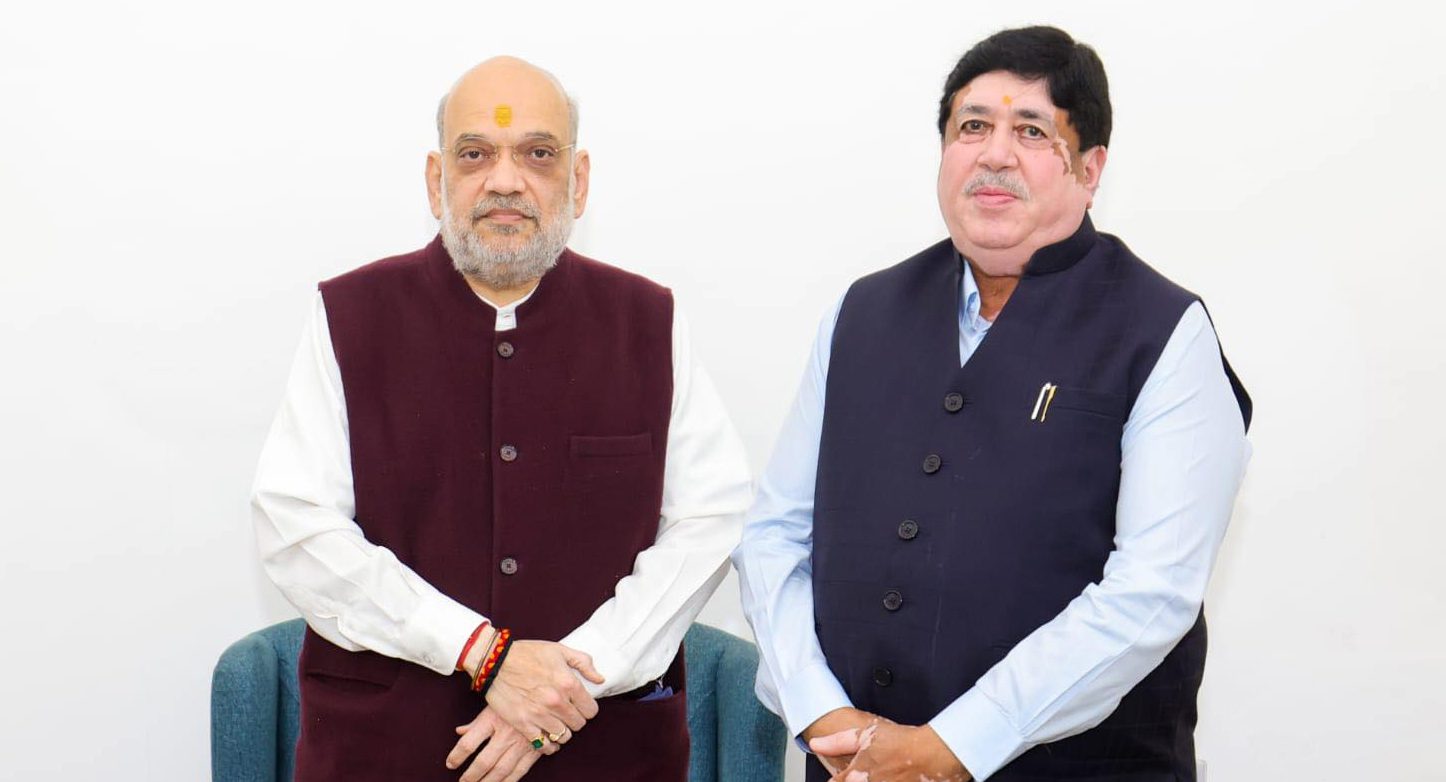
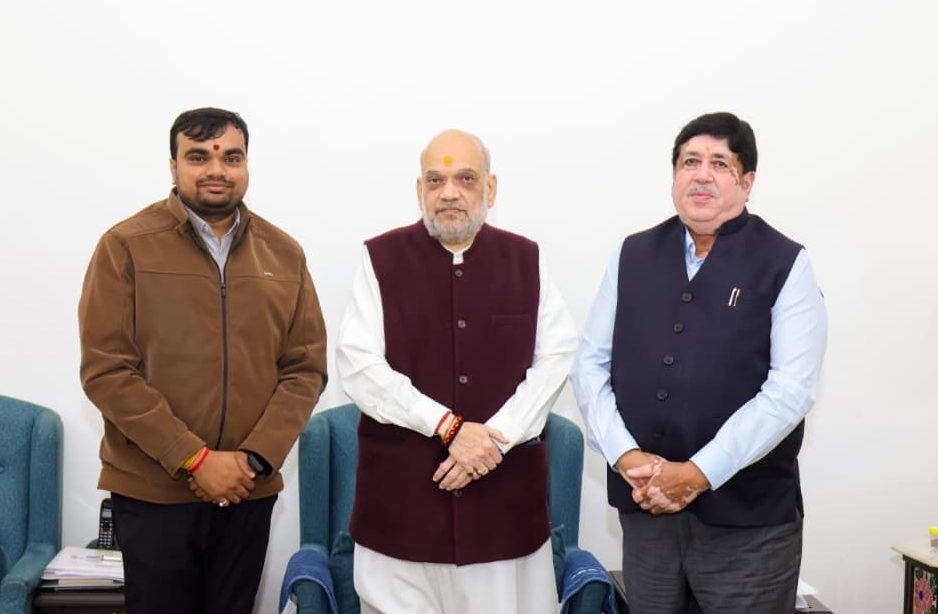
Senior cooperator Dileep Sanghani met Union Home and Cooperation Minister Amit Shah at his Delhi residence on Thursday to convey New Year greetings and seek approval for the long-pending elections of the National Cooperative Union of India (NCUI), the apex body of cooperatives in the country.
Speaking to Indian Cooperative after the meeting, Sanghani praised Shah’s “Cooperative First” approach and announced a major breakthrough. “There is good news. Amit bhai has given the green signal to proceed with preparations for the NCUI elections,” Sanghani said.
Sanghani recalled that he had earlier written to the minister highlighting the inordinate delay in conducting NCUI elections. Acting on the matter, Shah invited him to his residence on Thursday morning and informed him that the amended NCUI bylaws, as approved by the Annual General Meeting (AGM), have now received clearance from the Ministry.
The NCUI Board completed its tenure in November last year, but elections could not be held due to pending approval of amendments to the bylaws, first passed by the Board and later ratified by the AGM. With the Ministry’s approval now in place, the electoral process is expected to move forward.
The amended bylaws bring significant structural reforms, particularly in voting and representation. Earlier, eight members from State Cooperative Unions and Union Territories were grouped unevenly, offering limited and imbalanced regional representation.
Under the new framework, these unions are reorganized into seven clearly defined constituencies, each electing one member, ensuring equitable regional balance across North, East, West, South, and Union Territories.
 Representation of national-level cooperative societies and federations has been increased from four to five members, elected in accordance with the Multi-State Cooperative Societies (MSCS) Act, 2023, strengthening the role of apex institutions in NCUI’s governance.
State and national cooperative federations will now have six seats, covering key sectors such as cooperative banking, agriculture and rural development banks, urban cooperative banks, marketing federations, and specialized areas including housing, dairy, sugar, consumer cooperatives, spinning mills, fisheries, labour, tribal development, and handloom and industrial cooperatives.
Multi-State Cooperative Societies will elect two representatives, one from North and Eastern states and Union Territories, and another from Western and Southern states and Union Territories, ensuring fair and balanced representation.
Election rules have also been streamlined. Proposers and seconders must belong to the same group, member organisations must have cleared subscriptions for the previous year, and entities absent from three consecutive general body meetings without approval will be ineligible to participate.
Leadership reforms include retaining election of the President by the Council while reducing the number of Vice-Presidents from two to one, aimed at improving governance efficiency.
Sources, however, note that earlier objections had been raised by some quarters, alleging that the existing bylaws were inconsistent with cooperative principles and provisions of the amended MSCS Act, 2002, and did not ensure equal treatment of members.