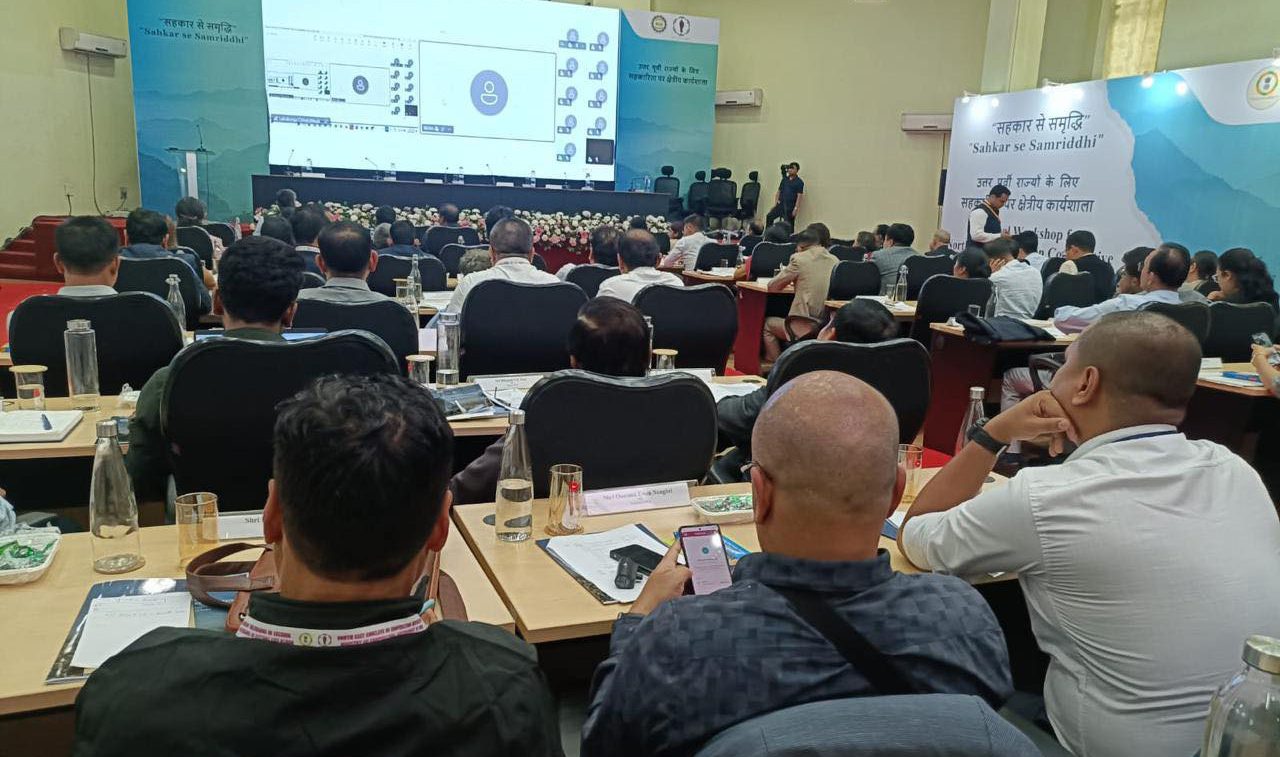







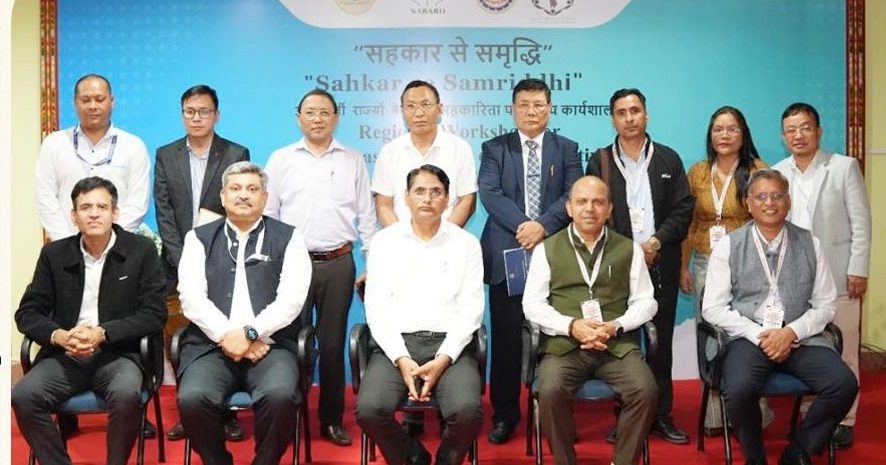
In a major push to expand the cooperative movement into India’s remote and border regions, the Ministry of Cooperation organised the first-ever Regional Cooperative Reform Conference in Mizoram, bringing together North-Eastern states to deliberate on cooperative-led development under the vision of “Sahkar se Samriddhi”.
Held in Aizawl, the conference marked the second regional workshop in the nationwide cooperative reform initiative launched under the guidance of Prime Minister Narendra Modi and led by Union Home Minister and Cooperation Minister Amit Shah. The first such regional conference had earlier been organised in Jaipur.
The Ministry described the event as a milestone in taking cooperative reforms to the farthest corners of the country, particularly the geographically challenging North-East. Officials said the conference reflected the government’s commitment to ensuring that cooperative development reaches remote rural and border areas through localized economic models and community participation.
Representatives from all eight North-Eastern states, Assam, Arunachal Pradesh, Mizoram, Meghalaya, Manipur, Nagaland, Tripura and Sikkim, participated in the conference along with officials from institutions such as National Bank for Agriculture and Rural Development, National Cooperative Development Corporation, National Agricultural Cooperative Marketing Federation of India, NCCF, NDDB, NFDB and NEDFi.
The participating states presented detailed reports on progress in strengthening Primary Agricultural Credit Societies (PACS), dairy cooperatives, fisheries, grain storage infrastructure, cooperative banking and value-chain development. Discussions also focused on improving exports and market access for organic and indigenous products from the North-East, which the Ministry identified as one of the region’s biggest strengths.
Addressing the concluding session, Secretary, Ministry of Cooperation, Dr. Ashish Kumar Bhutani, emphasized that cooperative reforms in the North-East require customized approaches rather than uniform national templates. He said the region’s geographical isolation, connectivity issues and socio-economic conditions demand flexible implementation models.
“A one-size-fits-all approach cannot work effectively in the North-East,” he observed, stressing the need for state-specific cooperative policies and adaptive operational guidelines.
Dr. Bhutani said the Ministry has been engaging regularly with states through video conferences and review meetings to address implementation challenges. He assured the North-Eastern states of full support in capacity building, manpower assistance and strengthening of cooperative banking institutions.
Technology modernization emerged as one of the major focus areas during the conference. The Ministry highlighted plans to standardize technology platforms across urban cooperative banks to improve operational efficiency and reduce costs. Cyber security and digital readiness were also identified as essential priorities for cooperative institutions.
The conference further reviewed implementation of the World’s Largest Grain Storage Plan, which the Ministry said would be pursued in mission mode across North-Eastern states to improve agricultural infrastructure and credit outreach through cooperatives.
Officials also underlined the importance of strengthening branding, packaging and market linkages for organic and indigenous products through national cooperative networks and initiatives such as Bharat Organics. Cooperative-led exports, rural entrepreneurship and local value chains were identified as key drivers for economic growth in the region.
A special session focused on reviving the cooperative sector in the North-East. The Ministry informed that a dedicated study has been sanctioned to NEDFi to examine cooperative revival models in three North-Eastern states, with successful practices later to be replicated across the region.
Chief Secretary of Mizoram K.R. Meena welcomed the participants and assured full support from the state government in implementing cooperative reforms and strengthening grassroots institutions.
The conference concluded with a collective commitment by the Centre, states and cooperative institutions to deepen cooperative-led rural development and contribute to the vision of Viksit Bharat 2047.