
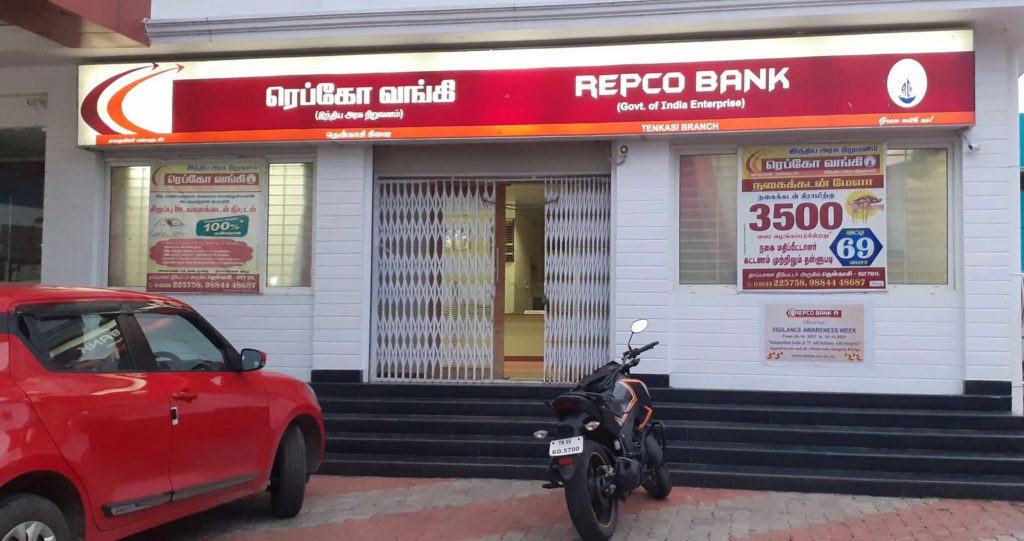
In a significant ruling, the Cooperative Ombudsman has upheld the decision of Repco Bank to restrict the allotment of additional shares to its ‘A’ Class members, holding that additional shares cannot be claimed as a matter of right.
The order came while dismissing a complaint filed by M. Dinesh, an ‘A’ Class member of Repco Bank (Repatriates Cooperative Finance & Development Society Ltd.), who had sought allotment of additional shares worth Rs 10,000 after already holding the prescribed four shares worth Rs 100.
Dinesh contended that the society’s refusal was based solely on a Board resolution passed on March 25, 2017, and not on any provision of its bye-laws or the statute. He also argued that since the society’s paid-up share capital stood at Rs 152.62 crore against an authorized share capital of Rs 500 crore, members should be allowed to voluntarily subscribe to additional shares.
In its response, Repco Bank stated that its Board had resolved in 2017 that every ‘A’ Class member would be allotted only four shares of Rs 25 each, amounting to Rs 100, solely to avail the services of the society. It further informed the Ombudsman that no additional shares had been allotted to any member since the resolution came into effect, thereby maintaining uniformity in the allotment of shares.
After examining the submissions and the relevant bye-laws, Cooperative Ombudsman Alok Agarwal observed that the society’s bye-laws empower the Board to determine the maximum amount of share capital that a member may hold from time to time. Accordingly, the Board’s decision restricting ‘A’ Class members to four shares was found to be in conformity with the bye-laws.
The Ombudsman also rejected the complainant’s contention that the difference between the authorized share capital and the paid-up share capital entitled members to seek additional shares. The order observed that it is the prerogative of a cooperative society to decide the amount of share capital required for its smooth functioning.
Holding that the society had uniformly applied its policy to all members, the Ombudsman ruled: “Any claim for additional shares cannot be a matter of right and the society is justified in its action in denying the same.” The complaint was accordingly dismissed.
The order clarifies that where a society’s bye-laws empower its Board to determine the maximum shareholding of members, additional shares cannot be claimed as a matter of right merely because the authorized share capital exceeds the paid-up share capital. It also reinforces that such decisions are valid when applied uniformly to all members.