






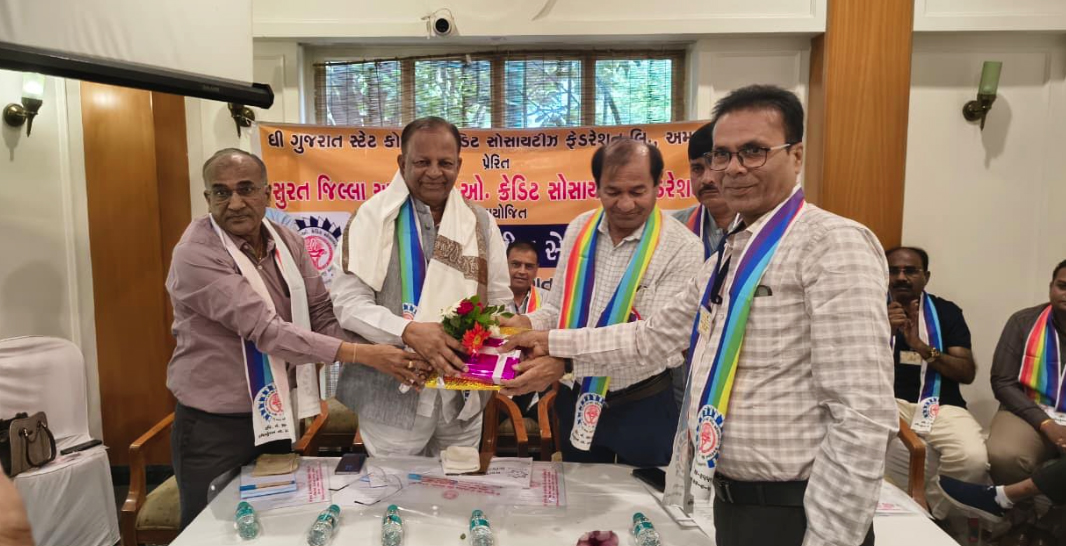
Cooperative credit societies must move beyond the traditional focus on profit, deposits, share capital and lending and embrace a wider social-service mission, Maharashtra State Cooperative Credit Societies Federation Chairman Omprakash Koyte said at a two-day educational training seminar held at Shirdi, Maharashtra.
The seminar, organised on August 22-23 by the Surat District Urban Cooperative Credit Societies Federation under the inspiration of the Gujarat State Cooperative Credit Societies Federation Ltd., Ahmedabad, brought together representatives of credit societies from Surat and Tapi districts to discuss the future direction of the sector.
Inaugurating the programme, Koyte said the rapid growth of credit societies in Gujarat after Maharashtra demonstrated the potential of the cooperative credit movement. However, he stressed that merely pursuing profits amounted to business development and did not fully reflect the cooperative philosophy.
He urged societies to discard self-interest, cultivate altruism and strengthen their spirit of service to society. Recalling the history of Gujarat’s cooperative credit movement, he cited Anyoanya Credit Society of Vadodara, established with 11 directors with social service as its primary objective.
Koyte proposed the creation of a network of specialised “Sahakar Mandirs” or cooperative service centres. These could include clothing centres to collect and distribute usable garments to needy people, industrial centres where women could manufacture products such as camphor and incense sticks, and study centres providing students with library-like spaces.
He also suggested cooperative childcare centres and drinking-water centres at bus stands to provide affordable or free community services. Such initiatives, he said, could help credit societies establish a stronger connection with the communities they serve.
Calling for diversification, Koyte said credit societies should explore new areas of business, including gold loans, while expanding their operations into rural areas. He stressed that rural expansion should generate employment and opportunities for young people and help reduce migration to urban centres.
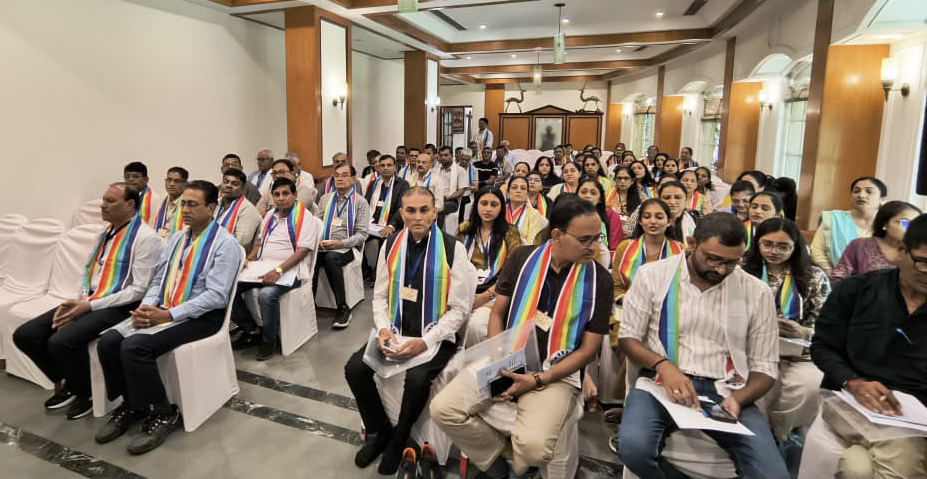 Maharashtra State Cooperative Credit Societies Federation CEO Surekha Lavande said rural depopulation was becoming a serious concern in both Maharashtra and Gujarat as people migrated to cities in search of livelihoods. Credit societies, she said, could reverse this trend by promoting economic and community activities in villages and creating local employment opportunities, particularly for people with limited formal education.
Lavande also urged societies to “know their customers” and provide satisfactory services. In the digital era, she emphasised, computerisation, effective marketing and customer trust were essential for sustainable growth. She further stressed 100% loan recovery, maintaining NPA benchmarks and adapting service models to changing customer needs.
The seminar also underlined the importance of stronger cooperation between Gujarat and Maharashtra credit societies. Koyte called for greater exchange of experiences and ideas and joint efforts towards developing laws and regulations beneficial to the sector in both states.
The programme was attended by Dushyantsinh Vaghela, Chief Executive of the Gujarat State Cooperative Credit Societies Federation, and other cooperative representatives. Following the seminar, delegates visited Samata Pat Sanstha in Kopargaon, Maharashtra, where they studied its operations, branch network, capital structure, deposits, profitability, retail activities and social-service initiatives. Koyte and society manager Sachin Bhattad shared details of its growth and institutional model.