
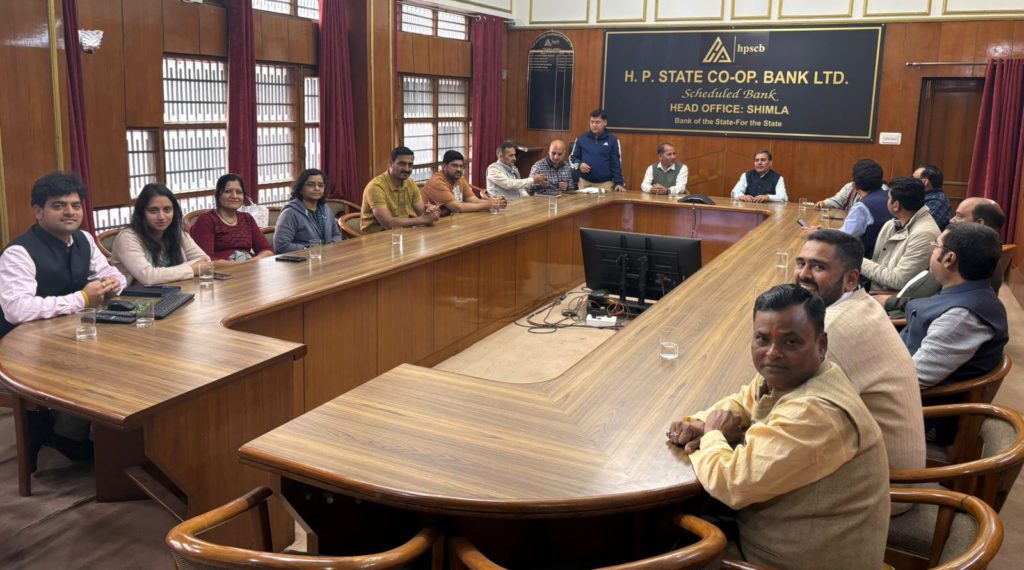
The Cooperative Bank of India (COBI) successfully conducted a three-day training programme on “Innovative Technology and RBI/NABARD Norms” at ACSTI Shimla from April 27–29, bringing together cooperative banking professionals from across four states.
The programme was inaugurated by Devendra Singh Shyam, Chairman of HP State Cooperative Bank and Vice Chairman of National Federation of Urban Cooperative Banks and Credit Societies.
In his keynote address, Shyam flagged critical gaps in the implementation of IT systems and regulatory compliance with Reserve Bank of India and NABARD guidelines.
He warned that weak adoption of technology has exposed cooperative banks to rising competition, cyber frauds, and regulatory penalties, ultimately eroding public trust. Emphasizing the urgency of digital transformation, he noted that such training initiatives are essential for strengthening cyber resilience and improving compliance standards.
Shyam also highlighted two flagship initiatives of the HP State Cooperative Bank, collateral-free loans for women entrepreneurs and education-focused financial schemes, both of which have shown near 100% recovery rates and strong public acceptance.
Participants later visited the bank on April 28 to gain hands-on insights into the implementation of these successful models, with many expressing intent to replicate them.
The inaugural session was also addressed by Sanjay Singh Chauhan, Chairman of the HP State Cooperative Agriculture and Rural Development Bank, who described innovative technology as a “pressing necessity” for the cooperative banking sector.
He urged experts to address operational challenges faced by banks through practical training modules.
Course Director Dr. V.K. Dubey underlined the importance of active participation and knowledge exchange to overcome operational bottlenecks. The programme featured expert sessions by S.C. Pradhan (cyber security), Gopal Dhakan (regulatory compliance), and senior officials from the HP State Cooperative Bank.
Key topics included cyber security frameworks, fraud detection, RBI norms, digital banking systems such as NEFT, RTGS, UPI, IMPS, mobile banking innovations like UPI Lite and 123 Pay, and modern payment solutions including micro ATMs and PoS systems.
A total of 21 participants attended the programme and expressed high satisfaction with the content and delivery. Many recommended extending the duration to allow deeper learning.
During the valedictory session, officials of ACSTI, including Course Coordinator Megha Thakur, collected participant feedback and emphasized the need for more such capacity-building initiatives. Certificates and training kits were distributed to all attendees.
The programme marks a significant step toward strengthening India’s cooperative banking ecosystem through technology adoption, regulatory compliance, and skill enhancement.