






The Ministry of Cooperation is exploring a dedicated digital commerce ecosystem for cooperatives, with an online platform proposed in association with the Open Network for Digital Commerce (ONDC) to take cooperative products to a much wider consumer market.
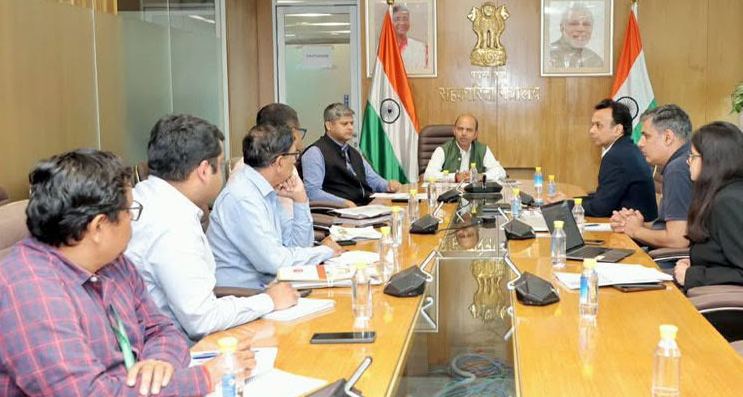
Dr. Ashish Bhutani, Secretary, Ministry of Cooperation, chaired a meeting with ONDC representatives at Atal Akshay Urja Bhawan, New Delhi, on October 6 to discuss the proposed e-commerce platform for cooperatives. Joint Secretary Raman Kumar, senior ministry officials and representatives of key cooperative institutions also participated in the deliberations.
The discussions focused on creating a robust digital ecosystem that can connect cooperative producers directly with consumers while strengthening market access, value chains, payments, logistics and technology.
The proposed initiative could be significant for cooperatives because many of them have established production capacities and strong grassroots networks but limited access to organised national markets.
An online channel can potentially help products such as dairy, agricultural commodities, processed foods, handloom and handicrafts, organic products and other cooperative-made goods move beyond local markets, exhibitions and conventional distribution networks.
The experience of ONDC indicates the potential of such an approach. ONDC says its open-network model enables sellers to become discoverable across multiple buyer applications rather than remaining dependent on a single e-commerce platform. It also provides digital cataloguing, connected logistics and onboarding support.
For cooperatives, this could translate into wider customer reach, improved product visibility and potentially lower dependence on intermediaries. ONDC’s own material identifies limited online visibility, restricted market access and high customer-acquisition costs among the barriers faced by small businesses, while its open network is designed to provide access to wider customer bases and interoperable logistics and payment services.
The platform could also help smaller cooperatives overcome some of the practical hurdles of entering e-commerce. Cataloguing, packaging, warehousing, order management, digital payments and last-mile delivery require capabilities that many grassroots organisations may not possess individually.
ONDC’s existing initiatives for farmers, artisans and small producers demonstrate models involving onboarding, catalogue creation, fulfilment and shared logistics. Its Amazing India programme, for instance, currently connects 1,500 FPOs and more than 50,000 farmers, while providing support in packaging, warehousing and logistics.
Another potential advantage is scale. A cooperative could digitise its catalogue once and potentially make its products discoverable across multiple buyer applications, giving even relatively small producer organisations access to customers outside their immediate geography.
The Ministry’s proposed initiative therefore fits into the broader objective of using technology to strengthen cooperative value chains and expand income opportunities for members. By combining the production strength of cooperatives with digital discovery, payments and logistics, the initiative could create a new route from village-level producers to national consumers.
The discussions are in line with the government’s broader “Sahkar Se Samriddhi” vision and its emphasis on making cooperatives more competitive, market-oriented and digitally enabled.