








Union Home Minister and Minister of Cooperation Amit Shah laid the foundation stone for what will become the world’s largest curd manufacturing plant under the Amul Bengal Dairy Project in Kolkata, describing it as a landmark initiative to usher in “White Revolution 2.0” in West Bengal.
The project, coming up at Howrah Food Park with an investment of around Rs 700 crore, is expected to significantly transform the state’s dairy economy while strengthening the cooperative movement.
Addressing a large gathering, Shah said the project reflects Prime Minister Narendra Modi’s vision of “Sahkar Se Samriddhi” and will play a major role in realizing the dream of a prosperous “Sonar Bangla.”
He said the first phase of the plant will process 10 lakh litres of milk daily, benefiting nearly 1.20 lakh milk-producing livestock rearers. Once fully operational, the facility will have a processing capacity of 30 lakh litres of milk per day, making it the largest curd manufacturing plant in the world.
Shah thanked the West Bengal Government for providing 30 acres of land free of cost for the project, saying the decision would help create a robust dairy ecosystem and ensure remunerative prices for nearly 2.5 lakh livestock rearers.
He expressed confidence that Bengal’s famous *mishti doi* produced at the plant would reach consumers across the country, from Kashmir to Kanyakumari, giving the state a distinct national identity in value-added dairy products.
 Highlighting the cooperative model, Shah said Amul remains the world’s leading cooperative institution, with over 36 lakh women members and more than 18,600 village dairy cooperative societies. He emphasized that nearly 87 paise of every rupee spent by consumers on Amul products reaches milk producers directly, demonstrating the strength of the cooperative system in ensuring equitable wealth distribution.
The Union Minister also announced a series of initiatives aimed at strengthening dairy and cooperative infrastructure in West Bengal. These include establishing an animal breed improvement centre, setting up a Sex-Sorted Semen facility to improve milk productivity, expanding dairy cooperatives, and ensuring that benefits of over 70 farmer-centric schemes of the Ministry of Cooperation reach farmers in the state within six months. He also noted that the office of the Registrar of Cooperative Societies in West Bengal has been fully computerized, improving transparency and ease of governance.
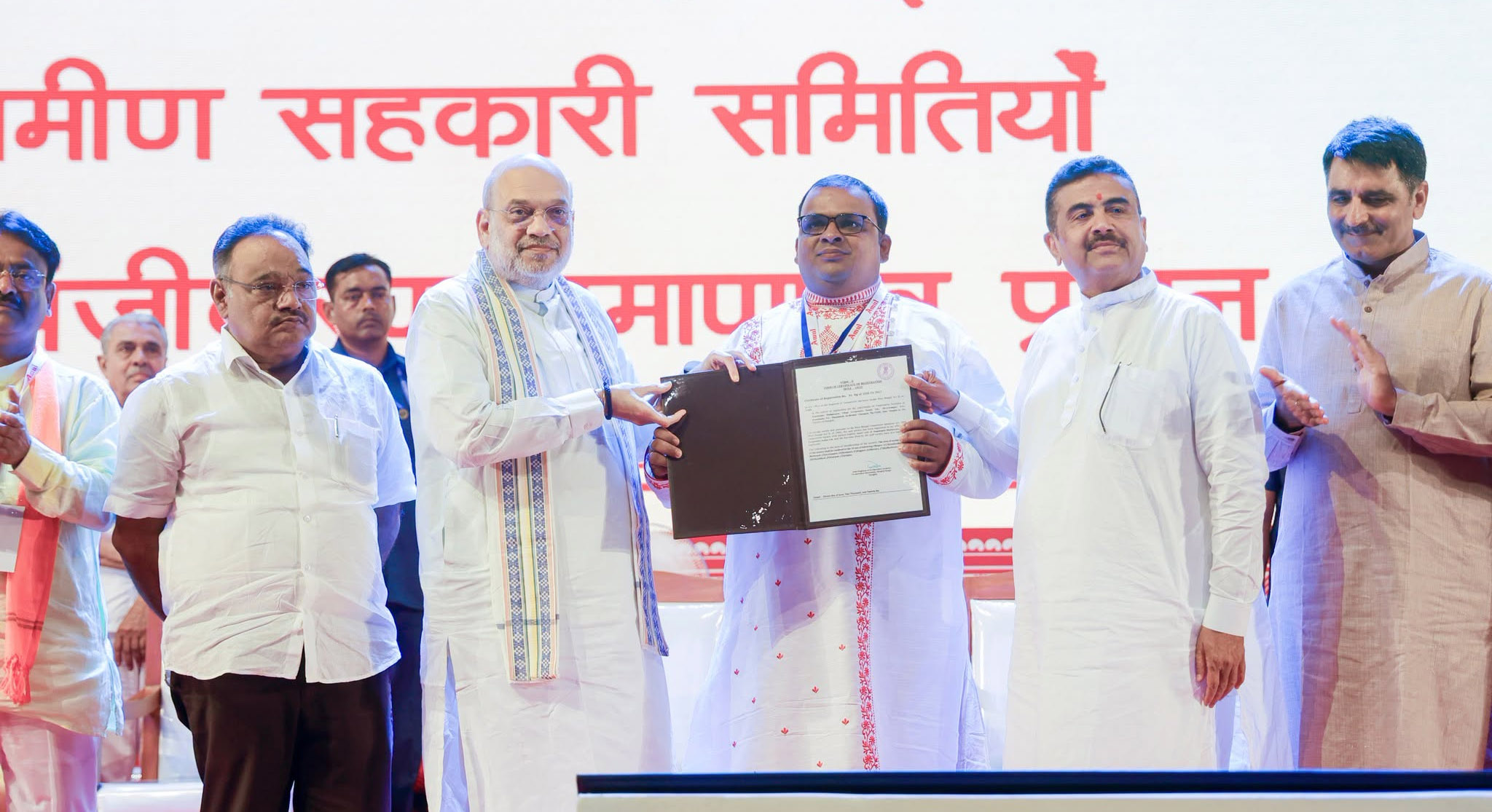
During the event, foundation stones for 10 cooperative warehouses were laid and storage facilities with a combined capacity of 1,400 metric tonnes were inaugurated to strengthen post-harvest infrastructure.
Shah also announced an MoU to integrate West Bengal’s taxi operators with the Bharat Taxi platform under the “Sarathi” model, enabling drivers to become shareholders and beneficiaries of the cooperative enterprise rather than remaining merely service providers.
The Amul Bengal Dairy Project will produce a wide range of dairy products, including packaged milk, UHT milk, curd, paneer, ghee, sweets, ice cream and flavoured milk. Besides creating extensive processing and cold-chain infrastructure, the project is expected to generate employment, strengthen dairy cooperatives, provide stable markets for milk producers and significantly enhance rural incomes.
Shah expressed confidence that with Bengal’s abundant water resources and fertile land, the state has immense potential to become a major dairy hub over the next 15 years, marking the beginning of a new chapter in India’s cooperative-led White Revolution.