






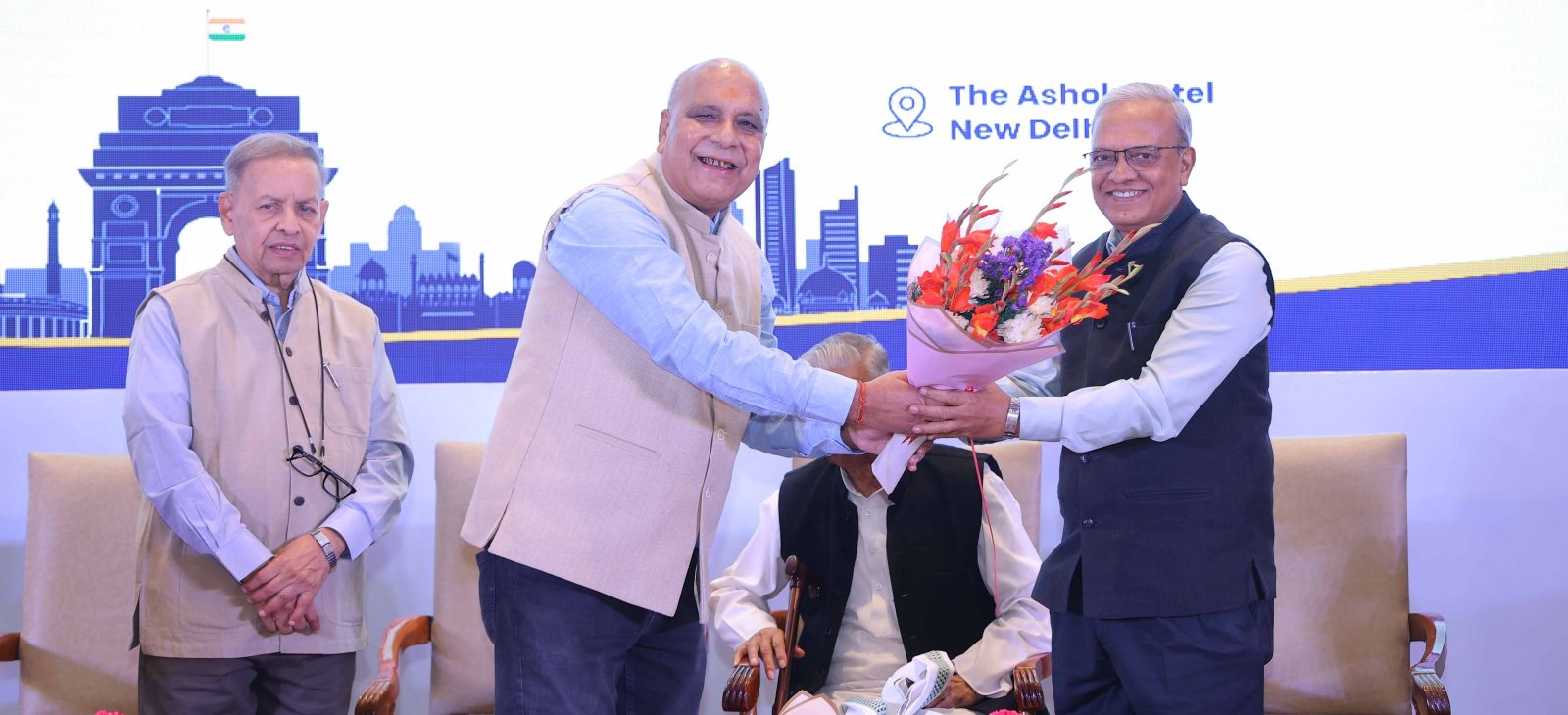
Speaking at the Indian Cooperative Summit & Excellence Awards 2026, held on Thursday at Hotel Ashok in New Delhi, Singh described the Authority’s performance as encouraging and acknowledged the contribution of Indian Cooperative in taking election-related information to every corner of the country.
Singh was particularly appreciative of the portal’s consistent coverage of CEA activities, saying that even small notifications issued by the Authority received prominent publicity through Indian Cooperative. This, he felt, had helped disseminate important information among cooperative leaders, members and stakeholders who otherwise might not have been aware of developments concerning elections.
“Even our small notifications are carried prominently by Indian Cooperative,” Singh remarked, acknowledging the portal’s role in giving visibility to the Authority’s work.
His appreciation assumes significance because cooperative elections, despite being central to democratic functioning, have traditionally received limited attention in mainstream media. By regularly reporting election schedules, notifications, developments and results, Indian Cooperative has helped make the electoral process more visible and accessible to the wider cooperative fraternity.
The CEA itself represents an important institutional reform introduced through amendments to the Multi-State Cooperative Societies Act, 2002, in 2023. Notified on March 11, 2024, the Authority was entrusted with conducting elections of multi-state cooperative societies and supervising, directing and controlling the preparation of electoral rolls.
The Cooperative Election Authority (CEA) has conducted more than 300 elections in the cooperative sector in a relatively short span, while another 100 elections are currently underway, its Chairperson D K Singh said, highlighting the institution’s growing role in strengthening democratic governance in multi-state cooperative societies.
Since its constitution, the Authority has been working to bring greater regularity, transparency and accountability to cooperative elections. Its responsibilities extend beyond merely conducting polls. Preparing electoral rolls, ensuring compliance with statutory provisions and overseeing elections of boards of directors and office-bearers are also part of its mandate.
The latest figure of more than 300 completed elections, along with 100 currently in progress, indicates the scale of work undertaken by the Authority. The achievement is particularly noteworthy considering the diverse nature of multi-state cooperatives, their membership structures and the procedural complexities involved in conducting elections across different states.
The CEA’s intervention is aimed at ensuring that cooperative institutions function through elected representatives rather than allowing electoral processes to remain delayed or uncertain.
Singh’s remarks at the summit also highlighted an often-underestimated dimension of institutional reform: communication. An authority may issue notifications and conduct elections, but their wider impact depends considerably on how effectively information reaches stakeholders. In this respect, Indian Cooperative has emerged as an important communication bridge between the Authority and the cooperative community.