
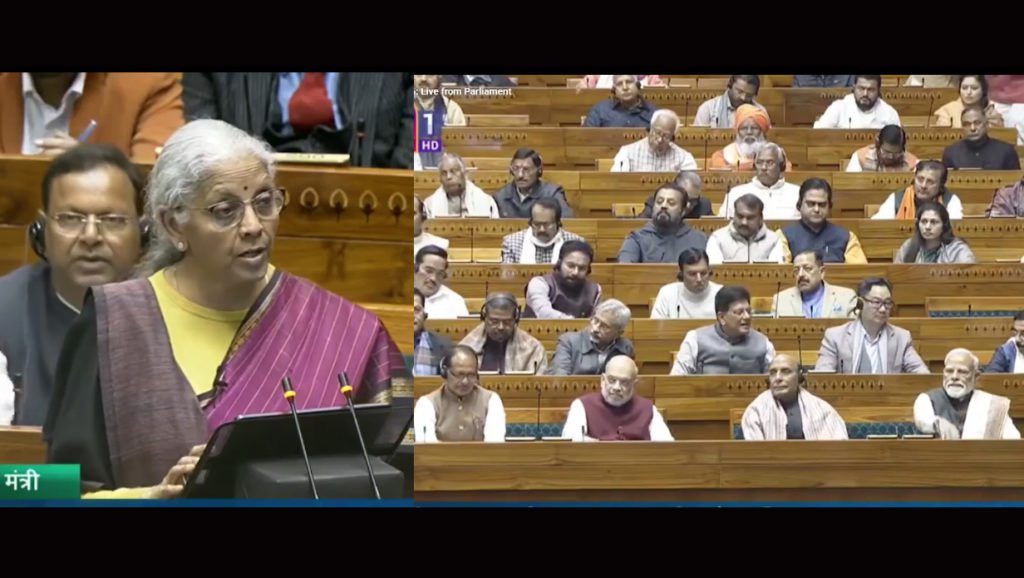
The Union Government has significantly reinforced its commitment to the cooperative sector with a sharp increase in allocations for the Ministry of Cooperation in the Union Budget 2026-27.
According to the notes on Demands for Grants, the Ministry’s total outlay has risen to Rs 1,744.74 crore in 2026-27, up substantially from Rs 1,186.29 crore in 2025-26.
Out of the total Rs 1,744.74 crore, an amount of Rs 47.77 crore has been earmarked for the establishment expenditure of the Union Ministry of Cooperation. This includes expenditure on the Ministry’s Secretariat as well as its attached and subordinate offices, such as the Central Registrar of Cooperative Societies, the Cooperative Election Authority, and the Office of the Ombudsman.
A key pillar of this support remains the Rs 500 crore annual grant-in-aid to the National Cooperative Development Corporation (NCDC), continuing from 2025–26 onwards for strengthening cooperatives, including cooperative sugar mills.
In a major boost to global engagement, the government has also allocated Rs 450 crore to the National Co-operative Exports Limited (NCEL) in 2026-27 to promote cooperative exports and enhance international market access.
Digital transformation continues to be a priority area. An allocation of Rs 364 crore has been made in 2026-27 for the computerization of Primary Agricultural Credit Societies (PACS), covering over 67,930 functional PACS across the country.
Additional funds have been provided under IT-based intervention schemes for strengthening Agricultural and Rural Development Banks (ARDBs) and the offices of Registrars of Cooperative Societies in States and Union Territories, aimed at improving efficiency, transparency, and accountability.
Capacity building and education have received a strong push, with Rs 300 crore allocated for cooperative education, including grants for the creation of capital assets at Tribhuvan Sahkari University (TSU).
Further, a total of Rs 56.96 crore has been earmarked as Grant-in-Aid for salaries to premier training institutions-Rs 46.96 crore for the National Council for Cooperative Training (NCCT) and Rs 10 crore for the Vaikunthlal Mehta National Institute of Cooperative Management (VAMNICOM). NCCT’s allocation has increased by Rs 4.96 crore.
Under the Developmental Heads, spending on Co-operation has risen sharply to Rs 1,419.76 crore in 2026-27, indicating a decisive policy thrust. Economic Services as a whole have increased to Rs 1,457.25 crore, while enhanced grants to State Governments and Union Territories underline the government’s focus on strengthening cooperatives at the grassroots level.
The cooperative sector received a major boost in the Budget as, over the past four years, several new reforms have been undertaken with sustained efforts by the Ministry of Cooperation. These initiatives have strengthened the sector’s institutional framework, expanded its economic role, and positioned cooperatives as a key driver in India’s development journey.