






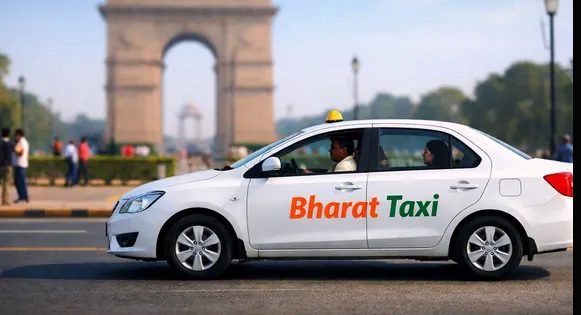
Even before its formal nationwide launch, Sahakar Taxi, branded on app stores as Bharat Taxi and promoted by Sahkar Taxi Cooperative Ltd., is fast gaining recognition as a credible public mobility platform across India. Anchored in a cooperative model, the initiative is attracting strong interest from both drivers and passengers, positioning itself as a viable alternative to commission-driven private cab aggregators.
Public response to the platform has been notably strong. The Bharat Taxi app has already crossed one lakh downloads, with adoption accelerating steadily. More than four lakh customers have registered nationwide so far, and in the past two days alone, registrations have surged by an estimated 40,000 to 45,000 per day. The sharp rise in user numbers signals growing anticipation ahead of the platform’s official rollout.
This momentum is also reflected in app store rankings. Bharat Taxi has climbed into the top tier of mobility applications, currently ranking ninth on the Google Play Store and thirteenth on the Apple App Store. The dedicated driver app is also gaining traction, securing a place among the top 20 apps on the Play Store. These rankings underline the scale of adoption even before the service is fully launched.
Amid the growing popularity, users have been advised to download only the official Bharat Taxi app, as instances of fake and misleading applications have surfaced. The cooperative has issued advisories to raise awareness and safeguard passengers and drivers from potential fraud.
A key driver of Sahakar Taxi’s appeal is its driver-first approach. Unlike private platforms that impose high commissions and multiple surcharges, Sahakar Taxi follows a cooperative structure that requires only a nominal membership fee. Drivers retain the entire fare from each trip, a transparent model that has resonated strongly with taxi operators seeking predictable incomes and relief from commission-heavy systems.
Beyond earnings, the platform also offers a structured support mechanism for drivers. Assistance during accidents or emergencies, along with legal support, forms an integral part of the service, features often lacking in conventional ride-hailing platforms. These provisions not only enhance driver security but also reinforce confidence in the cooperative framework.
Sahakar Taxi is being positioned as part of the broader national vision of “Sahkar Se Samriddhi,” which promotes cooperative-led economic empowerment. By blending technology with cooperative principles, the initiative aims to strengthen employment generation in the transport sector while delivering affordable, safe, and accessible mobility to citizens.
Government-linked narratives and national media coverage have highlighted Sahakar Taxi as a reform-oriented intervention, one that promises higher driver incomes, reduced dependency on private aggregators, and a more equitable mobility ecosystem.
As the platform prepares for its formal launch later this month, its early traction points to a growing demand for transparent, people-centric digital services. If the current momentum continues, Sahakar Taxi could play a transformative role in reshaping India’s ride-hailing landscape while giving fresh impetus to the cooperative movement in the urban economy.