
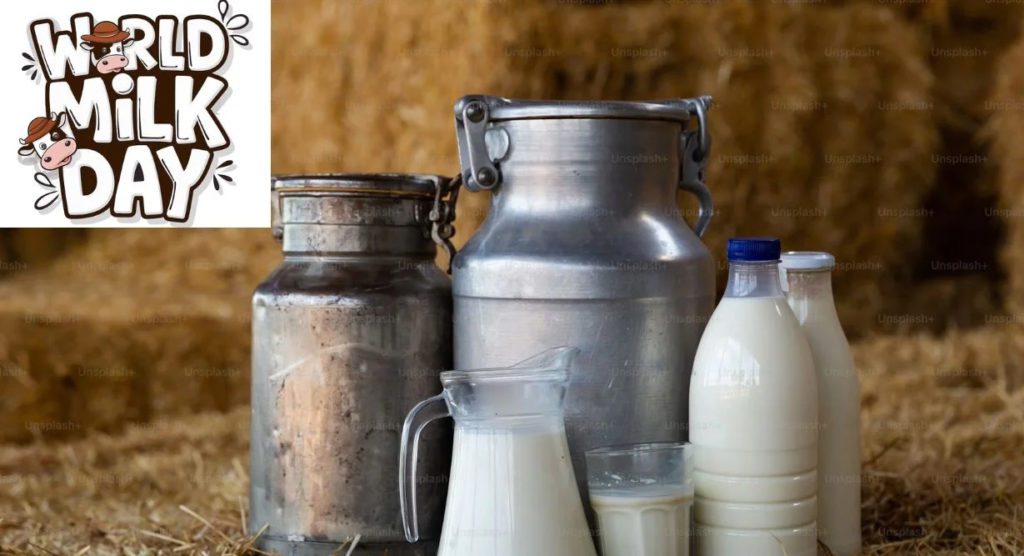
As the world celebrates World Milk Day, India’s dairy sector is emerging as a global symbol of nutrition, rural prosperity and cooperative strength. From the historic White Revolution led by Dr. Verghese Kurien to the present-day push towards “White Revolution 2.0”, the country has transformed milk into a powerful engine of economic and social development.
India today remains the world’s largest milk producer, contributing nearly 25 per cent of global milk output. According to official statistics, milk production in the country has increased from 146.31 million tonnes in 2014-15 to 247.87 million tonnes in 2024-25, registering spectacular growth of nearly 69 per cent over the past decade. Per capita milk availability has also risen sharply to 485 grams per day, significantly higher than the global average.
The growth story is closely linked with India’s cooperative movement, which has connected millions of rural households to organised dairy networks. Cooperative institutions such as Amul, Nandini, Sudha, Verka and several state federations have helped ensure fair prices for farmers while strengthening procurement, processing and marketing infrastructure across the country.
The dairy sector has become a lifeline for rural India, especially for women and small farmers. Experts note that milk provides regular daily income unlike seasonal crops, helping rural families manage household expenses, education and healthcare. Women-led self-help groups and village dairy societies are also playing a major role in expanding milk collection and financial inclusion in villages.
Globally, milk is increasingly being recognised not only as a source of nutrition but also as a driver of sustainable livelihoods. The United Nations’ Food and Agriculture Organization observes World Milk Day every year on June 1 to highlight the importance of dairy in food security and economic development. India’s success has often been cited as a model of how cooperatives can combine farmer welfare with large-scale production.
The government has also intensified efforts to modernise the dairy ecosystem through digital platforms, breed improvement programmes, animal healthcare, processing infrastructure and value-added dairy products. States such as Uttar Pradesh, Rajasthan, Gujarat and Maharashtra continue to lead milk production, while new dairy plants and chilling centres are expanding rapidly across the country.
On World Milk Day, the message from India’s dairy sector is clear, milk is no longer just a nutritional product; it is a stream of cooperation, self-reliance and prosperity empowering millions of lives every day.