
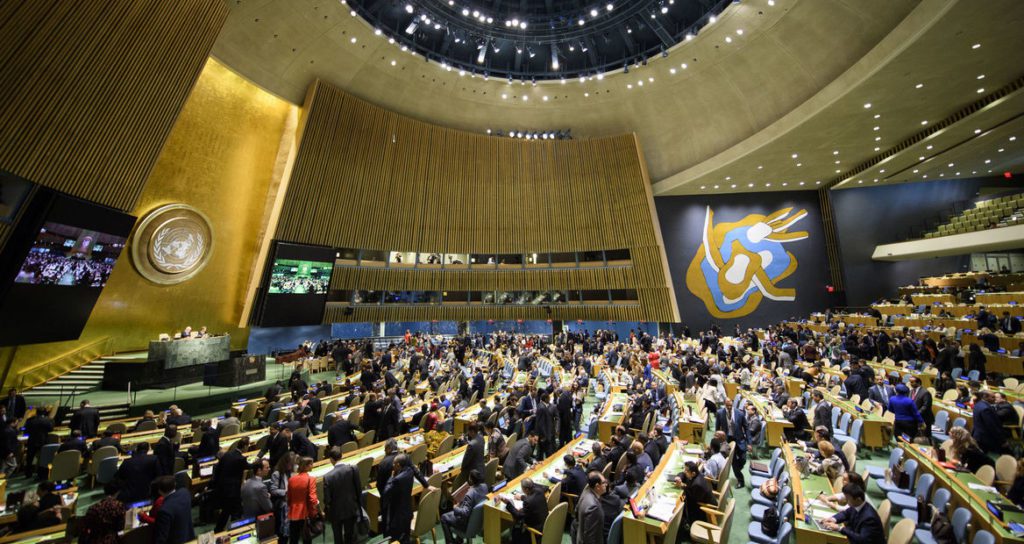
The United Nations General Assembly has taken a landmark step in recognising the transformative power of the cooperative movement by adopting Resolution A/RES/80/182, which proclaims an International Year of Cooperatives every decade.
The resolution, adopted on 15 December 2025 during the UN’s 61st plenary session, builds on the momentum generated by the International Years of Cooperatives in 2012 and 2025 and institutionalises a ten-year cycle to spotlight the cooperative enterprise model as a driver of inclusive and sustainable development.
By formally endorsing a recurring International Year, the General Assembly has signalled that cooperatives are not merely alternative business structures but central actors in advancing global development priorities.
The resolution recognises that cooperatives, in their diverse forms, promote the fullest possible participation in economic and social development at the community level. It underscores their direct contribution to poverty eradication, hunger reduction, gender equality, financial inclusion, social cohesion, and climate action.
Importantly, the resolution links the cooperative model to the achievement of the 17 Sustainable Development Goals (SDGs). It highlights how cooperatives strengthen the socio-economic conditions of Indigenous Peoples, rural communities, and other vulnerable groups by fostering local ownership, democratic governance, and equitable wealth distribution.
Agricultural cooperatives enhance food security and farmer incomes, financial cooperatives expand access to affordable credit, and worker and consumer cooperatives create resilient local economies rooted in shared benefit rather than shareholder profit maximisation.
Following the widely observed 2025 International Year of Cooperatives, the resolution urges governments to reinforce support systems that enable cooperatives to thrive. It calls for improved legal and regulatory frameworks that recognise the distinct identity of cooperatives, enhanced access to capital and fair taxation policies, and targeted backing for agricultural and financial cooperatives.
The text also emphasises the need for expanded digital access, stronger research and data collection, greater public awareness, and the promotion of gender equality in cooperative participation and leadership.
The resolution further encourages governments, international organisations, specialised agencies, and cooperative bodies at all levels to continue observing the International Day of Cooperatives (CoopsDay) each year on the first Saturday of July, as originally proclaimed in Resolution 47/90. In 2026, CoopsDay will be celebrated on 4 July, with the theme expected to be announced soon.
Leaders of the global cooperative movement have welcomed the development as a historic recognition. Dr Ariel Guarco, President of the International Cooperative Alliance, described the proclamation as a powerful affirmation that cooperatives offer solutions in times of environmental crisis, inequality, and global mistrust.
He emphasised that cooperatives demonstrate how wealth can be generated and distributed without exclusion, while strengthening environmental stewardship and social bonds. Jeroen Douglas, Director General of the International Cooperative Alliance, noted that the UN rarely repeats designated year themes, making the establishment of a recurring decade cycle an exceptional global endorsement of the movement’s enduring relevance.
He also acknowledged the Government of Mongolia for initiating both the previous International Years and the new resolution.
The United Nations has long recognised cooperatives as key partners in social development, adopting resolutions on the subject since the 1950s and on a systematic biennial basis since 1992. In April 2023, the General Assembly further reinforced this trajectory by approving the first-ever resolution promoting the social and solidarity economy for sustainable development.
With Resolution A/RES/80/182, the UN has embedded cooperatives more firmly into the architecture of global development, ensuring that every decade the world will pause to reflect on, and renew commitment to, a model that places people, participation, and shared prosperity at its core.