
The National Urban Co-operative Finance and Development Corporation Limited (NUCFDC), established as the Umbrella Organisation (UO) for Urban Co-operative Banks (UCBs), has now become fully operational after successfully mobilising the minimum regulatory capital of Rs 300 crore, marking a significant structural reform for the cooperative banking sector.
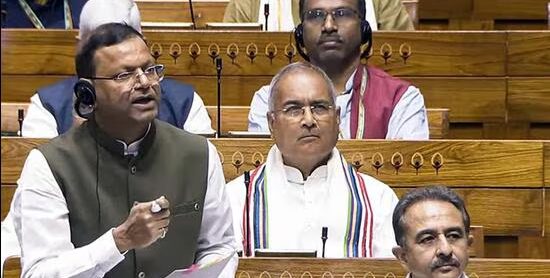
The development was highlighted by the Minister of State for Finance, Pankaj Chaudhary, in a recent reply in the Lok Sabha, underscoring the government’s commitment to strengthen and modernise UCBs as vital components of India’s financial ecosystem.
The creation of the NUCFDC responds to long-standing calls from stakeholders for a dedicated institution to address structural, technological, and compliance challenges faced by UCBs. These banks, which collectively operate thousands of branches and serve millions of depositors across urban and semi-urban regions, have historically struggled with fragmented technology systems, high compliance costs, and limited access to shared services.
The establishment of a central body was first recommended by expert groups within the Reserve Bank of India (RBI) over a decade ago, with the objective of unifying and uplifting the sector through shared infrastructure and coordinated support. The new umbrella organisation has been designed to act as a centralised platform that can provide UCBs with the tools they need to compete effectively in a rapidly evolving financial landscape.
With its registered office in New Delhi and corporate office in Mumbai, the NUCFDC is registered with the RBI as a non-banking financial company and will also function as a self-regulatory organisation for the sector.
This dual role enables it to not only offer a range of fund-based services in the future but also to set standards that enhance governance, regulatory compliance, and operational efficiency across member banks. By pooling resources and capabilities, the organisation aims to help smaller and mid-sized UCBs reduce capital expenditure, access advanced technology platforms, and achieve economies of scale that would be difficult to realise individually.
The umbrella organisation has already begun delivering non-fund-based services, including cyber insurance, legal advisory, and risk-based internal audit services, with plans to roll out funding support and other financial products in the coming months. Central to its mandate is the development of shared technology infrastructure that will enable UCBs to modernise core banking systems, strengthen cybersecurity, and offer improved digital services to their customers.
Experts say the launch of the NUCFDC marks a new chapter for Urban Co-operative Banks, which have traditionally played a crucial role in promoting financial inclusion by serving local communities, micro-enterprises, and middle-income households.
The umbrella organisation’s ability to centralise costly and compliance-intensive functions is expected to allow member banks to focus more on growth, customer service, and extending credit to underserved segments of the population.
The operationalisation of the NUCFDC underscores the government’s broader vision to reinforce the cooperative banking sector as a resilient and inclusive pillar of India’s financial system, helping it adapt to contemporary challenges while preserving its community-centric ethos.