






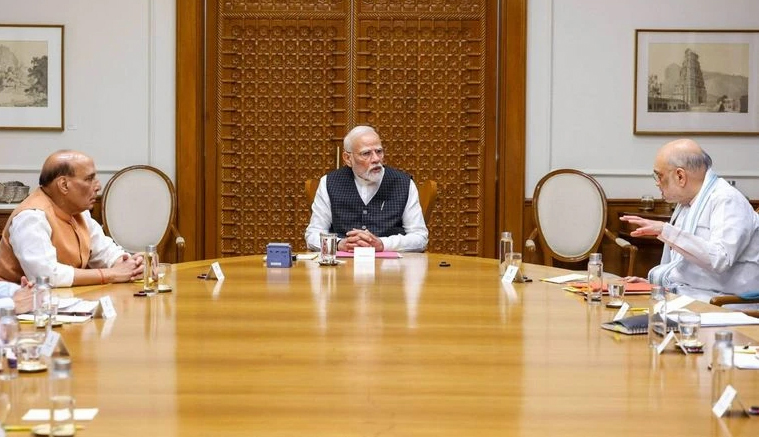
In a significant boost to the country’s cooperative sector, the Union Cabinet, chaired by Prime Minister Narendra Modi, has approved a Central Sector Scheme titled “Grant in Aid to National Cooperative Development Corporation (NCDC)” with a financial outlay of Rs 2,000 crore. Spread over four years from 2025–26 to 2028–29, the scheme will provide Rs 500 crore annually through budgetary support from the Government of India.
The approved grant will empower NCDC to raise Rs 20,000 crore from the open market during this four-year span. These funds will be deployed as loans to cooperatives across various sectors such as dairy, livestock, fisheries, sugar, textiles, food processing, cold storage, labour, and women-led initiatives. The funding will support both new and expansion projects, as well as provide working capital to cooperatives to enhance operational efficiency.
The scheme is expected to directly benefit approximately 2.9 crore members from 13,288 cooperative societies across the country. These societies will gain access to long-term credit for the establishment, modernization, and technological upgradation of their facilities. Additionally, working capital loans will help them run operations profitably and generate more employment, particularly in rural areas.
The NCDC, as the implementing agency, will be responsible for disbursing the loans, monitoring project execution, and recovering disbursed amounts. Loans will be issued either directly to eligible cooperatives or routed through state governments in accordance with NCDC’s guidelines. Direct funding will be provided against adequate security or a government guarantee.
Beyond its economic promise, the scheme also holds significant social value. By reinforcing cooperative models built on democratic participation and community concern, the scheme is seen as a tool for inclusive development. It is expected to help bridge rural socio-economic gaps, particularly by boosting the role of women in the workforce and enhancing participation from underrepresented groups.
Officials emphasized that the infusion of capital will not only strengthen cooperative enterprises but also lead to the creation of income-generating assets, supporting sustainable development and livelihood opportunities in the rural economy. Employment will be generated both directly, through cooperative-led production and services, and indirectly, via supporting infrastructure projects funded through the term loans.
The background to the move lies in the central role that cooperatives play in India’s rural and semi-urban economy. With over 8.25 lakh cooperatives and more than 29 crore members, including 94% of Indian farmers, the sector is deeply embedded in the fabric of Indian agriculture, rural credit, input supply, marketing, and allied services. Cooperatives are active across diverse domains including fertilisers, credit, dairy, handloom, fisheries, consumer goods, housing, and more.
Given their reach and potential, the Cabinet decision is being seen as a strategic intervention to unlock further economic capacity in underserved rural areas. Sectors such as dairy, poultry, sugar, and food processing, typically constrained by capital access, are expected to be key beneficiaries. In addition, labour and women-run cooperatives, which often face credit barriers, will now have greater financial support to scale operations and contribute more meaningfully to the economy.
Officials described the move as a continuation of the government’s commitment to cooperative-led growth and rural empowerment. The scheme aligns with the broader vision of “Sahakar se Samriddhi” (Prosperity through Cooperation), aiming to make cooperatives more self-sustaining, technologically forward, and employment-generating in nature. With a clear strategy, robust execution mechanism through NCDC, and strong financial backing, the Rs 2,000 crore grant is expected to catalyze a new era of revitalized cooperative activity across India.















































Hello I Am just new to CHS….. Can NCDC Raise funds through IPO..