





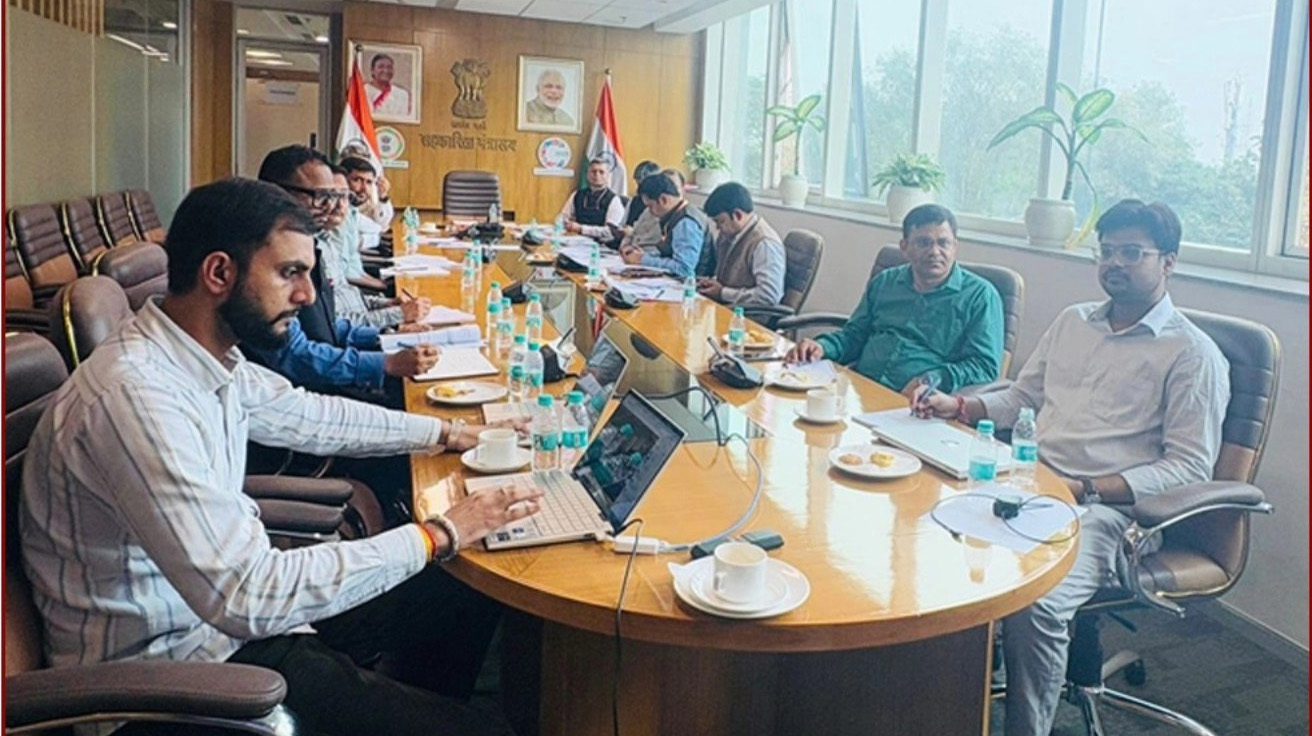
The Ministry of Cooperation convened a high-level online review meeting on Saturday chaired by Additional Secretary Pankaj Kumar Bansal, to assess the progress of key cooperative sector initiatives being implemented across States and Union Territories.
The session brought together senior officials of the Ministry including Joint Secretaries Siddharth Jain and Raman Kumar, Director Kumar Ram Krishna, and representatives from all States and UTs. The focus was on strengthening coordination, addressing implementation gaps, and ensuring the timely rollout of cooperative reforms.
Bansal underlined that the cooperative movement is central to achieving inclusive growth and rural prosperity under the vision of “Sahkar se Samriddhi.” He called for closer synergy between the Centre and States to enhance transparency, accelerate the digitisation of cooperative institutions, and build efficient mechanisms for monitoring progress.
The Ministry, he said, is determined to turn cooperatives into vibrant, professionally managed enterprises that empower people at the grassroots.The meeting reviewed the status of ongoing flagship schemes such as the computerisation of Primary Agricultural Credit Societies (PACS), the digital integration of Registrar of Cooperative Societies (RCS) offices, and the rollout of the world’s largest grain storage project in the cooperative sector.
Participants discussed State-level progress in forming new multipurpose PACS, dairy and fishery cooperatives at the panchayat level, and implementing model bye-laws.
Officials also highlighted the National Cooperative Database (NCD) as a transformative tool to enhance transparency and accountability. As of mid-2025, the database covers cooperatives across 30 sectors, representing over 32 crore members nationwide. The Ministry urged all States and UTs to update real-time information on audit status, infrastructure readiness, and project implementation through the NCD platform.
Bansal further noted that cooperatives today extend beyond agriculture and credit, they are emerging as key drivers in areas like healthcare, services, value-chain development, and digital finance. He cited examples of successful innovations in dairy and agri-marketing cooperatives that are improving rural incomes and employment generation.
The Ministry’s social media handles also shared highlights from the meeting, reiterating the government’s focus on collective action and effective governance. The review emphasised that the cooperative model, rooted in community participation, can play a crucial role in realising the vision of Viksit Bharat 2047 by ensuring financial inclusion, entrepreneurship, and equitable development.
States were advised to hold regular meetings of their State and District Cooperative Development Committees, share best practices, and work closely with national agencies like NCDC, NABARD, and NCUI for capacity building and project support.
The meeting concluded with a renewed commitment to make cooperatives a powerful vehicle for rural transformation through innovation, technology, and people’s participation.