





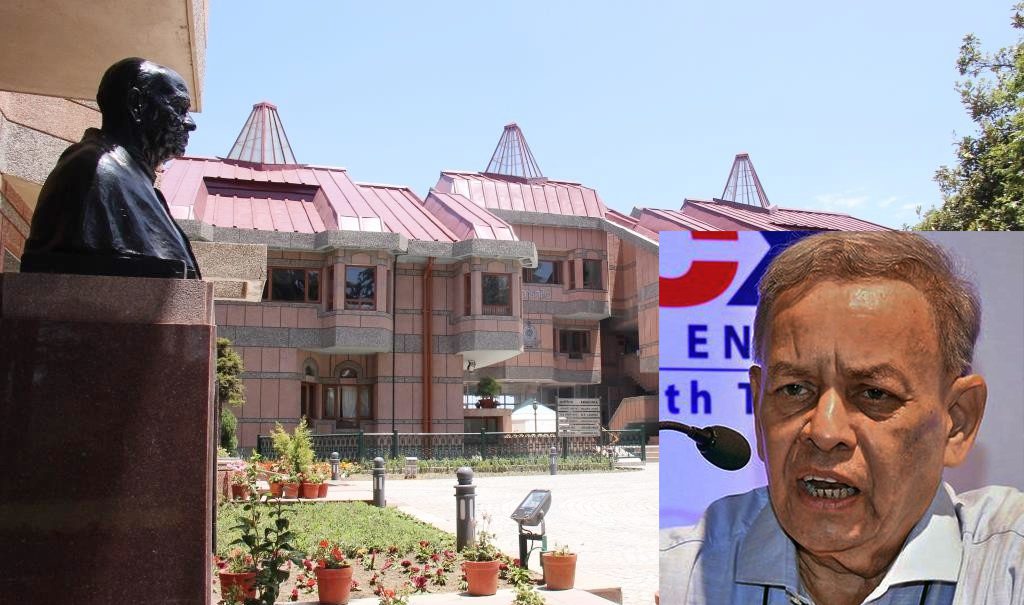
Satish Marathe, a distinguished member of the Reserve Bank of India’s Central Board and co-founder of Sahakar Bharati, addressed 650 newly selected IAS officers at the Lal Bahadur Shastri National Academy of Administration (LBSNAA) in Mussoorie.
His lecture focused on enhancing the trainees’ understanding of India’s cooperative sector and its pivotal role in rural credit systems, delivered in two comprehensive sessions.
In the first session, Marathe provided an extensive overview of the history, background, and present scenario of the cooperative movement in India. He traced its origins to the early 20th century, emphasizing how the cooperative model was designed to promote mutual help and democratic governance in economic activities, especially among marginalized communities.
He stressed the cooperative sector’s importance in various areas, such as agriculture, dairy, housing, and credit, which play a key role in promoting economic empowerment and financial inclusion in rural and semi-urban India. Marathe shared that Sahakar Bharati has emerged as the largest non-governmental organization dedicated to the cooperative movement, working with over 40,000 cooperatives nationwide to advance the cooperative spirit.
The second session focused extensively on the rural cooperative credit ecosystem, with particular attention to Primary Agricultural Credit Societies (PACS), District Central Cooperative Banks (DCCBs), and State Cooperative Banks (StCBs). Marathe outlined the structural challenges these institutions face, such as limited digitization, inefficient operational models, and the need for governance reforms.
He highlighted the importance of evolving new business models to ensure sustainability and adaptability in a fast-changing economic environment. Marathe underscored the relevance of expanding the scope of services provided by these institutions, deepening their reach into rural areas, and integrating them into a unified digital ecosystem. He noted the government’s ongoing efforts, such as the computerization of functional PACS over the 2022-23 to 2026-27 period, aimed at improving service delivery, operational transparency, and credit accessibility to farmers.
Marathe elaborated on how greater digitalization would lead to faster loan disbursements, better transparency, and improved financial inclusion for the rural population. He stressed that adapting to technological advancements is no longer optional but essential for the survival and growth of cooperative credit institutions. His insights were particularly relevant for the IAS trainees, who will be at the forefront of policy formulation and implementation in their future administrative roles.
By highlighting the cooperative sector’s transformational potential, Marathe’s address offered a strategic perspective on leveraging cooperatives for inclusive growth and sustainable development.
He called on the future bureaucrats to promote cooperative principles, modernize rural credit systems, and support policy initiatives that integrate digital solutions, thereby ensuring that the cooperative sector continues to contribute meaningfully to India’s socio-economic progress.