






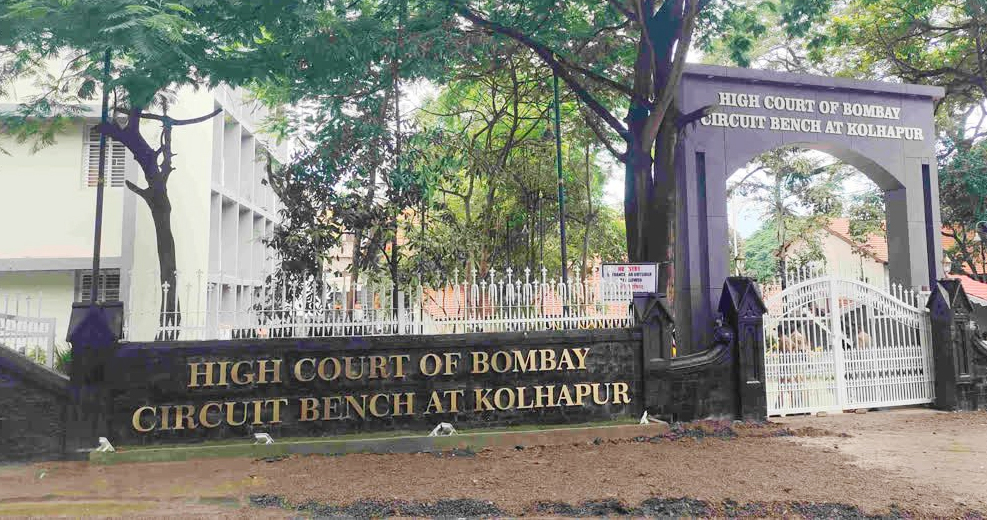
The Bombay High Court’s Kolhapur Bench has held that the 10-year tenure restriction for directors of cooperative banks under Section 10A(2A)(i) of the Banking Regulation Act, 1949, has retroactive application. This means the period of directorship served before the provision came into force on August 1, 2025, can be counted while determining whether a director has completed the prescribed tenure.
The ruling was delivered on October 14, 2026, by Justice Shailesh P. Brahme while hearing two writ petitions challenging the rejection of objections to the nominations of Anil Desai and Rajendra Rajpure in the election of the Satara District Central Cooperative Bank.
The petitioners contended that both candidates had served on the bank’s board for more than 10 years and were therefore ineligible to contest. The Court examined whether the tenure restriction introduced with effect from August 1, 2025, operated prospectively, retrospectively or retroactively, and accepted the argument that it was retroactive in nature.
In reaching this conclusion, the Bench relied on the Supreme Court’s judgments in Newtech Promoters and Developers Pvt. Ltd. v. State of Uttar Pradesh (2021) and Securities and Exchange Board of India v. Rajkumar Nagpal (2023), which explain the legal distinction between retrospective and retroactive operation.
The Court also referred to the Reserve Bank of India’s Urban Co-operative Banks (Governance) Amendment Directions, 2026, effective from May 25, 2026. Under paragraph 7A, a director completing 10 years of continuous tenure may be reappointed to the board of the same bank only after a minimum cooling-off period of three years.
For calculating continuous tenure, periods of directorship separated by an interruption of less than three years are counted together, whereas an interruption of at least three years excludes the earlier period.
In another significant finding, the Bench rejected the Government’s position, communicated through a letter dated August 21, 2026, that Returning Officers lacked jurisdiction to examine disqualification under Section 10A(2A) of the Banking Regulation Act.
The Court held that executive instructions cannot override statutory provisions. It ruled that Rule 25(2) of the Maharashtra Co-operative Societies (Election to Committee) Rules, 2014, empowers Returning Officers to decide objections concerning a candidate’s disqualification from being chosen to fill a seat.
However, the Court clarified that scrutiny at the nomination stage is summary and prima facie in nature. A Returning Officer’s finding does not finally determine substantive disqualification, and affected parties remain free to pursue remedies available under the Maharashtra Co-operative Societies Act, 1960, or the Banking Regulation Act.
The Bench observed that the 10-year restriction seeks to prevent concentration of power and monopoly on cooperative bank boards while providing equal opportunities to other eligible candidates.