







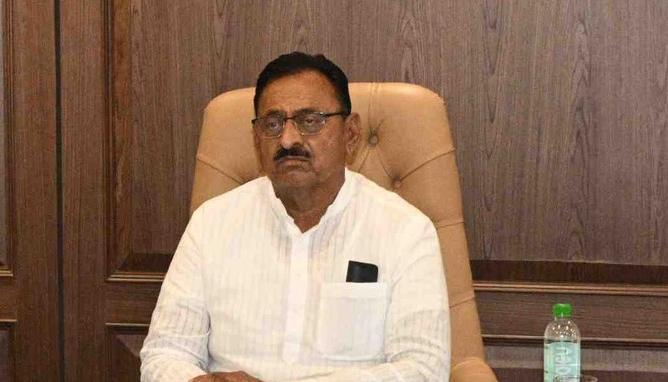
In a significant development for Maharashtra’s cooperative banking sector, the Bombay High Court’s Aurangabad Bench has refused interim relief to State Cooperation Minister Babasaheb Patil, who has completed 37 years as a director of a cooperative bank, providing an important boost to the Reserve Bank of India’s efforts to enforce the 10-year directorship restriction.
The ruling assumes significance as Maharashtra’s cooperative banking sector faces important governance questions over the implementation of RBI’s tenure norms, particularly concerning long-serving directors, continuity of leadership and restructuring of bank boards.
In an order pronounced on Friday, a Division Bench comprising Justice Nitin B. Suryawanshi and Justice Abasaheb D. Shinde rejected the interim relief sought by Patil, who had challenged the RBI’s September 18, 2026 order removing him as a director of a cooperative bank under Section 10A(2A)(i) of the Banking Regulation Act, 1949.
The petitioner argued that the RBI had improperly applied the amended tenure provisions retrospectively, denied him a personal hearing and failed to follow the prescribed procedure for removing a director.
Opposing the petition, the RBI maintained that the provision operated retroactively rather than retrospectively, particularly in view of the statutory expression “hold office continuously” used in Section 10A(2A)(i).
The High Court found prima facie merit in the RBI’s argument, noting that Patil had completed 37 years as a director. The Bench also agreed with the reasoning adopted earlier by the Kolhapur Circuit Bench in a similar matter, where interim relief had been refused.
Importantly, the earlier Kolhapur Bench had observed that the legislative intent behind Section 10A(2A)(i) was to prevent the concentration of board power in the hands of directors who had occupied their positions for excessively long periods. The Aurangabad Bench expressly agreed with this view.
The Court also noted that interim relief had not been granted in similar petitions pending before the Principal Seat and various benches of the Bombay High Court.
While granting Rule, allowing the petition to proceed for further consideration, the Bench made it clear that Patil had failed to establish a case for interim protection. The substantive legal challenge, however, remains pending and has not been finally decided.
The order could have wider implications for Maharashtra’s cooperative banking network, particularly institutions where directors have occupied board positions for extended periods. With the RBI enforcing the amended provisions, questions concerning leadership continuity, board restructuring and compliance with statutory tenure restrictions are likely to remain significant issues for cooperative banks across the state.
For Maharashtra’s Cooperation Department, the evolving legal position presents an important regulatory and administrative challenge in ensuring that cooperative institutions align their governance structures with the amended banking law.