
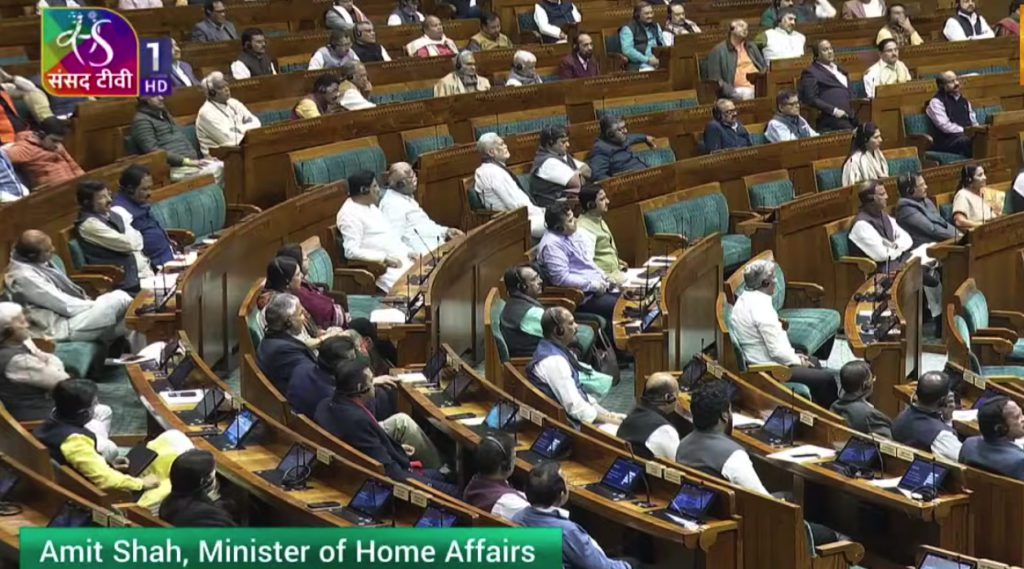
The government has undertaken a series of comprehensive initiatives to strengthen the structure and functioning of cooperative banks and bring them at par with commercial banks, Union Home and Cooperation Minister Amit Shah informed the Lok Sabha on Tuesday.
In a written reply, Shah said these measures have been taken with the assistance of the Department of Financial Services (DFS) and the Reserve Bank of India (RBI) to enhance business opportunities, improve governance, expand credit flow, and modernise banking services in the cooperative sector.
He informed that Urban Cooperative Banks (UCBs) have now been allowed to open new branches and have been granted additional time to achieve Priority Sector Lending (PSL) targets. UCBs are also permitted to provide doorstep banking services and undertake one-time settlement of outstanding loans, similar to commercial banks.
To expand lending capacity, RBI has more than doubled individual housing loan limits for both Rural Cooperative Banks (RCBs) and UCBs, while RCBs have also been allowed to lend to the commercial real estate, residential housing sector. Cooperative banks have further been included as Member Lending Institutions (MLIs) under the Credit Guarantee Fund Trust for Micro and Small Enterprises (CGTMSE).
The Minister said that RBI has eased several regulatory norms, including a reduction in PSL targets for UCBs from 75% to 60%, relaxation in weaker-section sub-limits, and removal of the Rs 2 lakh lending target for women borrowers. RBI has also doubled the gold loan ceiling under the bullet repayment scheme from Rs 2 lakh to Rs 4 lakh for eligible UCBs.
Highlighting digital and technological reforms, Shah noted that the license fee for onboarding cooperative banks to the Aadhaar Enabled Payment System (AePS) has been reduced by linking it to transaction volume. RBI has also notified scheduling norms for UCBs, while cooperative banks have been brought under the RBI Ombudsman Scheme, strengthening customer grievance redressal.
To provide structural support, the government has established the National Urban Cooperative Finance and Development Corporation Limited (NUCFDC) as an Umbrella Organization for the UCB sector to offer IT infrastructure and operational support. In addition, NABARD, with RBI approval, has set up Sahakar Sarathi, a shared service entity to provide technological services to RCBs.
Shah further informed that the PSL limit for agricultural cooperative societies engaged in dairy activities has been increased from Rs 5 crore to Rs 10 crore, while loan limits for urban cooperative institutions have been enhanced by 50%, from Rs 1 crore to Rs 3 crore.
Several governance reforms have also been implemented, including amendments to the Banking Regulation Act to align the tenure of boards of directors of cooperative banks with constitutional provisions, fixing a maximum of 10 consecutive years.
He added that RCBs have now been allowed to open up to 10 branches through the automatic route, and cooperative banks have been given relaxations in financial norms and penalty clauses to facilitate the adoption of modern banking services.
The minister said these initiatives collectively aim to make cooperative banks financially stronger, technologically advanced, and more competitive, while ensuring better services and protection for depositors.