
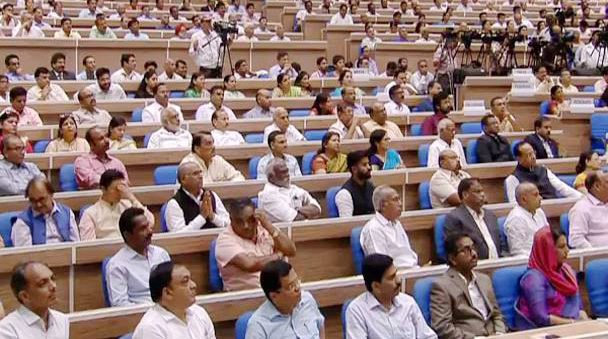
A high-level interaction meeting recently held at the Delhi office of the Reserve Bank of India brought together chairmen of Urban Cooperative Banks (UCBs) from Delhi-NCR, Haryana and other parts of northern India, where sector leaders openly discussed key operational and regulatory challenges before RBI officials.
The meeting was attended by several prominent cooperative banking leaders including Kangra Cooperative Bank Chairman Laxmi Das, Janata Sahakari Bank, Delhi Chairman Vijay Mohan, Delhi Nagarik Sahakari Bank Chairman Pradeep Sharma and O. P. Sharma, along with delegates from other UCBs across the region.
RBI CGM Scenta Joy, along with other senior officials, was present during the interaction and heard feedback from the participating banks. According to participants, RBI officials patiently listened to the issues raised by the banks, noted their concerns and assured them that appropriate matters would be taken up with the concerned authorities.
One of the major concerns highlighted during the meeting was the continuing confusion arising from the dual regulatory structure involving the RBI and Registrar of Cooperative Societies (RCS) authorities.
Representatives said the overlapping jurisdiction often creates uncertainty in operational and compliance matters, leading to delays and practical difficulties for cooperative banks at the ground level. Participants stressed the need for clearer coordination between RBI and RCS authorities to ensure smooth functioning of UCBs.
Bank representatives also raised concerns regarding amendments in the Banking Regulation Act and implementation challenges linked to tenure-related norms scheduled to come into effect from August 1, 2025. Participants sought more detailed operational clarity from RBI to avoid differing interpretations by various regulatory authorities.
During the discussion, Laxmi Das strongly raised the issue of revised Loan Against Property (LAP) norms. He stated that the reduction in LAP exposure limits from 10 percent to 5 percent has adversely impacted several cooperative banks that depend significantly on secured retail lending.
He urged RBI to reconsider the bifurcation between housing loans and LAP portfolios and restore the exposure limit to 10 percent to support fresh credit growth in the cooperative banking sector.
Another major issue discussed was the impact of stricter provisioning and IDR-related norms on the financial health of cooperative banks. Several participants warned that despite maintaining operational profits, many smaller UCBs could slip into losses because of heavy provisioning requirements.
Representatives requested RBI to consider suitable relaxations so that financially stable cooperative banks are not adversely affected.
Participants described the meeting as constructive and meaningful, stating that RBI officials encouraged open discussions and allowed bankers from different regions to freely express their concerns.