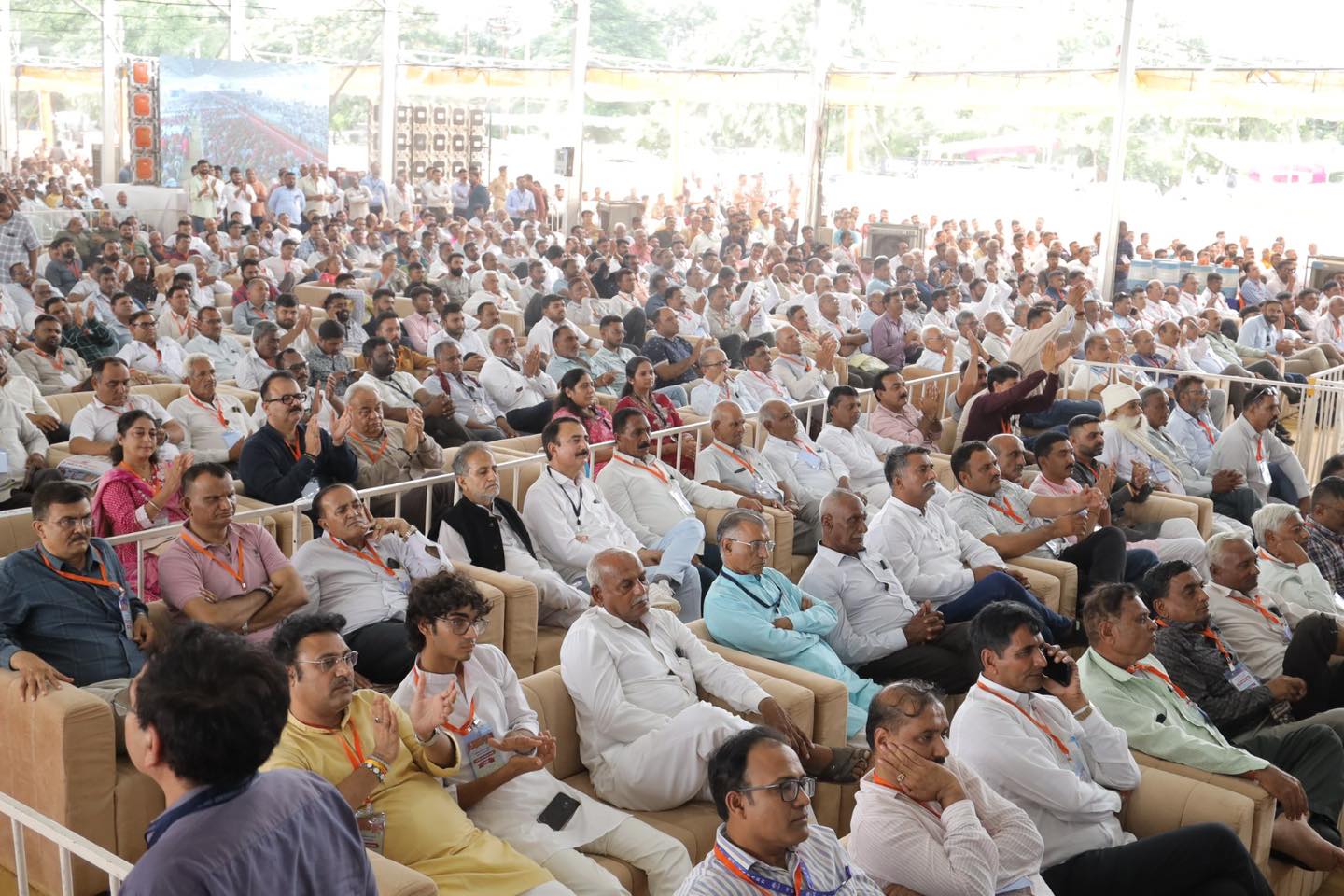







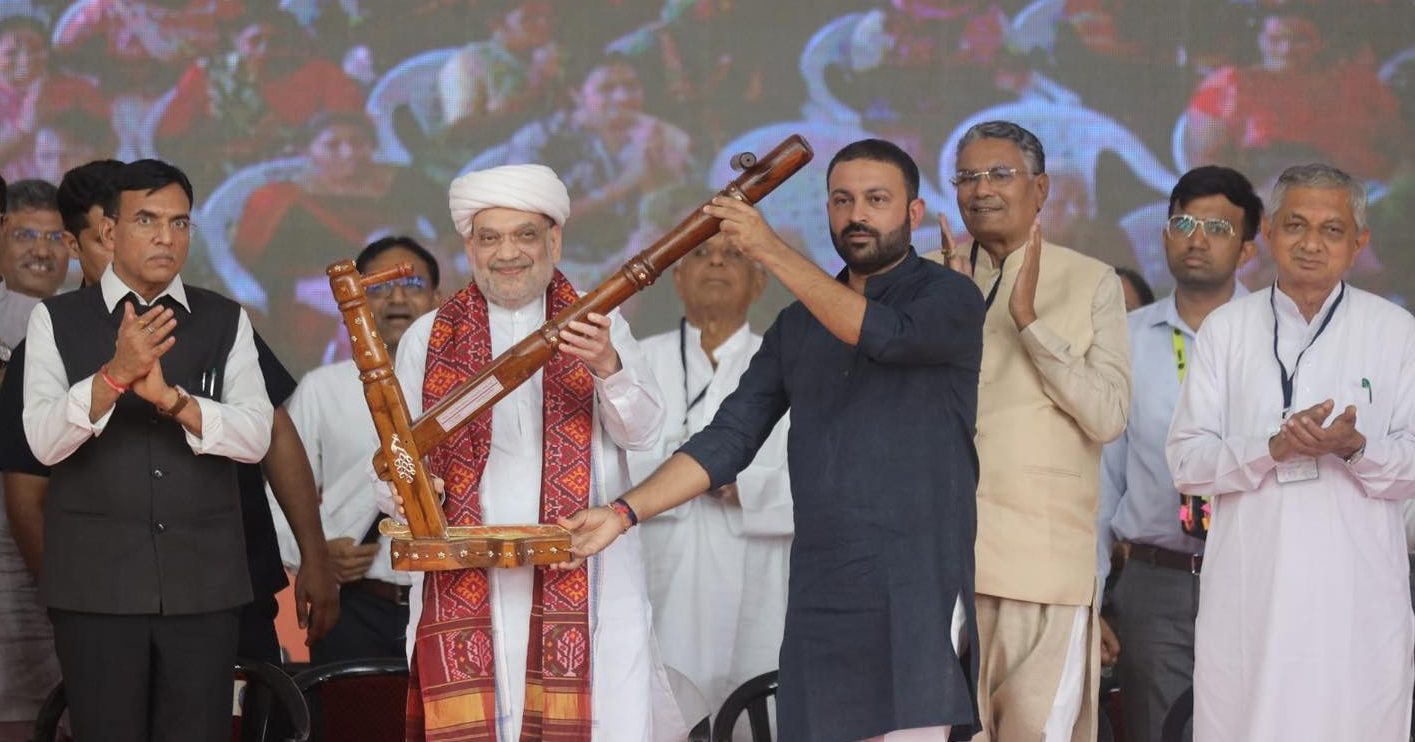
Union Home Minister and Minister of Cooperation Amit Shah on Monday addressed the annual meeting of seven district-level cooperative societies, including the Rajkot District Cooperative Bank Limited, in Rajkot, Gujarat. Union Minister of Youth Affairs and Sports Mansukh Mandaviya and several dignitaries were also present at the occasion.
In his keynote address, Shah underlined how the cooperative movement has received renewed energy after the creation of a separate Ministry of Cooperation in 2021 by Prime Minister Narendra Modi. “For decades, the vast cooperative network of India was managed by just a Joint Secretary in the Agriculture Ministry. But with Modi ji’s one decision, millions of farmers, livestock owners, and fishermen from Kashmir to Kanyakumari have gained the right to see the profits of their labour directly credited to their bank accounts,” Shah said.
He praised Rajkot’s cooperative model as an example for the entire country, stressing that milk societies, service cooperatives, and warehouse-linked institutions should be set up in every village to strengthen grassroots rural prosperity.
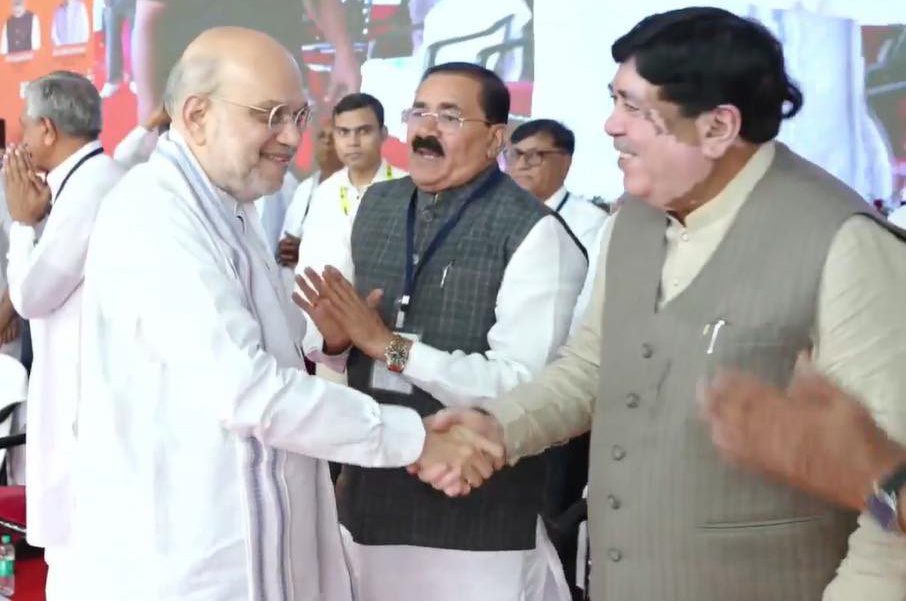 On the occasion, statues of Sardar Vallabhbhai Patel and Vitthalbhai Radadiya were unveiled. Shah recalled Patel’s leadership in fighting for farmers and establishing the Rajkot District Cooperative Bank, while appreciating Radadiya’s contributions that earned the bank repeated recognition from NABARD.
Highlighting the ethos of cooperatives, Shah remarked that their true identity lies in ensuring profits reach farmers rather than capitalists. The Rajkot District Cooperative Bank, he said, had maintained a stellar record, winning NABARD’s Best Performance Award five times and the Overall Best Performance Award four times.
For over 53 years, the bank has sustained profits worth hundreds of crores while keeping net NPAs below 1 per cent, offering loans at interest rates even lower than zero percent, he noted.
Shah also distributed benefits under the bank’s accident insurance scheme to 22 families and handed over motorcycles and compensation to nine cooperative societies through the Krishi Samaj Awards.
Pointing to reforms under the Modi government, the Minister said that more than 60 initiatives had been rolled out in the last three years to revive and strengthen cooperatives. These include computerisation of PACS, building warehouses, water conservation projects, and boosting dairy cooperatives. He also cited the creation of Tribhuvan Sahkari University in Anand as India’s first national-level university dedicated to cooperative education and research.
“After four decades of decline, the cooperative system stabilised within a year and has grown by 12 per cent over the last two years,” Shah observed. He added that cooperative banks in Gujarat are increasingly being centralised to provide loans only through district and state cooperative banks, a system already successful in Banaskantha and Panchmahal.
Among the new ventures, Shah highlighted Bharat Organic, a cooperative that purchases organic products directly from farmers and returns full profits to them, as well as new cooperatives for exports and seeds. He urged farmers to gradually reduce chemical fertilisers and pesticides and adopt organic farming, which he said would boost both public health and farm incomes.
On the festive occasion of Navratri, Shah extended greetings to the people of Gujarat and called the reduction of GST on farm inputs, food products, and daily essentials from 18% to 5% a significant gift by the Modi government ahead of Navratri and Diwali.