





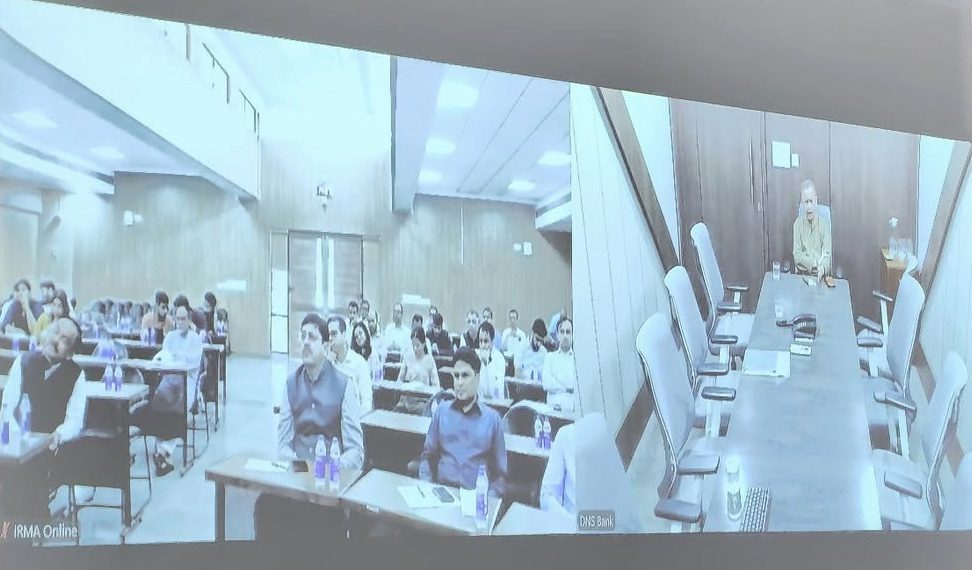
As part of the Swachhata Hi Seva 2025 campaign, Tribhuvan Sahkari University (formerly the Institute of Rural Management Anand, “IRMA”) inaugurated a two-day national seminar entitled “Development of Cooperatives in India: A Roadmap of Viksit Bharat” on Monday in Anand, Gujarat.
The seminar brought together thought-leaders, cooperative practitioners, policy makers, academics, and rural stakeholders to deliberate on strengthening the cooperative movement in India to align with the country’s vision of a developed (Viksit) Bharat.
In his keynote at the inaugural session, Satish Marathe, Director of the Reserve Bank of India, emphasized that Primary Agricultural Credit Societies (PACS) must undergo urgent reforms if cooperatives are to better serve rural India.
 He stressed conversion of PACS into Multipurpose PACS (MPACS) so that they can offer a broader range of services beyond mere credit, ones that match aspirations of rural communities and ensure more inclusive, grassroots growth. Marathe argued this change is essential for enabling cooperatives to become more resilient and relevant to the needs of farmers, small producers, women, and marginalized groups.
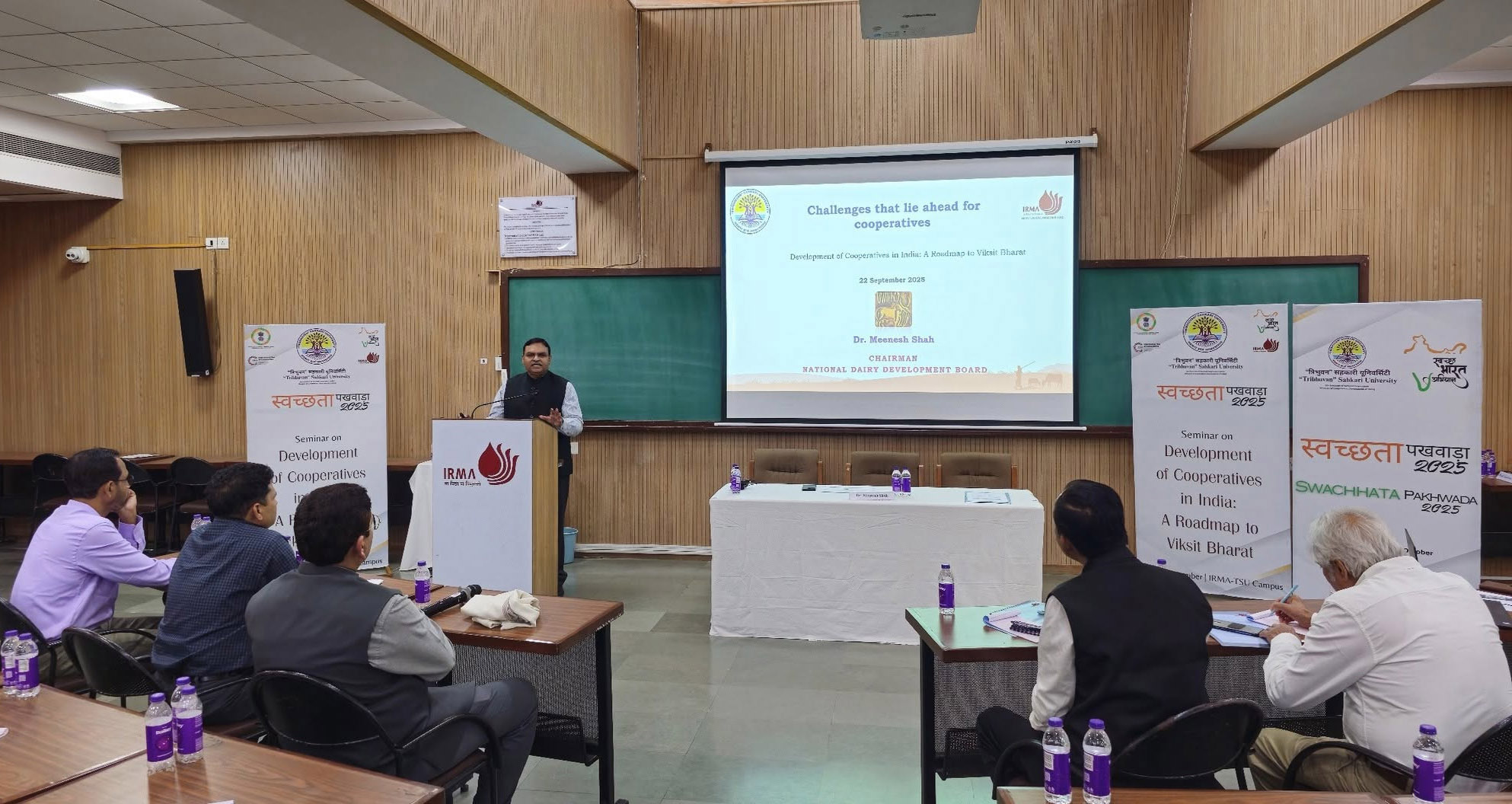
The concluding session of Day 1 was addressed by Dr. Meenesh Shah, Chairman of the National Dairy Development Board (NDDB). Dr. Shah outlined the key challenges confronting India’s dairy sector, such as supply chain inefficiencies, environmental sustainability, and global competitiveness.
He introduced “Vision Dairy 2047”, a long-term strategic framework which advocates for: increasing focus on value-added dairy products, promoting sustainable dairy farming methods, improving animal health and feed quality, enhancing export readiness, and integrating newer technologies to optimize production and reduce environmental impact.
Earlier during the day, Santosh Kumar Shukla, General Manager at IFFCO, led an interactive session focused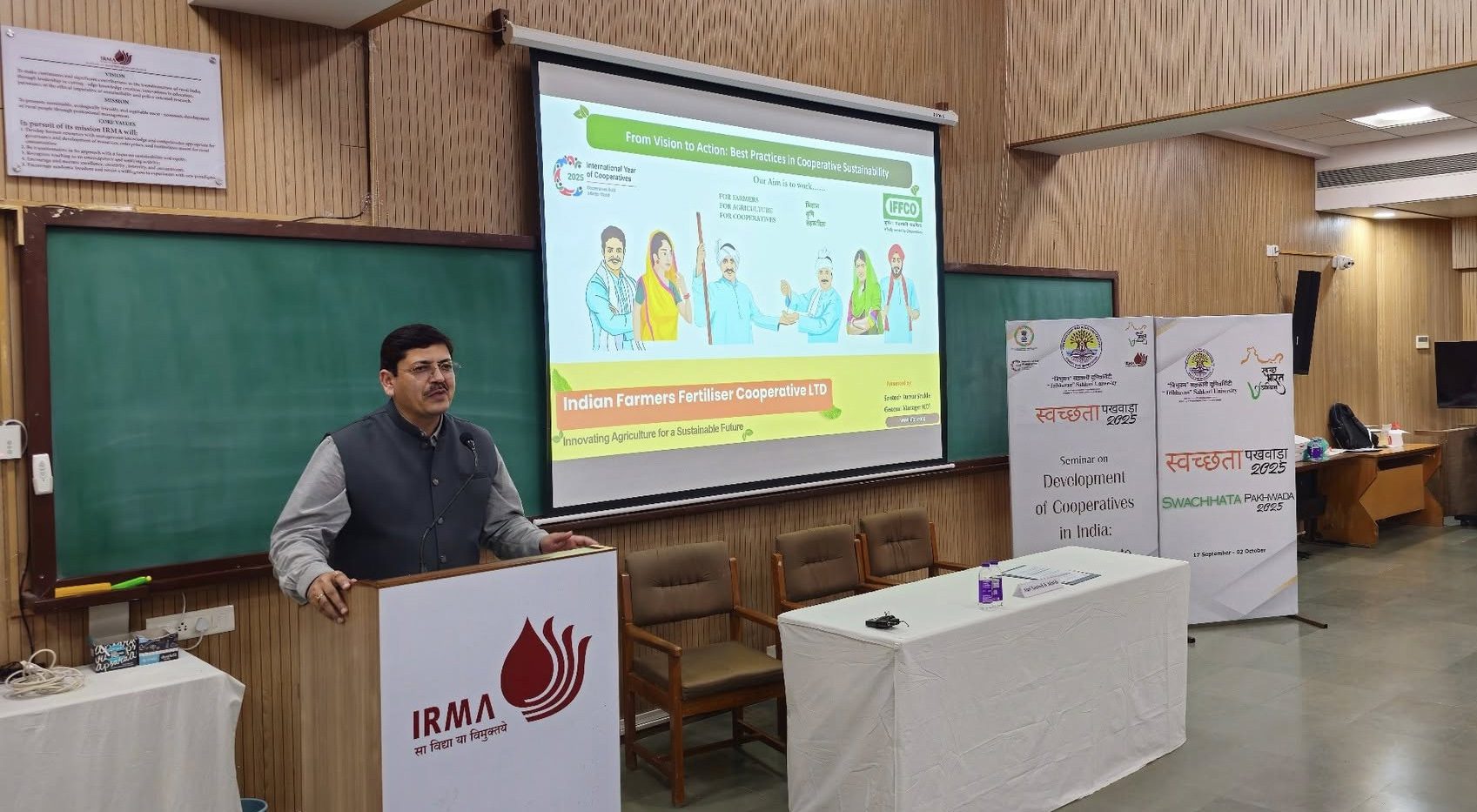 on the cooperative movement’s recent innovations. Among the highlights was IFFCO’s “Sahkari Taxi” initiative, a creative attempt to leverage cooperative institutions to provide transportation services in rural areas, helping mobility, access, and connectivity. Shukla also reflected on how cooperatives must innovate in governance, member engagement, and diversification of activities to stay relevant.
The seminar served as a platform for rich dialogue among cooperative sector experts, government officials, practitioners, as well as students and members of IRMA / TSU. Participants discussed what reform, modernization, capacity building, and policy interventions are required to make cooperatives a central pillar in achieving Viksit Bharat.
Social media posts from IRMA’s official channels reiterated that the cooperative movement is not just an economic model but also a social institution that can help realize rural prosperity, social inclusion, youth engagement, and sustainable livelihoods.
This seminar builds on ongoing transformations: recently, the Tribhuvan Sahkari University Bill, 2025 was passed to convert IRMA into a full-fledged cooperative university, making it an institution of national importance dedicated to cooperative education, research, training and policy development.
The seminar thus aligns with TSU’s mission: to professionalize cooperative management, develop future leaders of the cooperative movement, and integrate cooperation into India’s rural growth trajectory under the vision of Viksit Bharat.