





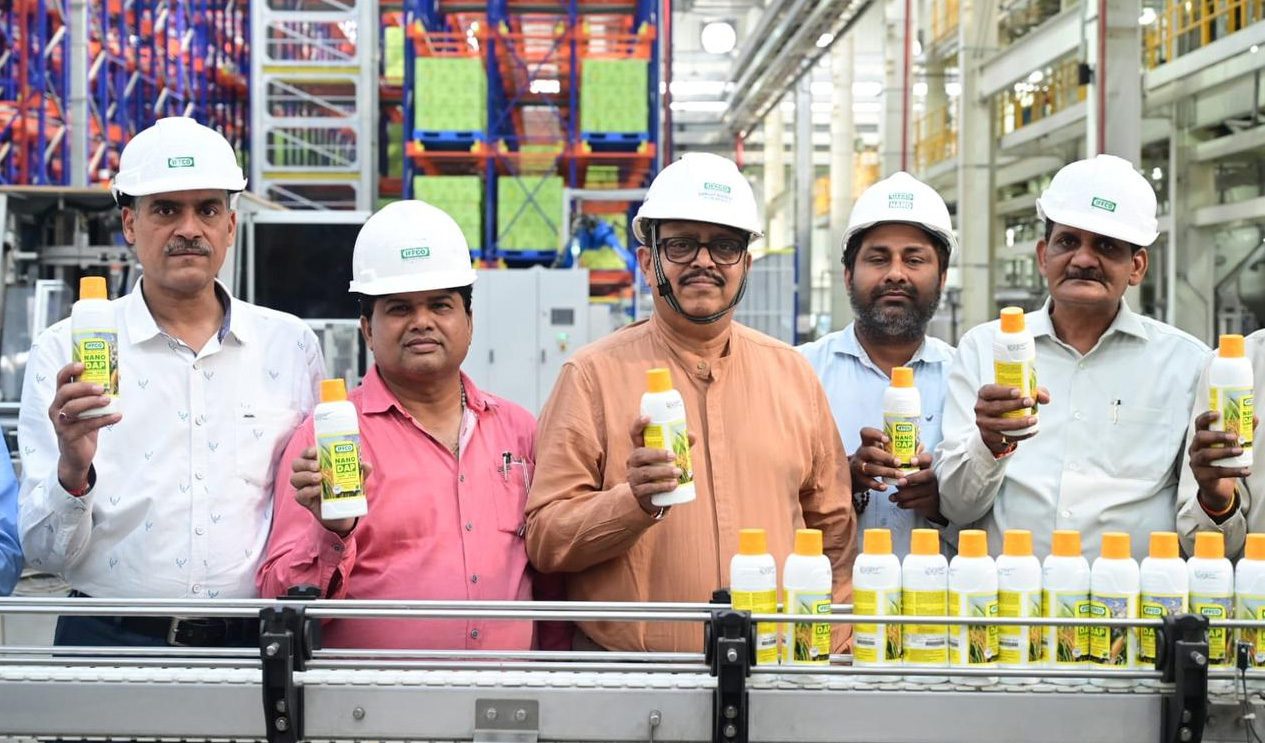
IFFCO has further bolstered its nano-fertiliser capacity with the commissioning of two additional Nano DAP Liquid plants in Uttar Pradesh. Located at Aonla (Bareilly district) and Phulpur (Prayagraj district), each facility is designed to produce 2 lakh bottles (500 ml each) per day, marking a significant upsurge in the cooperative’s output of advanced fertiliser solutions.
With these two new units coming online, IFFCO now operates five nano-fertiliser plants across India, delivering a combined daily capacity of 9.5 lakh bottles encompassing both Nano Urea and Nano DAP Liquid.
This expansion is poised to strengthen the supply chain for nano-formulated nutrients, ensuring that farmers from Punjab to Tamil Nadu can access the product without delays or shortages.
Traditional Di-Ammonium Phosphate (DAP) fertilisers consist of relatively large particles that can be prone to runoff and uneven soil distribution. By contrast, Nano DAP Liquid is engineered with particles under 100 nanometers, dramatically increasing its surface area and enabling superior nutrient absorption by plant roots. It enhances soil health through more uniform phosphorus delivery, reduces wastage and lowers environmental impact, and improves crop vigour and yield potential.
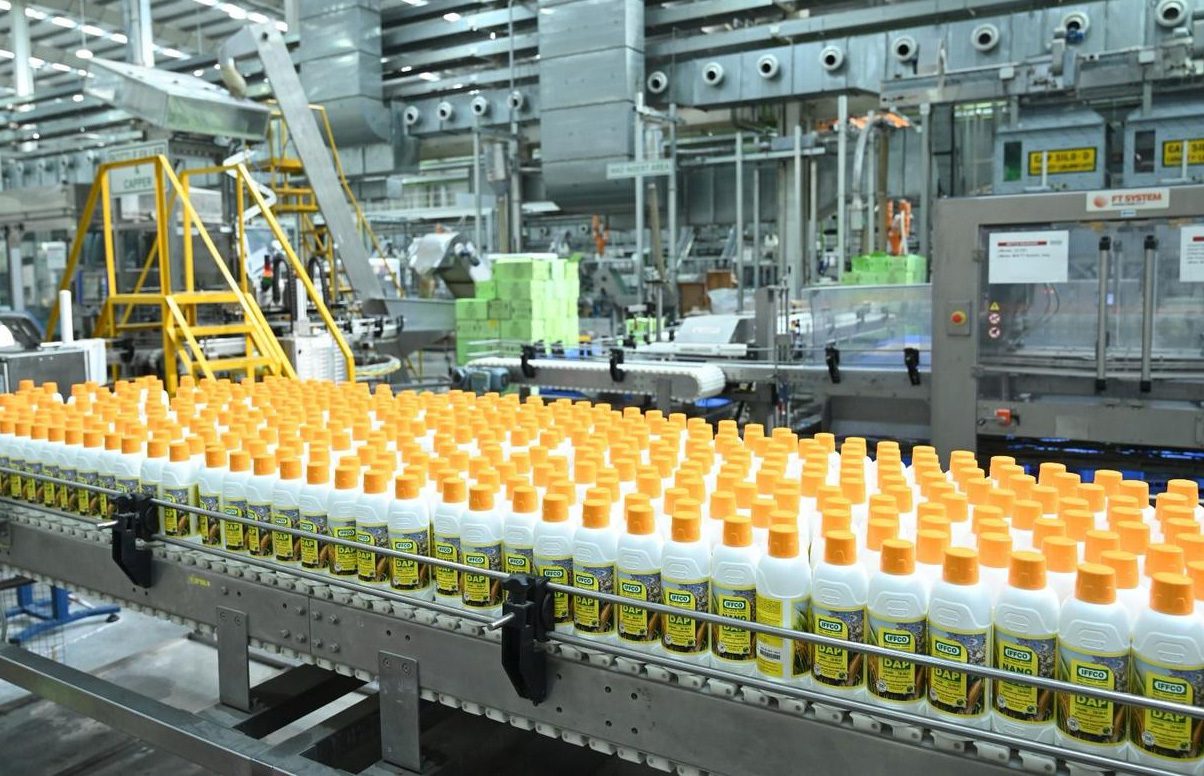 Studies and field trials have shown that nano-sized fertilisers can reduce the total quantity of product needed per hectare while maintaining—or even boosting—crop productivity. This not only cuts input costs for farmers but also aligns with national goals for sustainable agriculture, reducing nutrient leaching into waterways and greenhouse-gas emissions from fertiliser overuse.
Commenting on the milestone, IFFCO Managing Director Dr U.S. Awasthi noted: “After the brilliant response from farmers for Nano DAP Liquid, IFFCO’s Aonla and Phulpur units have started commercial production, each with a capacity of 2 lakh bottles per day. This enhancement will ensure wider availability and timely delivery of Nano DAP across the country”.
IFFCO pioneered nano-liquid fertiliser technology with the launch of Nano Liquid Urea in June 2021, followed by Nano DAP Liquid in April 2023 (Rediff). Today, Nano Urea is priced at approximately ?240 per 500 ml bottle, while Nano DAP Liquid retails at around ?600 for the same volume.
Together, these advancements represent a game-changing solution for India’s agricultural sector, equipping farmers with tools to cultivate healthier, more resilient crops while promoting efficient resource use and environmental stewardship.