
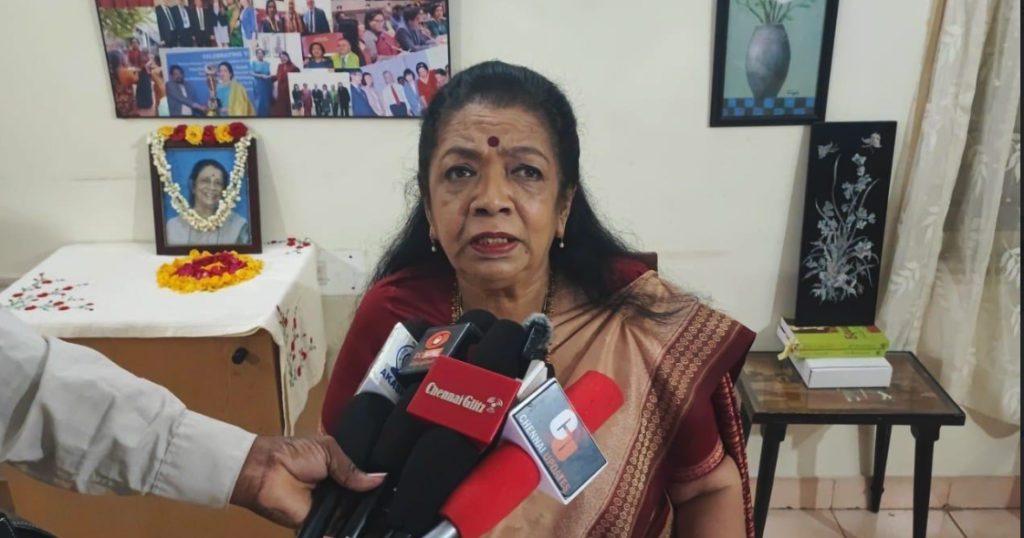
A global spotlight fell on grassroots women’s cooperatives on Wednesday as the Working Women’s Forum–Indian Cooperative Network for Women hosted a high-level side event of the 64th United Nations Commission for Social Development from its headquarters in Chennai.
Addressing participants gathered physically and online from more than 25 countries, WWF–ICNW President Dr Nandini Azad said the event marked a historic moment in amplifying the voices of informal sector women from the Global South on international platforms.
Held during the New York–based CSocD session but anchored in Chennai, the event drew over 300 grassroots women workers from multiple Indian states including Tamil Nadu, Karnataka, Andhra Pradesh and Telangana. Dr Azad highlighted that WWF–ICNW today represents over 2.15 lakh women members across 250 trades through 13 branches in South India, reflecting the scale and depth of its grassroots reach built over a 45-year journey.
Expressing gratitude to the UN Economic and Social Council, Dr Azad said the recognition of poor women’s cooperatives demonstrated how locally rooted institutions could exercise global leadership. She noted that WWF–ICNW has consistently ensured that the lived realities of informal sector women are represented in global forums including the UN, BRICS and G20, with the organisation having conducted nearly nine ECOSOC side events from Chennai in the past five years alone.
The panel brought together international cooperative and development leaders. Andreas Kappes, Secretary General of the International Raiffeisen Union, said democratic cooperatives with gender equality at their core were essential for social justice and economic resilience.
He described the election of Dr Azad to the IRU global board as an unprecedented milestone, marking the first time a mass women’s cooperative from the informal sector had assumed such global influence. He stressed the importance of enabling legal frameworks, access to finance and sustained investment in training to achieve lasting impact.
Representing the Caribbean Community, Selvine Stephenson-Grant underlined the role of cooperatives in food security, climate resilience and gender equity, particularly in small island and developing states. She commended WWF–ICNW for elevating grassroots women’s leadership globally and called for stronger governance systems, policy support and digital tools.
World Farmers Organization Secretary General Andrea Porro and WFO President Arnold Puech d’Alissac echoed the centrality of cooperatives in translating policy into action, especially in agriculture. They highlighted the scale of cooperative farming globally and acknowledged Dr Azad’s leadership role within WFO, noting the growing focus on women farmers as the cooperative movement transitions beyond 2025.
Voices from Africa added a critical dimension, with Ghada Ahmadein of the Regional Nile Women Network detailing how water scarcity and climate stress disproportionately affect women and girls. She emphasised that women-led grassroots networks are vital in bridging gaps between policy commitments and on-ground realities across the Nile Basin.
The event also showcased five video case studies of women members who transformed small loans into sustainable enterprises, illustrating how access to credit, financial literacy and cooperative mentorship can shift families from informal survival to long-term stability.
The session concluded by reaffirming that strengthening grassroots women’s cooperatives is central to advancing gender equality, economic resilience and social justice, aligning closely with the UN Sustainable Development Goals and the global development agenda.