
The recent appointment of an Administrator in the National Cooperative Union of India (NCUI) has triggered quiet but intense speculation within cooperative circles about the role played by influential stakeholders behind the scenes.
Sources familiar with the developments suggest that Sahakar Bharati, one of the country’s largest cooperative organisations, may have actively sought government intervention, citing concerns over governance, legality and democratic functioning at the apex body.
According to persons aware of the matter, Sahakar Bharati had conveyed to the Ministry of Cooperation its unease over what it perceived as prolonged delays in holding elections to NCUI’s Governing Council, whose term ended in November 2025.
The organisation is said to have argued that continuation of the Governing Council beyond its mandated tenure lacked legal backing under the Multi-State Co-operative Societies (MSCS) Act, 2002 and could potentially undermine the interests of NCUI’s members.
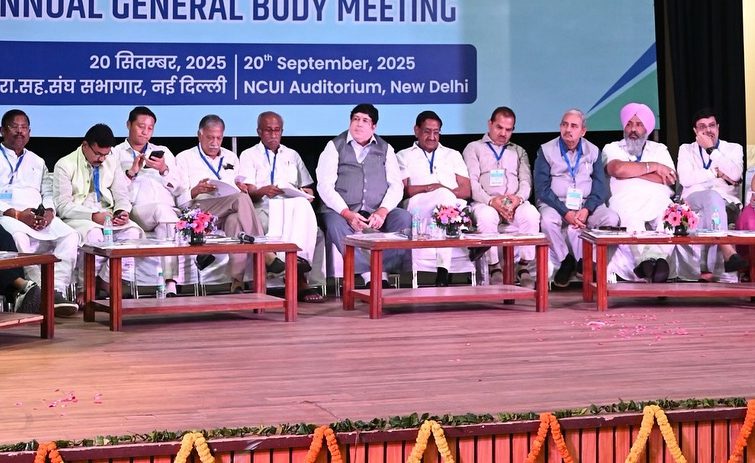
Sources indicate that governance-related issues at NCUI had been flagged much earlier, particularly with regard to its bye-laws. The controversy is believed to have deepened following NCUI’s Annual General Meeting held in September 2025.
According to sources, government nominee and Sahakar Bharati President Uday Joshi was dissatisfied with the manner in which the AGM was conducted and is understood to have written to the Central Registrar of Cooperative Societies (CRCS) raising concerns over the proceedings.
Against this backdrop, insiders suggest that Sahakar Bharati may have urged the Ministry to invoke provisions of the amended MSCS Act that permit supersession of the Governing Council and appointment of an Administrator.
The rationale, sources say, was that elections conducted under an expired Governing Council would lack credibility and legal sanctity, and that an Administrator could facilitate a neutral and orderly election process with the assistance of the Cooperative Election Authority.
While there has been no official confirmation of such a demand, the sequence of events has led many in the cooperative sector to believe that sustained representations from influential quarters may have played a role in the government’s decision.
Sahakar Bharati, sources add, has consistently projected its position as one aimed at safeguarding democratic norms, transparency and statutory compliance at NCUI, which it believes should set the highest standards as a national apex cooperative body.
The Ministry of Cooperation and NCUI have so far remained tight-lipped on the specific triggers behind the administrative action, leaving room for speculation even as attention now shifts to the timeline and conduct of fresh elections.