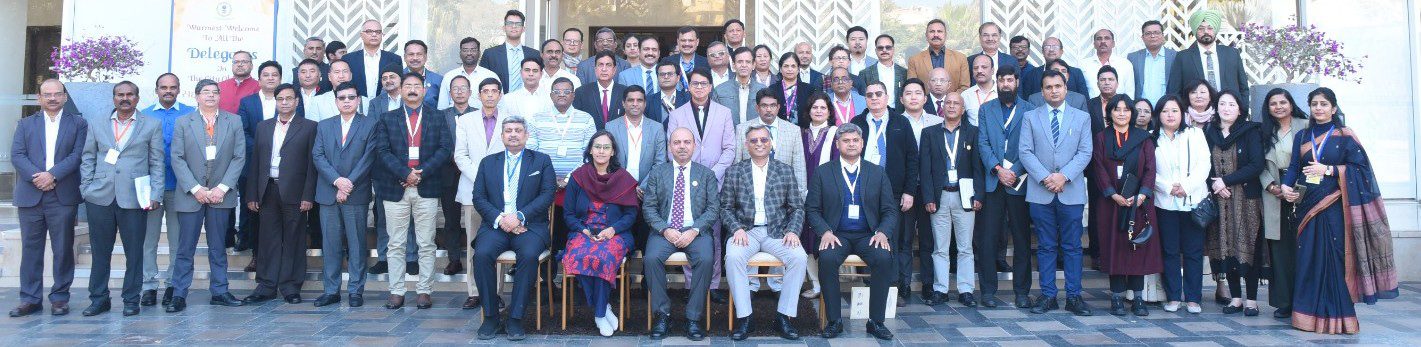






The two-day National-Level Review Meeting of the Ministry of Cooperation concluded on Friday in Udaipur, with wide-ranging deliberations on strengthening and modernising India’s cooperative ecosystem. Senior officials from the Centre, cooperative leaders, and representatives from States and Union Territories participated in an intensive review of flagship initiatives and future reform strategies.
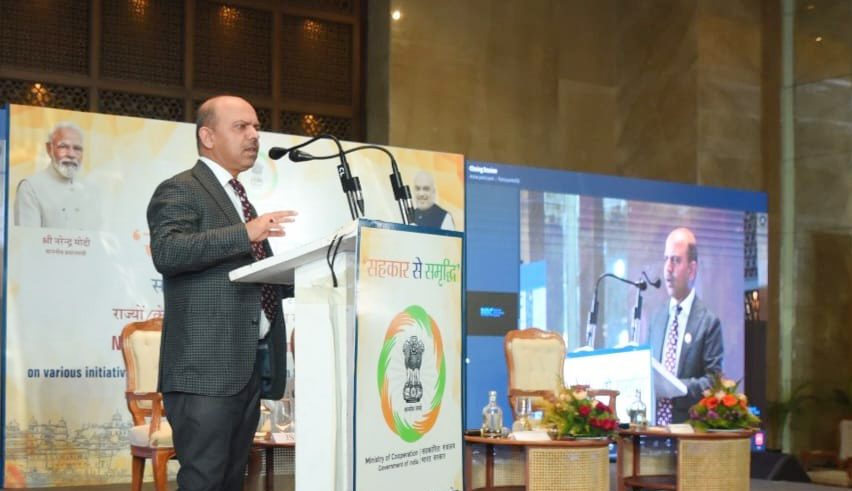
Addressing the concluding session, Dr. Ashish Kumar Bhutani, Secretary, Ministry of Cooperation, described the event as one of the best-organised review workshops to date. Stressing that the computerisation of Primary Agricultural Credit Societies (PACS) is the backbone of cooperative reforms, he called for faster digitisation, activation of all software modules, and a significant increase in digital transactions to enhance transparency and efficiency.
Dr. Bhutani urged States to resolve long-pending issues expeditiously and encouraged Registrars of Cooperative Societies (RCSs) and senior officials to personally visit PACS to monitor ground-level implementation. Highlighting the government’s ambitious grain storage programme, he reiterated targets of 5 lakh tonnes by 2026 and 50 lakh tonnes by 2027, calling for coordinated efforts to achieve these goals.
 He also emphasised the need to intensify membership drives for the formation of new PACS, improve the financial viability of District Central Cooperative Banks (DCCBs), diversify cooperative business activities, and eliminate nepotism from cooperative institutions.
Informing participants about the removal of restrictions under Section 20 following consultations with the Reserve Bank of India, Dr. Bhutani described the move as a major relief for the cooperative banking sector. He further encouraged States to actively share success stories on social media platforms and tag the Ministry to amplify positive narratives around cooperatives.
Deliberations during various sessions focused on the critical role of cooperative banks in strengthening PACS. States shared progress on the implementation of cashless PACS and MIS systems, promotion of startup ecosystems within cooperatives, district-level business planning, NABARD’s model cooperative village initiative, and efforts to strengthen modern storage and supply chains in collaboration with the Food Corporation of India.
Another session, titled “Sahakar Samvad with Successful Cooperatives,” highlighted best practices and innovations under White Revolution 2.0. Representatives from Odisha, the National Dairy Development Board (NDDB), and Banas Dairy showcased transformative initiatives in the dairy and fisheries sectors, underlining the growing contribution of cooperatives to farmers’ incomes and the national economy.
Focus on regional development marked one of the sessions that discussed cooperative growth in the North-Eastern States. Experiences, challenges, and best practices were presented by Sikkim, Arunachal Pradesh, Mizoram, and Manipur. Chaired by Siddharth Jain, Joint Secretary, the session also featured presentations by NEDFI on financial support mechanisms for strengthening cooperatives in the region.
Another session, themed “Sahakar se Samriddhi – PACS in a Leading Role,” showcased progress in PACS empowerment through digitisation, ERP integration, e-KCC reforms, startup linkages, cluster-based business models, and innovative initiatives such as farmer drones. NABARD and State representatives highlighted how these reforms are making PACS multi-purpose and financially sustainable.
A dedicated capacity-building and media strategy workshop, chaired by Anand Kumar Jha, Joint Secretary, focused on training through premier institutions such as LBSNAA, TSU, NCCT, and VAMNICOM. States were encouraged to strengthen communication strategies by maintaining active social media handles, publishing newsletters and magazines, and sharing content in regional languages to improve outreach and public engagement.
Another session addressed the theme of future-ready cooperative leadership and governance, emphasising research-based training, policy reforms, digital empowerment, and capacity building across all levels of cooperative administration.
The meeting concluded with a strong consensus on transforming cooperatives into financially strong, digitally enabled, inclusive, and multi-purpose institutions, reinforcing their pivotal role in rural transformation, economic growth, and social development across India.