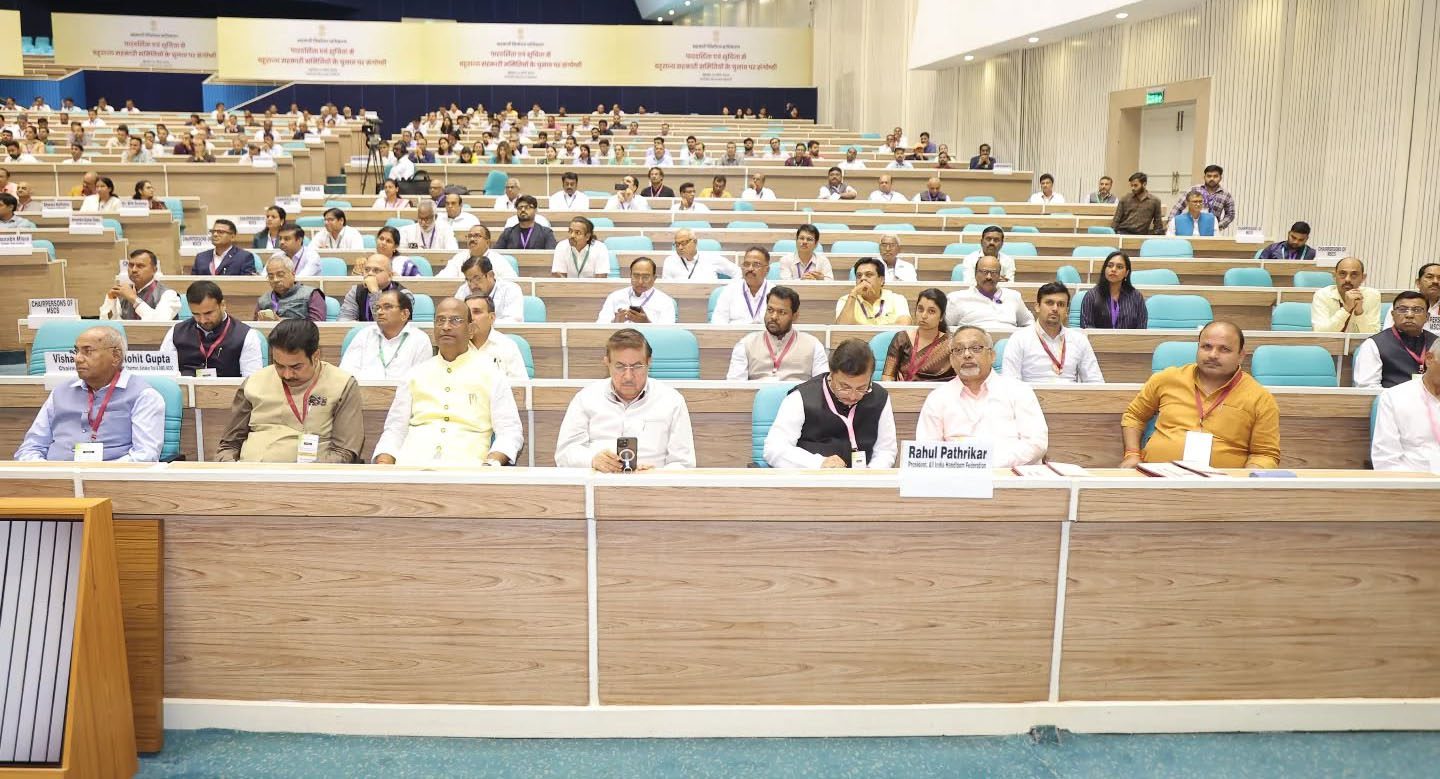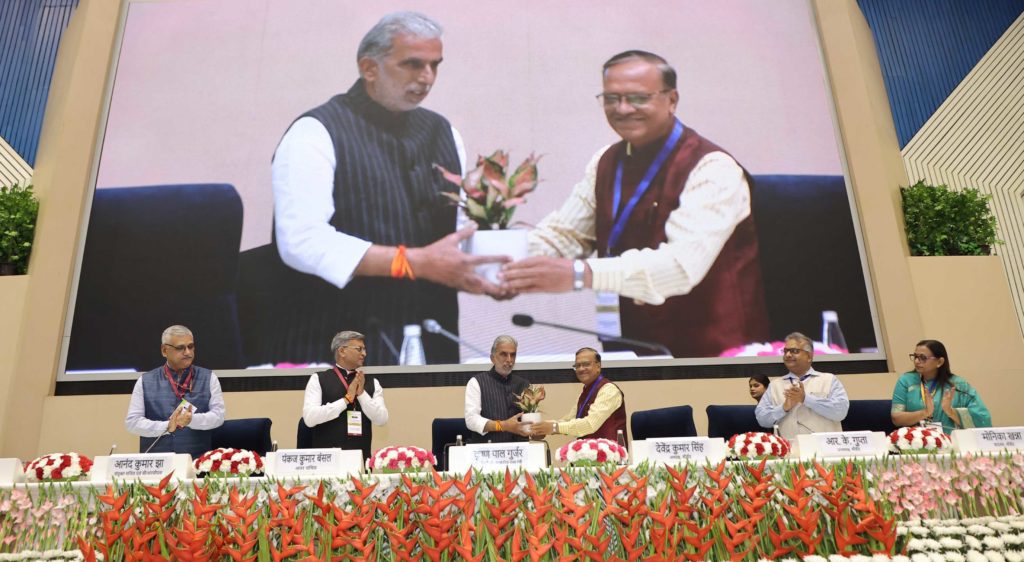
A national seminar on “Transparency and Purity in Elections of Multi-State Cooperative Societies” was held at Vigyan Bhavan in New Delhi, bringing together key stakeholders from across the cooperative sector to discuss ways to strengthen democratic governance and accountability in cooperative institutions.
The event was organised by the Cooperative Election Authority (CEA) under the Ministry of Cooperation and witnessed participation from chairpersons, chief executive officers, board members of multi-state cooperative societies, returning officers, district magistrates, representatives of state cooperative election authorities, experts from the cooperative sector and senior government officials.
Addressing the gathering, Minister of State for Cooperation Krishan Pal Gurjar said the seminar marked a historic step for the cooperative movement by bringing representatives of multi-state cooperatives from across the country onto a single platform to deliberate on transparency and integrity in cooperative elections.
He said the reforms introduced in the cooperative sector are advancing the vision of “Sahkar se Samriddhi” under the leadership of Prime Minister Narendra Modi and the guidance of Union Home and Cooperation Minister Amit Shah.
Gurjar highlighted that the Multi-State Cooperative Societies (Amendment) Act, 2023 has introduced several key reforms aimed at strengthening transparency, accountability and democratic functioning in cooperatives. One of the major reforms was the creation of an independent Cooperative Election Authority, which was formally notified on March 11, 2024, to ensure free, fair and transparent elections in multi-state cooperative societies.
According to the minister, the authority has already conducted around 240 elections across cooperative institutions. At present, around 70 elections are underway, while nearly 130 additional elections are expected to be conducted in the coming financial year. He said these measures are helping to reinforce democratic governance and ensure timely elections within cooperative bodies.
Gurjar also emphasised that reforms have been introduced to fix the tenure of boards of directors in multi-state cooperative societies, eliminating provisions that previously allowed boards to continue indefinitely until elections were conducted. This, he said, would promote greater discipline and accountability in cooperative governance.
Highlighting the importance of inclusiveness, the minister said the amended Act provides for reservation of two seats for women and one seat each for Scheduled Castes and Scheduled Tribes on the boards of multi-state cooperative societies. These provisions aim to increase diversity and ensure broader representation in cooperative decision-making. He noted that several reserved seats remain vacant and the government is taking steps to address the issue.
Gurjar further stated that the Banking Regulation (Amendment) Act, 2025 has aligned the tenure of boards of cooperative banks, including multi-state cooperative banks, with constitutional provisions to strengthen democratic functioning in the cooperative banking sector. Additional measures have also been introduced to enhance transparency, including the requirement that cooperative banks appoint auditors from panels approved by the Central Registrar of Cooperative Societies.
The government has also introduced the post of Cooperative Ombudsman to protect the interests of members. More than 38,000 complaints have been received so far, and many grievances have already been addressed through orders issued by the Ombudsman.
Cooperative Election Authority Chairperson Devendra Kumar Singh said the authority has gained significant experience in managing elections across diverse cooperative institutions since its formation. He stressed that clarity in cooperative bye-laws is essential to avoid disputes and ensure fair elections, particularly in large multi-state cooperatives operating across multiple states.
The seminar also featured technical sessions on promoting transparency in elections and strengthening integrity in the electoral process. Participants discussed issues such as voting rights, membership eligibility and representation in cooperative boards.
The event concluded with a collective commitment to strengthen transparency, fairness and democratic participation in cooperative elections, reinforcing the cooperative sector as a key pillar of India’s socio-economic development.