






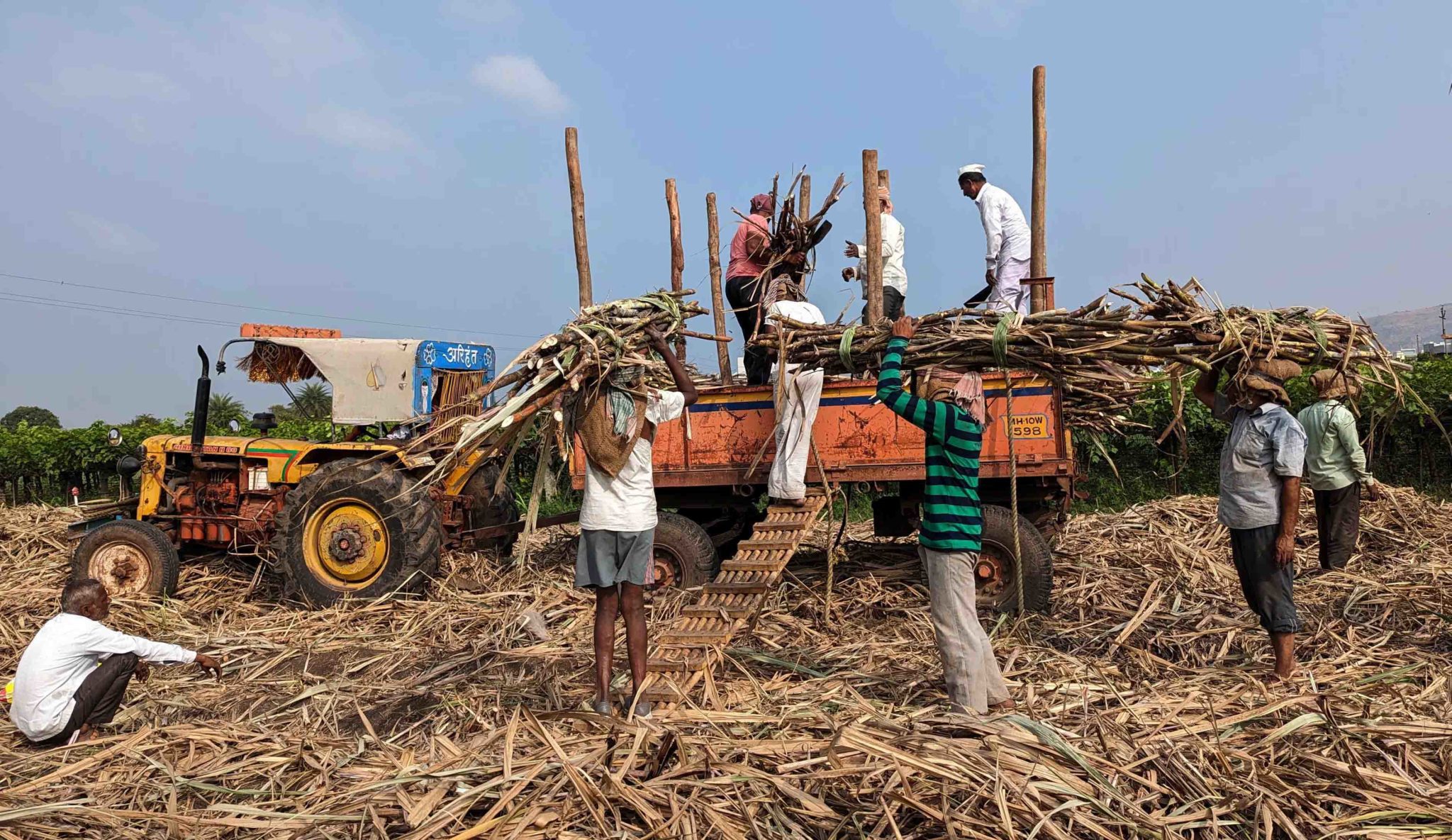
India’s sugarcane crushing season for 2025–26 has begun on an uneven note as extended monsoon showers and price-related disruptions slowed down the expected October start, reads a press release sent by apex sugar body, NCSF.
The new season traditionally begins on the first of October after the withdrawal of monsoon in late September, but this year, the rains lingered well into October and even into November in parts of Maharashtra.
Experts have termed this unusual pattern “retreat rains”, and their impact has been felt most severely in the Marathwada region, where heavy downpours destroyed ready-to-harvest kharif crops such as soybean, sorghum, maize, pulses, vegetables and orchards.
Sugarcane, though more resilient and likely to gain weight due to the moisture, could not be harvested on time because the fields remained soggy and inaccessible. In addition, ongoing cane price agitations in Maharashtra and Karnataka slowed down the movement of cane, delaying crushing and early sugar output across the country.
Despite these challenges, the first fortnightly report of the season shows a relatively active start. By mid-November, 325 mills had commenced operations, compared with just 144 mills during the same period last year.
This translated to 128 lakh metric tonnes of cane being crushed, significantly higher than last year’s 91 LMT for the same period. New sugar production reached 10.50 LMT, up from 7.10 LMT a year ago, and the average sugar recovery improved to 8.2 percent from 7.8 percent. Last year’s delayed start due to elections in Maharashtra partly explains the higher comparative numbers this season.
Industry estimates suggest that gross sugar production this year will reach about 350 LMT, with Maharashtra expected to contribute 125 LMT, Uttar Pradesh 110 LMT and Karnataka 70 LMT. After diverting an estimated 35 LMT of sugar for ethanol production and accounting for the expected domestic consumption of 290 LMT, India will still have a tradable surplus of around 20–25 LMT.
The government has already allowed 15 LMT for export, a move industry leaders say will help stabilise market sentiment. With the January–April 2026 export window only weeks away, the country may additionally secure opportunities to ship another 10 LMT later in the season.
This export potential comes as a relief to mills that have been struggling with depressed sentiments due to the stagnant sugar Minimum Support Price for the past six years and unchanged ethanol procurement rates for three years. With both major revenue streams blocked, mills are finding it increasingly difficult to pay cane dues, manage operations, and stay financially viable.
The National Cooperative Sugar Federation (NCSF) has reiterated that farmers’ interests remain at the core of its approach. It supports the rising Fair and Remunerative Price (FRP) and acknowledges farmers’ expectations for higher cane rates. However, it has urged that millers also be supported through an upward revision of sugar MSP and ethanol prices, keeping in view the rising cost of raw material.
NCSF President Harshwardhan Patil appealed to cane growers to adopt artificial intelligence–based farming techniques, noting that pilot projects have shown yield improvements of 40 percent and cultivation cost reductions of 30 percent.
With India’s cane acreage stagnating at 55–57 lakh hectares and yields hovering around 75–77 tonnes per hectare, he emphasised the need for technological adoption to maintain leadership as the world’s second-largest sugar producer and largest sugar consumer.
NCSF Managing Director Prakash Naiknavare reaffirmed the federation’s three main priorities: raising MSP to reflect actual ex-mill realisation, revising sugar-based ethanol prices upward, and increasing sugar-to-ethanol allocation in future cycles.