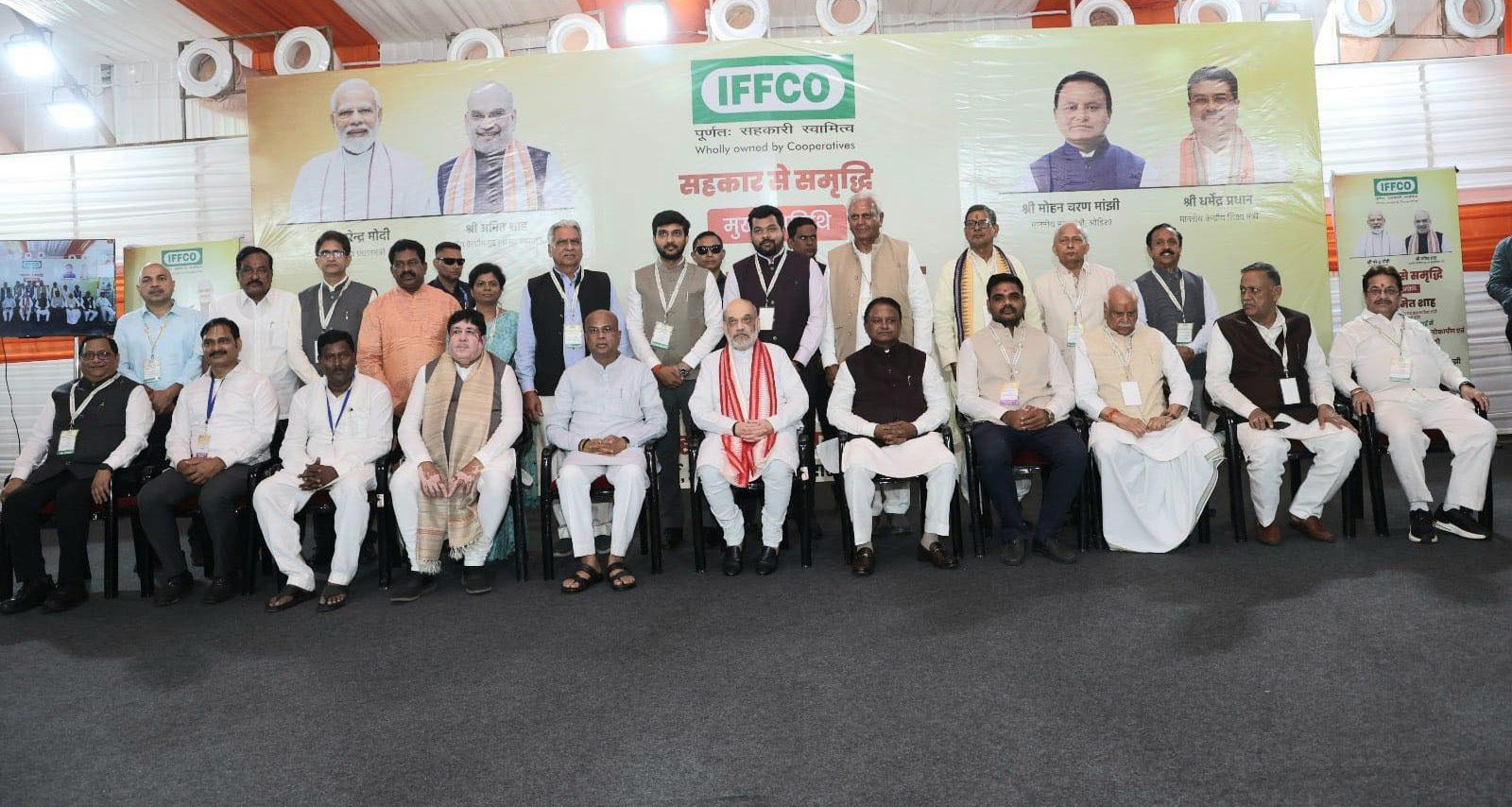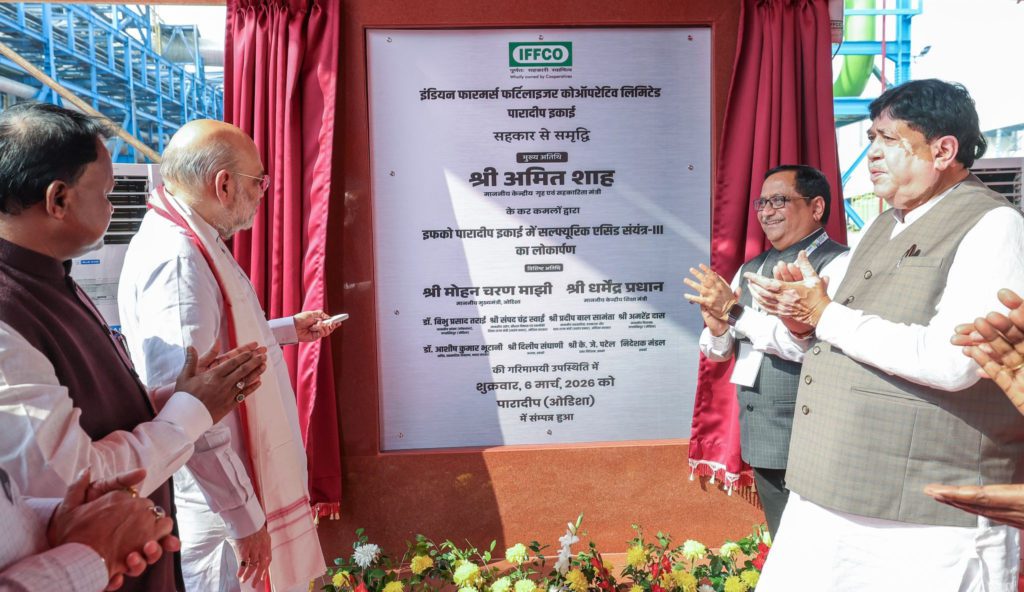
Union Home and Cooperation Minister Amit Shah on Friday inaugurated IFFCO’s Sulphuric Acid Plant–III at its Paradip complex in Odisha, highlighting the project as a major milestone for the cooperative sector and for India’s efforts to achieve self-reliance in key fertiliser inputs.
The inauguration took place as part of a broader programme in which development initiatives worth more than Rs 3,770 crore were launched in the state. However, the expansion of IFFCO’s Paradip unit emerged as the central highlight, underlining the growing role of cooperatives in strengthening the country’s fertiliser and agricultural ecosystem.
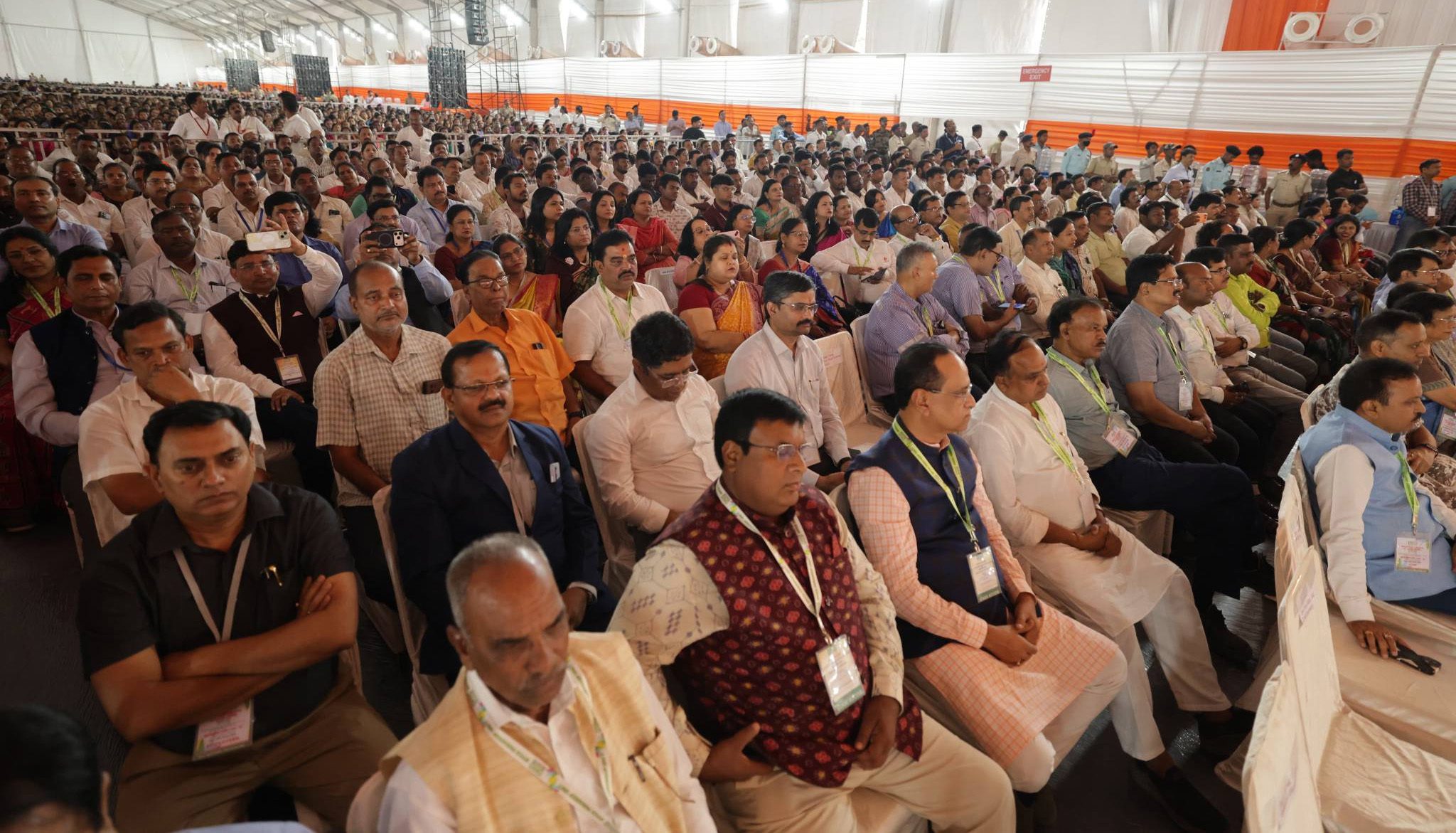
Addressing a cooperative development seminar, Shah said the commissioning of the third sulphuric acid stream at IFFCO’s Paradip facility would significantly boost domestic production of the critical raw material used in fertiliser manufacturing and various chemical industries. Increased domestic production of sulphuric acid, he said, will help reduce import dependence and support the country’s long-term fertiliser security.

Shah said the latest expansion will further strengthen IFFCO’s contribution to the fertiliser sector and enhance the country’s ability to meet domestic demand. He added that cooperatives such as IFFCO and KRIBHCO are expected to play a key role in making India self-sufficient in sulphuric acid production in the coming years.
Highlighting the cooperative character of IFFCO, Shah noted that the organisation is owned by nearly five crore farmers across India, making it one of the largest farmer-owned institutions in the world. He said the cooperative’s financial strength reflects the power of collective farmer participation.
IFFCO’s turnover exceeds Rs 41,000 crore, with profits of more than Rs 3,800 crore and a net worth above Rs 28,000 crore, and these resources ultimately belong to the farmer members who form the backbone of the organisation.
The minister also pointed to IFFCO’s initiatives aimed at promoting sustainable agriculture and balanced

Shah said the growth of institutions like IFFCO demonstrates how the cooperative model can combine industrial scale with farmer ownership. According to him, the success of such organisations shows that cooperatives can operate efficiently while ensuring that the benefits of economic growth flow directly to farmers.
Alongside the IFFCO inauguration, several other development initiatives were also launched in Odisha, including projects related to dairy infrastructure under NDDB and OMFED, as well as the announcement of a National Forensic Sciences University campus in the state. However, Shah emphasised that the expansion of IFFCO’s Paradip facility stands as a major symbol of the strength and potential of India’s cooperative sector.
Led by Chairman Dileep Sanghani, IFFCO’s top leadership was present in Paradeep for the occasion. Sanghani felicitated Amit Shah, Odisha Chief Minister Mohan Charan Majhi and Union Minister Dharmendra Pradhan during the event.
Camping in Paradeep for two days, Sanghani and IFFCO Managing Director K J Patel closely supervised the preparations to ensure that the programme proceeded smoothly. Following the successful conclusion of the event, many attendees congratulated them for the grand and well-organised culmination of the programme.