





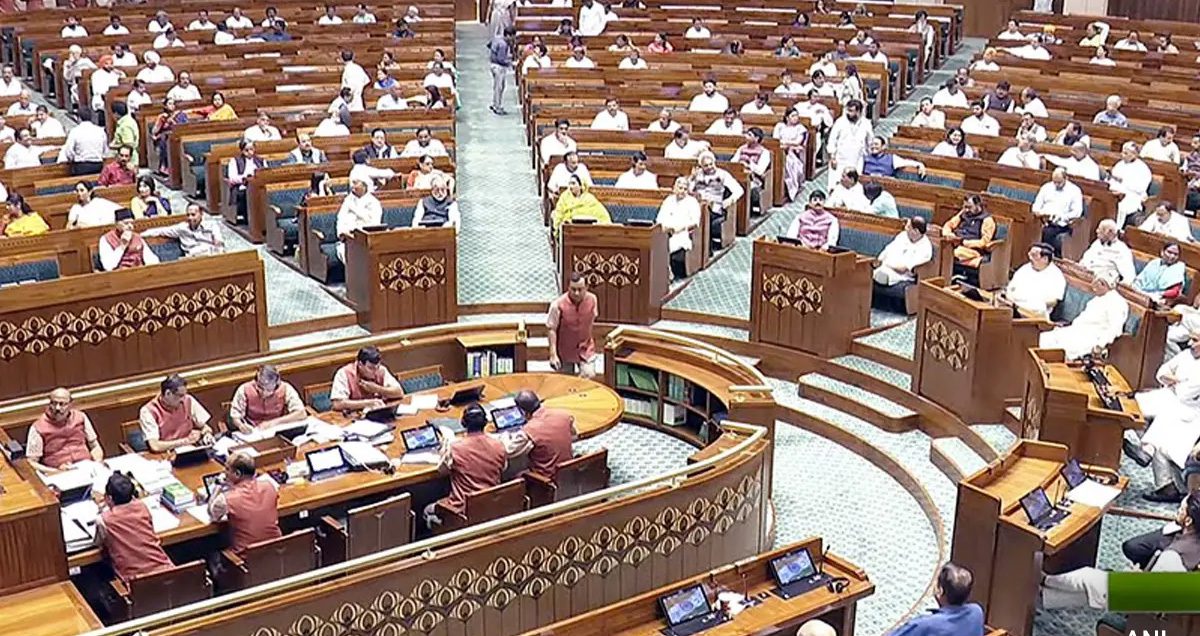
Union Home and Cooperation Minister Amit Shah, in a written reply in the Lok Sabha, informed that the Government has disbursed Rs 6,841.86 crore to 35,24,966 depositors of the Sahara Group’s four Multi-State Cooperative Societies as of 25 November 2025 through the CRCS–Sahara Refund Portal.
The refund process follows the Hon’ble Supreme Court’s landmark order dated 29 March 2023, which directed that Rs 5,000 crore from the “Sahara–SEBI Refund Account” be transferred to the Central Registrar of Cooperative Societies (CRCS) for repayment to genuine depositors.
The disbursement is being conducted under the supervision of Justice R. Subhash Reddy, former Supreme Court judge, with assistance from Gaurav Agarwal, Amicus Curiae.
Launched on 18 July 2023, the CRCS-Sahara Refund Portal enables depositors of Sahara Credit Cooperative Society (Lucknow), Saharayn Universal Multipurpose Society (Bhopal), Humara India Credit Cooperative Society (Kolkata) and Stars Multipurpose Cooperative Society (Hyderabad) to file claims digitally.
Payments of up to Rs 50,000 per depositor are released directly to Aadhaar-seeded bank accounts after verification.
Shah stated that applications are processed transparently as per a detailed Standard Operating Procedure, with deficiencies communicated through a dedicated Re-submission Portal launched on 15 November 2023.
The Supreme Court has extended the deadline for completing refunds to 31 December 2026, giving additional time to settle all legitimate claims.
It bears recall that between around 2010 and 2014, Sahara floated several cooperative societies, including Sahara Credit Cooperative Society Ltd, Humara India Credit Cooperative Society Ltd, Saharayn Universal Multipurpose Cooperative Society Ltd and Stars Multipurpose Cooperative Society Ltd, and reportedly collected deposits worth in the order of Rs 86,673 crore from as many as 4 crore depositors.
Authorities flagged this as suspicious because a large portion of the collected funds, estimated at over Rs 62,000 crore, was channelled into the group’s real-estate project Aamby Valley, which regulators said violated the basic principles of thrift and credit cooperative societies.
In 2020, the Central Registrar of Cooperative Societies asked for a probe by the Serious Fraud Investigation Office (SFIO), following thousands of complaints from depositors who alleged that despite schemes maturing, they did not receive their dues.
The criticism: Sahara, once barred by regulators from raising public deposits, allegedly shifted to the cooperative-society route to continue collecting money, thereby evading regulatory oversight.
Investigations by the Enforcement Directorate (ED) more recently have alleged that Sahara used depositors’ money in a non-regulated manner, operated a Ponzi-style system by forcing or coaxing depositors to reinvest rather than repay mature deposits, manipulated account books to disguise non-repayment, and diverted funds into benami assets and lavish personal expenses.
Thus, what began as cooperative deposit schemes turned into one of India’s biggest alleged deposit-fraud cases, leaving millions of investors waiting, distrustful, and prompting decades of legal, regulatory and recovery efforts.