
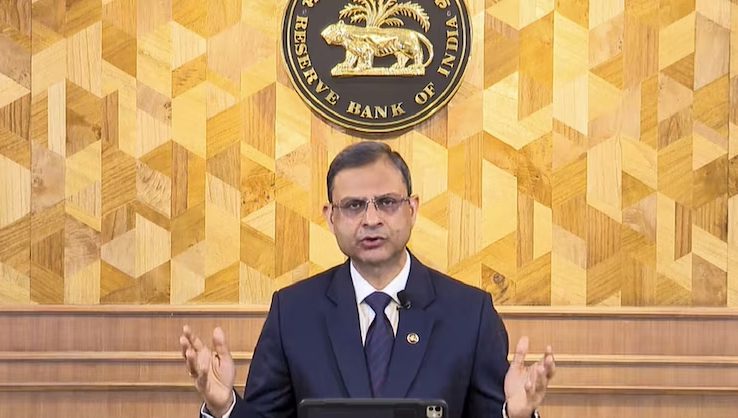
The Reserve Bank of India (RBI) released its Annual Report for 2024-25, a statutory publication of the Central Board of Directors, detailing the central bank’s activities and performance from April 2024 to March 2025. The report outlines notable developments in the functioning, supervision, and financial performance of the urban cooperative banking (UCB) sector.
The credit growth of urban cooperative banks showed a marked improvement as of end-December 2024. This positive momentum was underpinned by stronger capital buffers and a reduced gross non-performing assets (GNPA) ratio compared to the same period the previous year, reflecting an overall enhancement in the sector’s financial health.
The Department of Supervision (DoS) undertook several initiatives aimed at reinforcing both onsite and offsite oversight of UCBs. These included assessments of cyber and information technology (IT) related risks, enhanced focus on fraud risk management, and strengthened Know Your Customer (KYC) and Anti-Money Laundering (AML) supervision.
Notably, guidelines on a revised Prompt Corrective Action (PCA) framework for UCBs were issued, and supervisory engagements with overseas regulators were expanded. The DoS also worked on developing a supervisory Data Quality Index (sDQI) to improve the reliability of reporting.
Efforts were also made to improve consumer awareness and grievance redressal. The Consumer Education and Protection Department (CEPD) continued its campaigns on safe banking practices and regulatory awareness, while also enhancing customer service protections.
A significant structural reform highlighted in the report was the review of the financial reporting format for cooperative banks. The existing format, notified in 1981 under the Banking Regulation Act, 1949, is being revised in light of evolving market conditions and accounting norms. A draft of the updated format was released on January 7, 2025, for public comment, and the RBI is currently reviewing the feedback received.
Supervisory efforts throughout the year focused on maintaining the safety and soundness of UCBs.
The department’s 2024-25 agenda prioritized strengthening cyber risk assessments related to Core Banking Solutions (CBS), card management, and mobile banking. In a key initiative, pooled audits of three major IT Service Providers (ITSPs) were conducted by select UCBs using CERT-In empanelled auditors. Updated cyber security guidelines for UCBs are also in the final stages of development.
The coverage of UCBs under a Risk-Based Approach (RBA) to KYC/AML supervision was expanded to include Tier 3 and Tier 4 banks, which account for nearly 60% of the sector’s deposits. Furthermore, the RBI issued fresh PCA guidelines on July 26, 2024, replacing the earlier Supervisory Action Framework (SAF).
The new PCA framework, which will take effect from April 1, 2025, applies to all UCBs in Tier 2, 3, and 4—excluding those under all-inclusive directions. Tier 1 UCBs remain outside the PCA framework but continue to be under enhanced supervision.
The revised PCA guidelines focus on capital adequacy, asset quality, and profitability. Unlike its predecessor, the framework is more principle-based, with fewer parameters, yet retains the intensity of supervisory scrutiny. It is also aligned with frameworks applicable to Scheduled Commercial Banks (SCBs) and Non-Banking Financial Companies (NBFCs), modified suitably to reflect the principle of proportionality.
Looking ahead, the Department has outlined its agenda for 2025-26, which includes reviewing the RBA for KYC/AML supervision under the RBI’s Utkarsh 2.0 strategy, examining the feasibility of migrating UCBs to a Risk-Based Supervision (RBS) model, and issuing updated cyber security guidelines.
These initiatives underscore the RBI’s continued commitment to modernizing the regulatory landscape for urban cooperative banks, ensuring stability while fostering growth and consumer trust.