





The Centre’s flagship initiative, PM-PRANAM, is gaining traction across states as part of a broader push to promote sustainable agriculture, reduce chemical fertiliser dependence, and restore soil health. Backed by extensive field trials and scientific validation, the programme is now emerging as a key pillar of India’s nutrient management strategy.
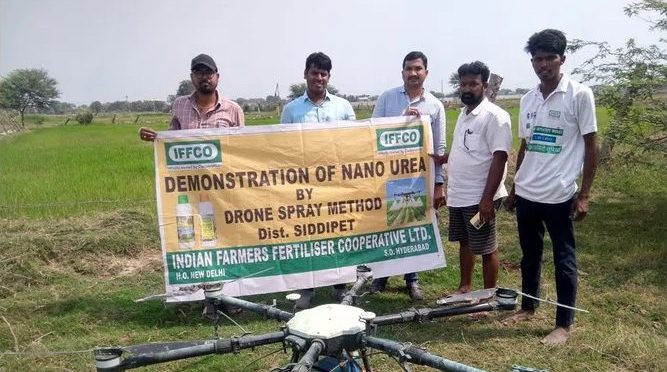
According to the Ministry of Chemicals and Fertilizers, over 5,800 field trials of Nano DAP and Nano Urea have been conducted across 15 agro-climatic zones, with IFFCO playing a central role in execution. The cooperative major conducted 2,500 Nano DAP trials in 2024–25 and 2,938 trials in 2025–26 so far, alongside nearly 900 Nano Urea trials over the same period under the guidance of Indian Council of Agricultural Research and Krishi Vigyan Kendras.
The Department of Fertilizers has also launched a nationwide “Maha Abhiyan” to promote Nano DAP adoption and a parallel campaign in 100 districts to popularise Nano Urea Plus. These efforts aim to demonstrate the effectiveness of nano fertilisers in improving nutrient efficiency while reducing conventional fertiliser usage.
The PM-PRANAM scheme, approved in June 2023, offers financial incentives to states that reduce their consumption of chemical fertilisers such as urea, DAP, NPK, and MOP. States achieving reductions compared to their three-year average are eligible for grants equivalent to 50% of the subsidy savings. Of this, 95% is allocated to states, with a majority earmarked for capital expenditure and awareness initiatives.
Announcing the progress in Parliament, Union Minister Jagat Prakash Nadda highlighted that the scheme integrates policy incentives with grassroots-level demonstrations, creating a dual approach to behavioural and structural change in fertiliser usage.
Beyond recent initiatives, long-term research findings reinforce the need for balanced fertilisation. Studies conducted by ICAR and agricultural universities show that recommended NPK application improves yields by 20–30% compared to nitrogen-only usage. More significantly, integrated nutrient management, combining chemical fertilisers with organic inputs like farmyard manure (FYM), can boost productivity by 30–50% while enhancing soil organic carbon and microbial activity.
Experiments conducted over decades at the University of Agricultural Sciences, Bengaluru, further underline that indiscriminate use of nitrogen-based fertilisers leads to soil degradation, declining yields, and nutrient imbalances. In contrast, integrated approaches improve soil structure, water retention, and long-term sustainability.
The findings also caution against over-reliance on DAP, noting emerging deficiencies in secondary nutrients like sulphur. Experts recommend supplementing fertiliser regimes with organic inputs and balanced nutrients, including potassium, to sustain productivity.
Farmers currently access subsidised fertilisers through retail outlets and Pradhan Mantri Kisan Samridhi Kendras based on Soil Health Card recommendations. However, integration of these recommendations into fertiliser supply planning is yet to be formalised.
With IFFCO at the forefront of nano fertiliser dissemination and the government pushing policy-backed incentives, India’s fertiliser landscape appears to be transitioning towards a more sustainable and science-driven model.