






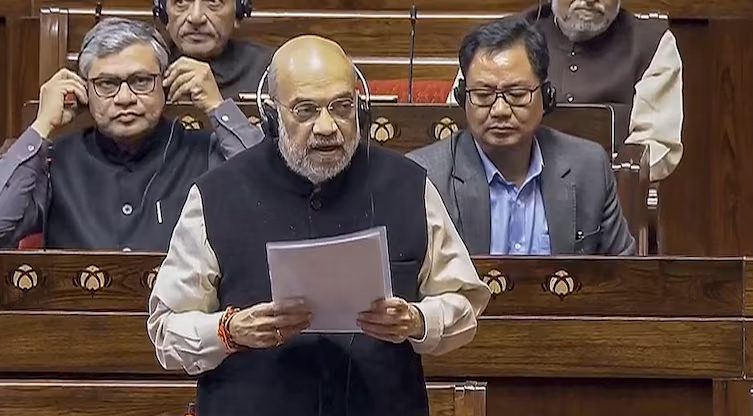
Union Home and Cooperation Minister Amit Shah informed the Rajya Sabha that the draft of the new National Cooperative Policy has been prepared and is under finalization.
The policy aims to strengthen the cooperative sector under the vision of “Sahkar se Samriddhi” (Prosperity through Cooperation).
To develop the policy framework, the government constituted a National Level Committee on September 2, 2022, under the leadership of Suresh Prabhakar Prabhu. The committee includes experts from the cooperative sector, representatives from National, State, District, and Primary-level cooperative societies, as well as officials from the Ministry of Cooperation and various central ministries.
As part of the policy formulation process, the committee held 17 meetings and conducted four regional workshops across the country to gather suggestions from stakeholders. The inputs received from cooperative societies, state governments, and industry experts have been incorporated into the draft policy.
The new National Cooperative Policy aims to unlock the full potential of India’s cooperative sector by providing a structured framework for its growth and sustainability.
Additionally, an analysis of budget allocations, revised estimates, and expenditure under various schemes highlights the financial commitments and utilization patterns in the cooperative sector.
The budget for the digitalization of Primary Agriculture Cooperative Societies was initially set at Rs 500 crores but was later revised to Rs 131 crores, with an expenditure of Rs 113.63 crores as of March 5, 2025.
Similarly, the scheme for strengthening cooperatives through IT interventions had an initial allocation of Rs 88.96 crores, which was revised to Rs 25 crores, with Rs 15.87 crores utilized. On the other hand, the Grant-in-Aid to the National Cooperative Development Corporation for strengthening Cooperative Sugar Mills retained its full allocation of Rs 500 crores, all of which has been utilized.
The budget analysis reveals a significant downward revision in allocations for digitalization and IT interventions, suggesting a reassessment of funding priorities. Despite the reduction in funds, actual utilization rates of 86.7% for PACS digitalization and 63.5% for IT interventions indicate that most of the revised amounts have been effectively used.
The full utilization of the Rs 500 crore allocation for cooperative sugar mills showcases a focused investment in boosting the sector.
As the new policy nears finalization, experts expect it to address funding distribution and prioritization concerns, ensuring robust growth and modernization of the cooperative sector.
The Ministry of Cooperation, under the leadership of Amit Shah, continues to push for financial efficiency and structural reform within the cooperative framework, with stakeholders anticipating comprehensive policy guidelines soon.