
The Union Government on Tuesday outlined the scope and implementation of the National Cooperative Policy, 2025 in Parliament, stating that the policy aims to strengthen democratic functioning, transparency and trust in cooperatives while transforming them into vibrant, member-driven institutions.
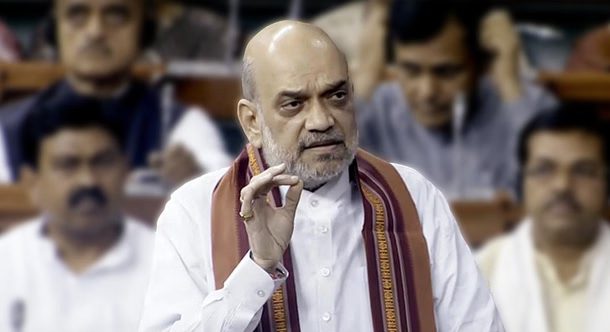
Replying in the Lok Sabha, Union Minister for Home and Cooperation Amit Shah said the policy encourages States and Union Territories to amend their Cooperative Societies Acts and Rules to provide greater autonomy, ensure ease of doing business and improve governance standards across the sector.
The Minister said the proposed reforms seek to guarantee autonomous functioning of cooperatives with genuine democratic member control, free and fair elections of boards and office bearers, and transparent recruitment processes.
To reduce delays and curb discretion, States and UTs have also been advised to completely digitalise the offices of Registrars of Cooperative Societies, making them paperless and enabling all interactions with cooperatives through online portals, e-mail and mobile-based platforms.
He informed the House that the policy promotes adoption of model bye-laws across different tiers and sectors of cooperatives to strengthen the role of members. These bye-laws focus on ensuring active participation of members, creating mechanisms to collect member-centric feedback, activating dormant memberships and encouraging greater participation of women and weaker sections.
The policy also stresses transparent and corruption-free governance and the induction of young and qualified professionals to modernise cooperative management.
Highlighting the importance of capacity building, the Minister said the Tribhuvan Sahkari University has been established as the apex institution for cooperative education, training and research in the country. The University will work through affiliated institutions, Centres of Excellence and campuses nationwide to implement standardised curricula and teaching methodologies.
He added that the process for appointing the first Vice-Chancellor was initiated in July 2025 through advertisements in national dailies and the e-Samarth portal, and a Search-cum-Selection Committee has been constituted as per the University statutes.
On strengthening grassroots institutions, the Minister said the government has prepared and circulated model bye-laws for Primary Agricultural Credit Societies in consultation with States, cooperative banks and national federations.
These bye-laws allow PACS to undertake more than 25 business activities and improve governance, transparency and accountability. He said multiple steps have been taken to integrate PACS with central schemes such as PM-KISAN, Pradhan Mantri Kisan Samriddhi Kendras and Pradhan Mantri Bhartiya Janaushadhi Kendras, with the objective of developing PACS as local service delivery hubs for farmers.
Under the centrally sponsored computerisation project, PACS are being provided a uniform ERP-based platform to link them with national portals related to agriculture inputs, fertilisers, seeds, insurance, public distribution, fuel retailing and health services.
The Minister noted that thousands of PACS have already been upgraded as Kisan Samriddhi Kendras and Common Service Centres, while several have been enabled to operate Janaushadhi Kendras, petrol and diesel retail outlets, LPG distributorships and rural water supply maintenance services.
The Minister said the National Cooperative Policy, 2025 represents a comprehensive effort to revitalise the cooperative movement, deepen democratic governance and expand economic opportunities at the grassroots, ensuring that cooperatives play a central role in rural development and inclusive growth.