
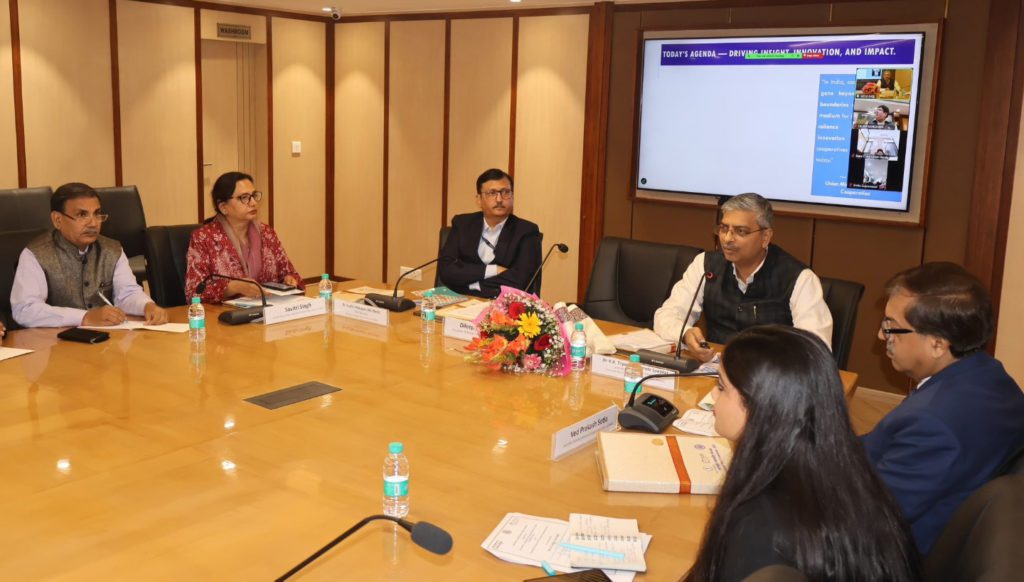
The National Cooperative Union of India (NCUI) on Thursday concluded the 72nd All India Cooperative Week with a high-level seminar organised in hybrid mode at the NCUI Board Room, New Delhi.
The theme for this year’s concluding event, “Innovation in Cooperative Business Models for Global Competitiveness,” set the tone for a forward-looking discussion on India’s cooperative future.
NCUI President Dileep Sanghani joined the programme virtually but could not deliver his valedictory remarks due to technical issues. The session was attended by keynote speaker Dr. K.K. Tripathy, Joint Secretary (EAC–PM), along with NCUI CE Sudhir Mahajan, Deputy CE Savitri Singh, and other senior officials. The programme was moderated by Ved Setia.
Delivering the keynote address, Dr. Tripathy said the cooperative sector stands at a crucial inflection point, where innovation, technology adoption and competitiveness must drive future growth. He stated that while Indian cooperatives are rooted in values, the rapidly changing global environment demands modern systems and digital readiness. “In today’s fast-changing world, standing still is the fastest way to fall behind,” he said.
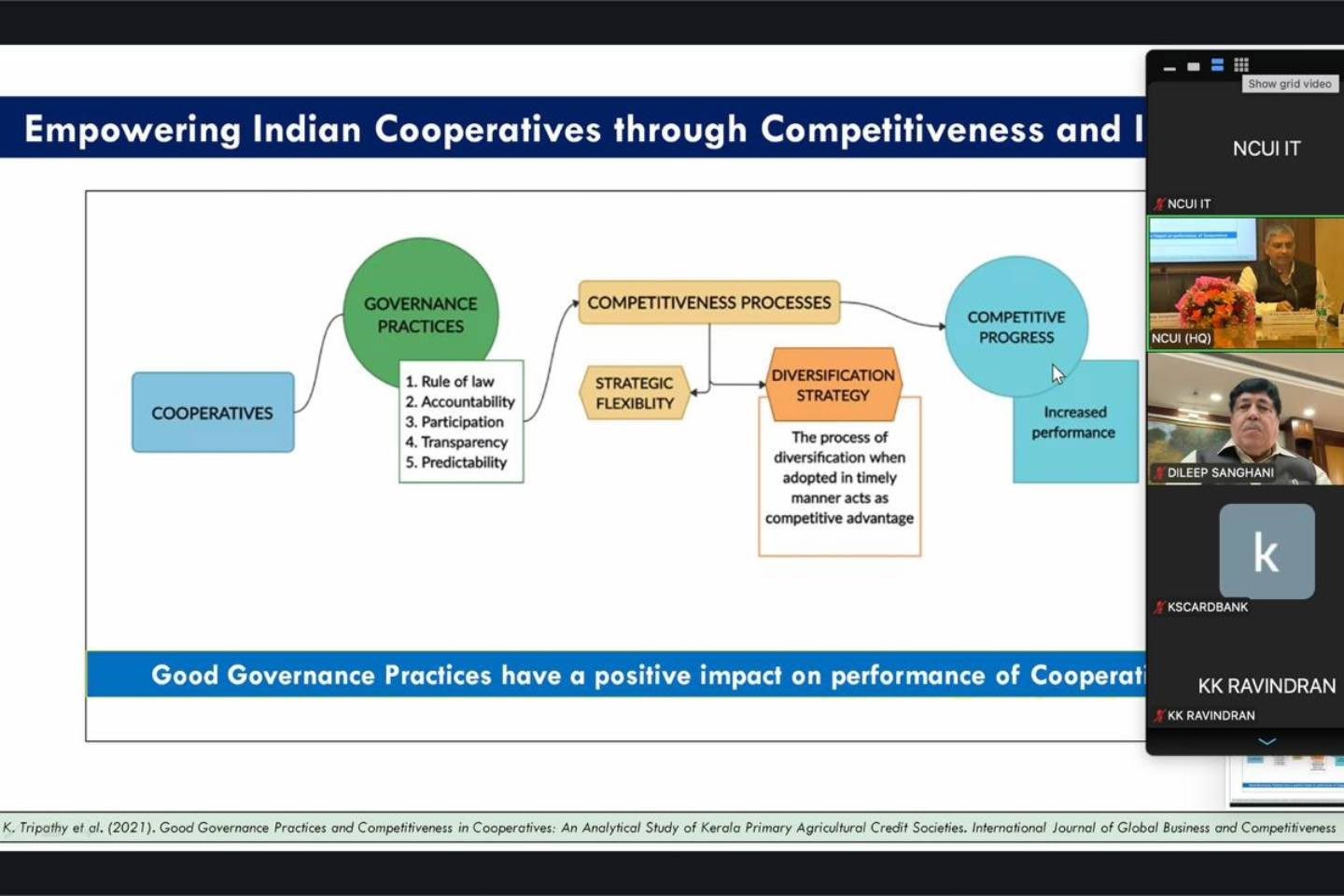
He noted that although India has one of the world’s strongest cooperative legacies, governance gaps continue to limit long-term performance. Highlighting analytical studies, he said good governance directly improves competitiveness, making structural reforms, harmonised laws and strengthened institutional frameworks essential.
Dr. Tripathy called for redesigning foundational systems-legal, regulatory, managerial and electoral-to enhance productivity and efficiency. He emphasised the need for transparency in audits, professional HR systems, clarity in oversight and improved ease of doing business for cooperatives.

Pointing to India’s demographic strength and digital infrastructure, he said the country has all the ingredients for a “cooperative renaissance.” He urged cooperatives to benchmark themselves with global leaders like Mondragon, Fonterra and Rabobank, and to assert a stronger global presence. “India believes cooperatives can provide new energy to global cooperation,” he said.
Concluding his address, he added, “If you want to go far, go together,” calling on cooperatives to redesign, reinvent and rise in line with the vision of Viksit Bharat@2047.
Delivering the welcome address, the NCUI CEO said the week-long deliberations had generated valuable insights that must be documented and shared with NCUI for submission to the concerned ministries. He stressed that “cooperative innovations are becoming essential in a fast-changing environment, and cooperatives must engage actively in this transformation.”
He highlighted several initiatives of the Ministry of Cooperation and India’s preparations for the International Year of Cooperatives, citing examples such as Amul’s global model, NDDB’s dairy partnerships, Banas Dairy’s MoU with Suzuki, and technological advancements at AMR Dairy.
He also pointed to new cooperative-led ventures like Bharat Taxi, set to compete with Ola and Uber, and the NUCFDC’s Sahakar Digi Loan platform as indicators of a rapidly evolving cooperative ecosystem.
Deputy CE Savitri Singh delivered the vote of thanks, appreciating the widespread participation of cooperative institutions across the country.