





The launch of a nationwide Nano Fertilizer Awareness Mega Campaign by Indian Farmers Fertiliser Cooperative Limited marks a significant push towards technology-driven, sustainable agriculture in India, with cooperative networks at the core of its execution.
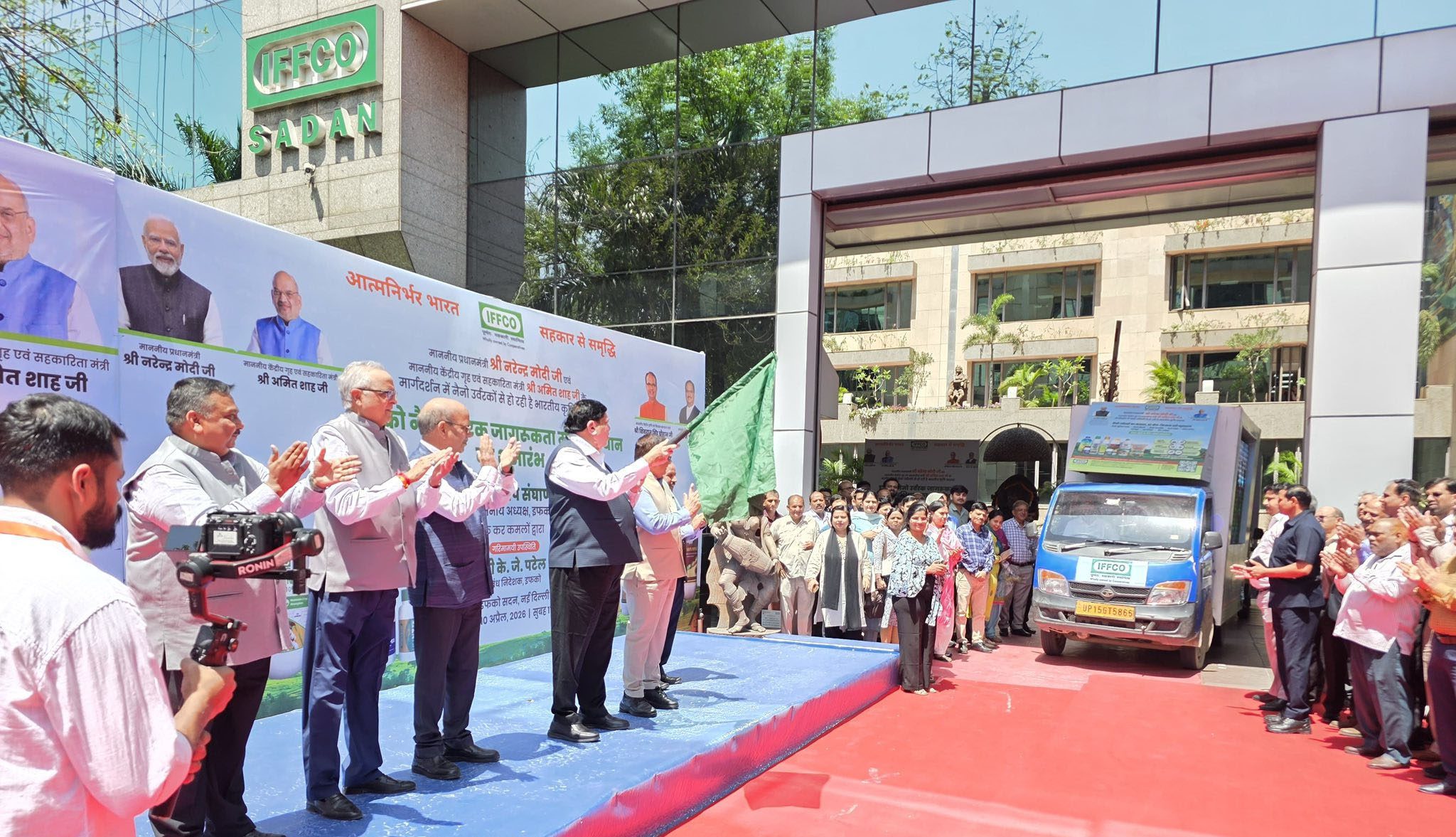
The campaign, flagged off in New Delhi by IFFCO Chairman Dileep Sanghani, aims to promote the adoption of nano fertilizers across 560 districts and 3,477 tehsils in 19 states and Union Territories, making it one of the largest outreach initiatives in the sector.
The campaign began with the rollout of five specially designed nano promotion vans from the national capital, symbolising what Sanghani described as a “historic beginning” in India’s fertilizer transformation journey.
Designed as a multi-media initiative, the programme will leverage print, television, radio, outdoor publicity and digital platforms to ensure deep penetration among farmers. At the grassroots level, Primary Agricultural Credit Societies (PACS) and cooperative institutions will play a pivotal role in spreading awareness and demonstrating usage.
The initiative gains further significance with the formal inclusion of Nano NPK Liquid (8-8-10) and Nano NPK Granular (20-10-10) under the Fertilizer Control Order (FCO), providing regulatory backing and accelerating their acceptance.
According to Sanghani, this milestone reflects India’s growing confidence in nano-based agricultural inputs and aligns with broader national goals such as “Atmanirbhar Bharat” and “Sahkar Se Samriddhi,” inspired by Shri Narendra Modi and Amit Shah.
IFFCO’s strategy combines innovation with scale. Its research arm at IFFCO Nanoventions in Coimbatore has been instrumental in developing advanced nano products, while its upcoming nano fertilizer plant in Brazil, expected to be operational by June 2026, signals India’s emergence as a global player in agricultural nanotechnology.
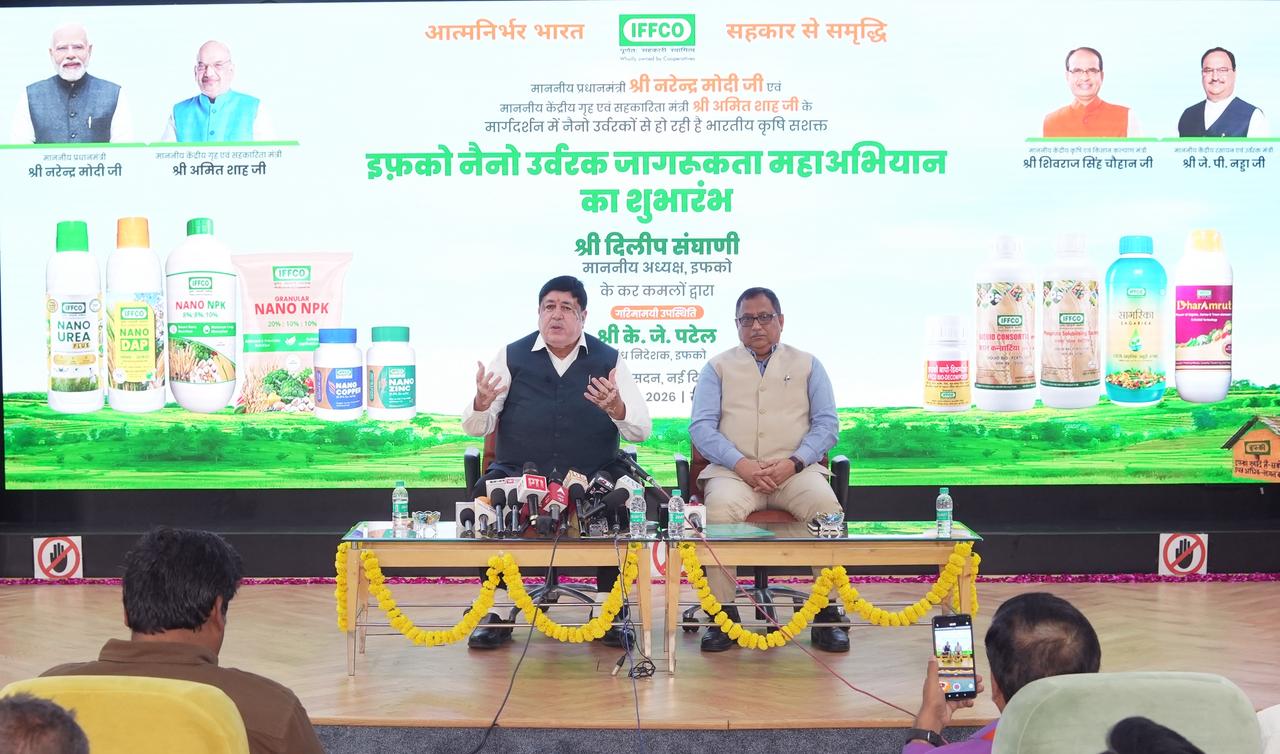 At the heart of the campaign are four key objectives: promoting a full basket of nano products including Nano Urea Plus, Nano DAP, Nano NPK, Nano Zinc and Nano Copper; training farmers in proper foliar spray techniques; reducing dependence on conventional fertilizers; and ensuring last-mile delivery through cooperatives. Sanghani emphasised that farmer trust will be built through field demonstrations, enabling cultivators to witness yield improvements and cost benefits firsthand.
IFFCO’s performance data reinforces its confidence in nano fertilizers. The cooperative has recorded sales of over 21.8 million bottles of Nano Urea Plus Liquid and 6.426 million bottles of Nano DAP Liquid. Additionally, Nano Zinc and Nano Copper have achieved first-year sales of 5.7 million and 0.2 million bottles respectively.
These figures translate into substantial resource savings, 20.826 million bottles of Nano Urea Plus are equivalent to 0.937 million metric tonnes of conventional urea, while 5.789 million bottles of Nano DAP equate to 0.289 million metric tonnes of traditional DAP, leading to reduced logistics costs, lower energy consumption and decreased import dependence.
Beyond fertilizers, IFFCO is expanding its portfolio with products like “DharaAmrut,” a bio-stimulant enriched with amino acids, humic substances and minerals, which is gaining traction among farmers. Financially, the cooperative remains robust, with its profit before tax for FY 2025–26 expected to exceed Rs 4,200 crore.
The campaign underscores a broader shift in Indian agriculture where traditional practices are being integrated with cutting-edge technologies such as nano inputs, drones, artificial intelligence and data analytics. Sanghani described this moment as transformative, urging stakeholders to turn the campaign into a mass movement that ensures higher productivity, lower input costs and improved environmental outcomes.
Launched at IFFCO Sadan in New Delhi in the presence of Managing Director K J Patel and senior officials, the initiative positions cooperatives once again at the forefront of India’s agricultural progress.