
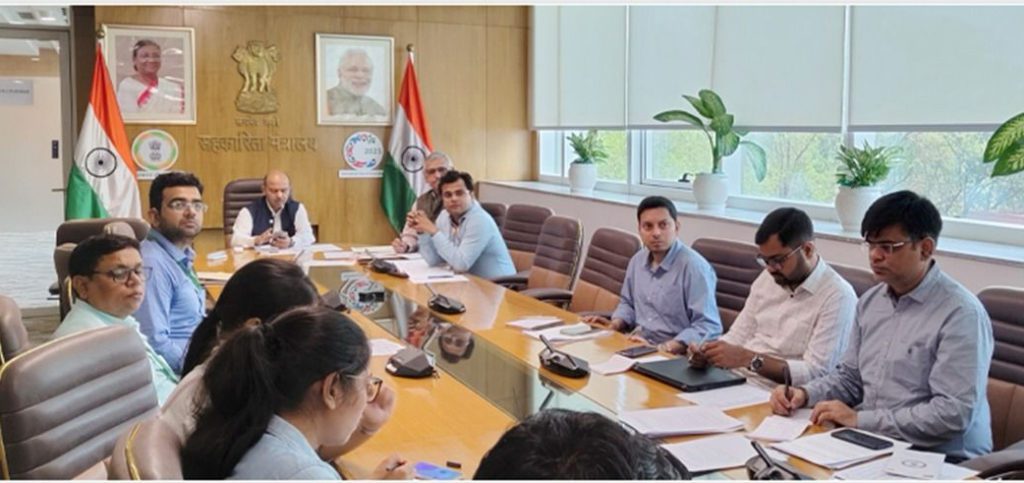
In a significant step toward strengthening India’s cooperative sector, Dr. Ashish Kumar Bhutani, Secretary of the Ministry of Cooperation, chaired a high-level meeting to review the progress of the International Year of Cooperatives (IYC) 2025 Annual Action Plan.
The review placed special emphasis on two flagship initiatives—Ek Ped Maa Ke Naam (One Tree in Mother’s Name) and the nationwide Swachhta Abhiyan (Cleanliness Campaign). These programs, aimed at environmental sustainability and grassroots awareness, have seen enthusiastic participation from nine states: Uttar Pradesh, Chhattisgarh, Punjab, Tamil Nadu, Karnataka, Andhra Pradesh, Bihar, Telangana, and Sikkim.
Senior ministry officials, including Joint Secretary Anand Kumar Jha and Director Kapil Meena, participated in the review meeting. The session evaluated on-ground implementation progress, inter-state coordination, and the impact of community-level involvement in cooperative-led initiatives.
The Ek Ped Maa Ke Naam campaign, launched to promote ecological consciousness through tree planting, has also taken on an emotional and cultural significance by honoring mothers. Meanwhile, the Swachhta drive is engaging cooperative societies in maintaining hygiene and sanitation in rural and urban settings alike.
These programs form part of a larger vision under the “Sahkar Se Samriddhi” (Prosperity through Cooperation) mission, which aims to empower cooperatives as engines of inclusive growth. The meeting also underscored upcoming efforts such as White Revolution 2.0, focusing on modernizing the dairy sector, and the operationalization of Tribhuvan Sahkari University, a first-of-its-kind national-level cooperative university to standardize and professionalize cooperative education across the country.
Additionally, the Ministry reviewed efforts to digitally transform over 63,000 Primary Agricultural Credit Societies (PACS) and Agriculture and Rural Development Banks (ARDBs), ensuring enhanced transparency, efficiency, and service delivery.
Plans are underway to provide cooperative societies with access to affordable finance, including zero-interest loans via RuPay Kisan Credit Cards. The integration of cooperative banks with core banking systems and the promotion of multi-purpose cooperative societies were also discussed.
The Ministry is pushing for deeper engagement across all cooperative tiers—village, district, and state—encouraging states to accelerate implementation and expand outreach. With a renewed focus on technology, skill development, and environmental sustainability, the cooperative movement is being repositioned to meet contemporary socio-economic challenges.
Through consistent review mechanisms, inter-state collaboration, and strategic vision, the Ministry of Cooperation is ensuring that the IYC 2025 becomes a milestone in rejuvenating India’s cooperative landscape, fostering self-reliance, and delivering tangible outcomes for millions of members and stakeholders across the country.