






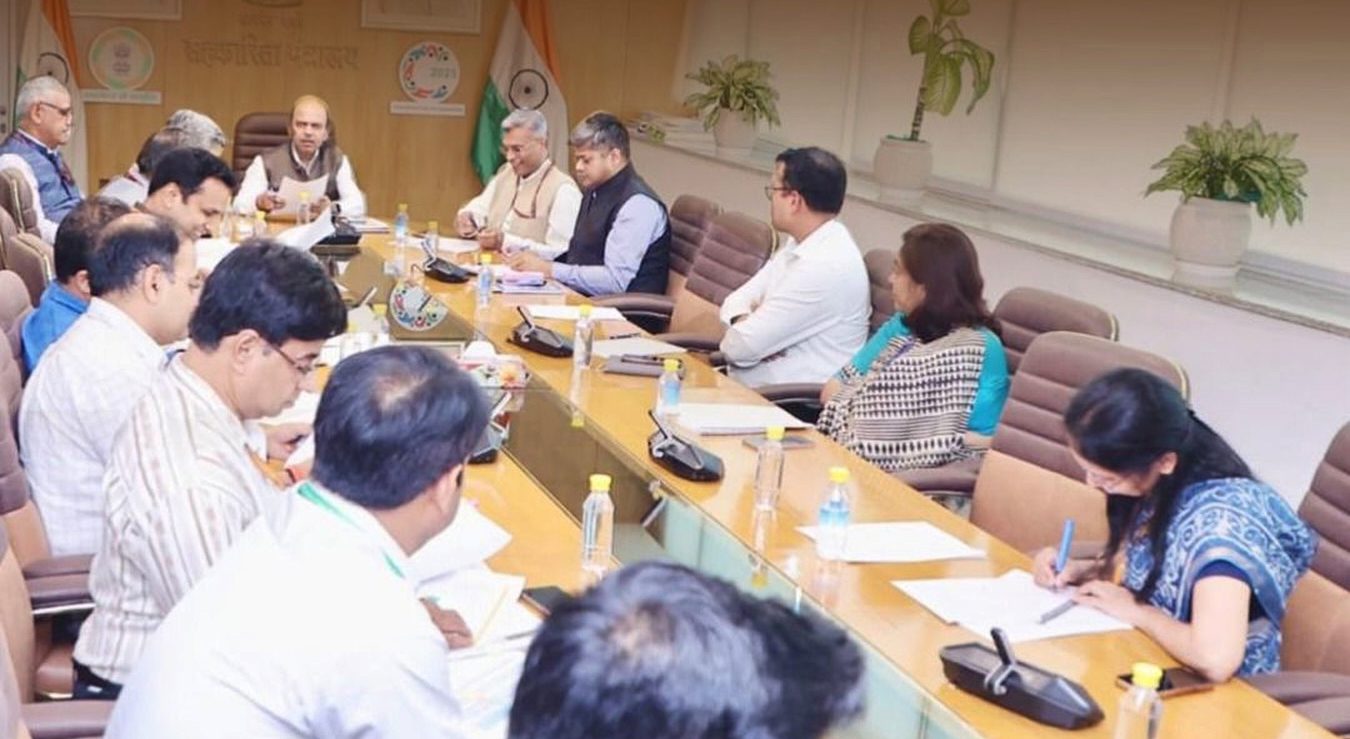
In a significant step towards strengthening India’s cooperative ecosystem, the Ministry of Cooperation convened a high-level review meeting on April 1, 2026, at Atal Akshay Urja Bhawan in the national capital to deliberate on a series of proposed reforms aimed at enhancing efficiency, transparency, and inclusive growth.
The meeting was chaired by Dr. Ashish Kumar Bhutani, who underscored the importance of aligning institutional reforms with the broader national vision of “Sahakar Se Samriddhi.” The initiative, championed by the Government of India, seeks to empower grassroots institutions and expand the reach of cooperatives as engines of rural development and economic self-reliance.
Senior officials participating in the meeting included Additional Secretary Pankaj Kumar Bansal, Joint Secretaries Anand Kumar Jha, Siddharth Jain, and Raman Kumar, along with Deputy Director General Debanjana Datta and Directors including Dr. Mukesh Kumar, Kapil Meena, and Kumar Ram Krishna.
Discussions during the session focused on a comprehensive reform agenda designed to modernize cooperative governance structures, streamline regulatory mechanisms, and improve service delivery across sectors such as agriculture, dairy, fisheries, and rural credit.
Officials also emphasized the need to leverage digital tools for better transparency and accountability, particularly at the grassroots level where Primary Agricultural Credit Societies (PACS) and other local cooperatives play a critical role.
The review comes at a time when the cooperative sector is being positioned as a key pillar of India’s rural economy. Recent policy thrusts have aimed at expanding the cooperative network, strengthening financial viability, and fostering professional management practices.
The Ministry has been actively working on initiatives such as the digitization of cooperatives, creation of new multi-purpose societies, and capacity-building programs for stakeholders.
According to officials, the proposed reforms are expected to address long-standing challenges such as governance gaps, limited access to capital, and uneven regional development. By improving institutional efficiency and ensuring greater transparency, the government aims to build trust among members and enhance the competitiveness of cooperatives in an evolving economic landscape.
The meeting also reviewed progress on ongoing initiatives and explored ways to accelerate implementation through better coordination between central and state agencies. Participants stressed the importance of a collaborative approach to ensure that policy benefits reach the grassroots effectively.
Reaffirming the government’s commitment, Dr. Bhutani highlighted that a robust and transparent cooperative framework is essential for achieving inclusive growth and empowering farmers, artisans, and rural entrepreneurs across the country.